

- Fast Delievery
- Quality Assurance
- 24/7 Customer Service
Product Introduction

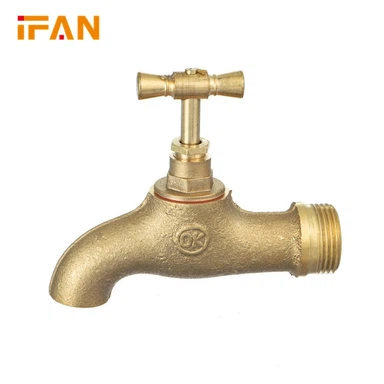
| Product Name | Brass Tap |
| Size | 1/2" 3/4" Or Customized |
| Color |
White,Blue,Orange Or Customized |
| Package | IFAN standard packaging |
| Connection | Compression/Press/Sliding Fittings |
| Sample | Sample Free |
| Contact |
Click HERE to contact us now! |
Welcome to contact IFAN, we are online 24 hours a day to answer your questions!
Understanding Smooth Water Flow
A brass tap is more than a visible fixture at the end of a water line. Its internal passage determines how water moves from the supply connection to the outlet. When the passage is properly designed, water can travel through the tap with a controlled and consistent flow pattern.
Smooth water flow depends on several elements working together. These include the internal passage shape, inlet and outlet dimensions, aerator design, valve cartridge, and alignment of the waterway. The objective is not simply to allow water to pass, but to create a predictable path with limited unnecessary turbulence.
The Internal Waterway
Inside a brass tap, water follows a defined route from the inlet toward the spout. The internal body contains passages that connect the supply connection with the operating valve and outlet. The geometry of these passages influences how the water changes direction as it travels through the fixture.
Abrupt changes in direction can disturb the flow pattern, while appropriately shaped passages can guide water more evenly. The internal structure must also provide sufficient space for the expected flow rate. For this reason, the exterior appearance of a tap does not always reveal how efficiently water moves inside it.
Brass Body and Flow Passage
The brass body forms the main structure around the internal waterway. During manufacturing, the body is shaped to create the required inlet, outlet, and valve passages. The accuracy of these areas affects the route taken by water through the fixture.
A well-formed passage avoids unnecessary restrictions while maintaining the dimensions required by the tap design. Internal machining, casting, or other manufacturing processes must produce surfaces and openings that correspond with the intended water path.
The actual flow characteristics depend on the complete tap design rather than the brass material alone.
The Role of the Cartridge
In many modern taps, a cartridge controls the amount of water released from the supply passage. When the handle is moved, the cartridge changes the opening through which water travels.
A correctly functioning cartridge allows the user to increase or decrease flow gradually. The opening size influences the velocity of water entering the tap's downstream passage. If the cartridge or valve mechanism is incorrectly installed, damaged, or contaminated, the flow may become uneven.
Therefore, smooth water delivery depends partly on the condition and design of the internal control component.
Aerator and Water Outlet
At the end of many kitchen and bathroom taps is an aerator. This small component has an important influence on how water appears and feels as it leaves the spout.
An aerator can introduce air into the outgoing stream and shape the water into a more uniform column or stream. It typically contains a screen or internal structure that distributes the water across the outlet.
If mineral deposits or particles block the aerator, the stream can become irregular or split into several directions. Cleaning or replacing the aerator according to the manufacturer's instructions can restore the intended outlet pattern.
Managing Turbulence Inside the Tap
Water does not always move in a perfectly straight line through a tap. It may change direction as it passes through the inlet, valve, body, and spout. Each change can influence turbulence within the passage.
A suitable internal geometry helps guide these transitions. Smoothly shaped passages can reduce abrupt disturbances compared with poorly aligned or unnecessarily restricted pathways.
However, some turbulence is normal in a water tap, particularly around the valve and aerator. Smooth flow should therefore be understood as controlled, consistent water delivery rather than the complete absence of turbulence.
Correct Pipe and Tap Connection
The water flow through a brass tap is also affected by the connection between the tap and the supply pipe. The connection should match the specified pipe size and fitting arrangement.
If a supply connection is partially obstructed, incorrectly assembled, or contaminated with sealing material, the available flow path can be reduced. Excess sealing compound or improperly positioned components can also enter the waterway and interfere with internal parts.
Correct connection preparation therefore forms part of achieving the intended flow characteristics of the tap.
Keeping the Waterway Clean
Particles inside the waterway can change the flow pattern. Small pieces of pipe debris, mineral deposits, or other contaminants may become trapped around the cartridge, valve opening, or aerator.
Before installation, the supply pipe should be prepared according to the applicable plumbing procedure. After installation, the system may need to be flushed as required by the manufacturer's instructions. This helps remove loose particles that could otherwise enter the tap.
If the flow changes unexpectedly, checking the aerator and internal components for contamination can be a useful diagnostic step.
Handle Movement and Flow Adjustment
The tap handle provides direct control over the opening of the internal valve or cartridge. A well-designed control mechanism allows the user to make gradual adjustments rather than creating an abrupt change in the water stream.
For a single-lever tap, small handle movements can change the valve opening. The relationship between handle position and water flow depends on the cartridge design.
A smooth operating handle does not automatically guarantee smooth water flow, but accurate interaction between the handle and cartridge helps the user control the outgoing stream more precisely.
Spout Shape and Water Delivery
The spout determines the final route of water before it leaves the tap. Its height, curvature, outlet position, and internal diameter all influence how the stream reaches the sink or basin.
A carefully positioned spout can direct water toward the intended area without unnecessary splashing. The outlet should also correspond appropriately with the sink dimensions. In a kitchen, for example, the spout may need to reach a particular area of the basin so that the water stream remains practical during washing and rinsing.
Thus, smooth flow involves both internal hydraulics and the final shape of the water stream.
Maintaining Consistent Flow
Maintaining smooth water flow requires attention to the entire pathway rather than one individual component. The supply connection, brass body, cartridge, internal passages, spout, and aerator all contribute to the final result.
Routine inspection can identify changes such as reduced flow, uneven discharge, or a divided stream. These symptoms may come from a blocked aerator, contaminated valve, restricted connection, or another issue within the waterway.
Following the manufacturer's cleaning and maintenance instructions helps preserve the intended flow arrangement without introducing unsuitable chemicals or tools.
A Controlled Water Stream
Smooth water flow through a brass tap is created by the interaction of internal passage geometry, valve control, spout design, and outlet components. The brass body provides the structure through which these elements are arranged, while the cartridge and aerator influence how water enters and leaves the fixture.
Rather than focusing only on the visible appearance of the tap, proper flow assessment considers the complete water path. Correct installation, clean internal passages, compatible connections, and appropriate component maintenance all contribute to a controlled stream. When these details are properly coordinated, a brass tap can deliver water through a clear and well-directed flow path for everyday kitchen or bathroom use.





Hot Tags: smooth water flow through brass tap, China smooth water flow through brass tap manufacturers, suppliers, factory, Pipe Tap