

Your Leading Zhuji Fengfan Piping Co.,Ltd Supplier
IFAN factory started in 1993. And IFAN has workshop 120000 ㎡ with 610 staff. IFAN can design and produce all plumbing pipe and fitting include PPR PVC CPVC PPSU HDPE PEXA PEXB PERT pipe and fitting, brass fitting, brass ball valve, heating system, gas system, sanitary faucets and hose. In the past 30 Years, IFAN has never forgotten his mission-To protect health and safety. And IFAN factory use best materials to produce high quality pipe and fittings with automatic production line and high tech quality control machines. The most important, IFAN can guarantee that all pipes and fittings manufactured by IFAN are qualified.
Why Choose Us?
Quality control
We have a professional quality inspection team, and our quality inspection team will carry out strict quality inspection on the products before all products are shipped to ensure the quality of the products.
OEM & ODM Support
We have 56 professional engineers. They can design and produce all plumbing pipe and fitting.
Competitive price
We have a professional purchasing team and costing team,trying to reduce costs and profits,and provide you with a good price.
24h online service
You can contact us to inquire about pre-sales, sales, and after-sales services, and we will give you a very satisfactory.We are at your service online 24 hours a day.
-
![PPR Plastic Pipe]() Add to Inquiry
Add to Inquiry -
![PPR Pipe for Hot and Cold Water]()
PPR Pipe for Hot and Cold Water
Add to Inquiry -
![PPR Pipe Hot Water]() Add to Inquiry
Add to Inquiry -
![Ppr Pipe Plumbing]() Add to Inquiry
Add to Inquiry -
![Grey PPR Pipe Resists Corrosion Effectively]()
Grey PPR Pipe Resists Corrosion Effectively
Add to Inquiry -
![Grey PPR Pipe Ensures Reliable Waterflow]()
Grey PPR Pipe Ensures Reliable Waterflow
Add to Inquiry -
![IFAN Heat-Stable PPR Pipe]() Add to Inquiry
Add to Inquiry -
![IFAN Noise-Reducing PPR Pipe]() Add to Inquiry
Add to Inquiry -
![IFAN Plastic PPR Pipes]() Add to Inquiry
Add to Inquiry -
![IFAN PPR Water Pipes]() Add to Inquiry
Add to Inquiry -
![Yellow PPR Pipe Fittings]() Add to Inquiry
Add to Inquiry -
![IFAN Green PPR Fitting]() Add to Inquiry
Add to Inquiry
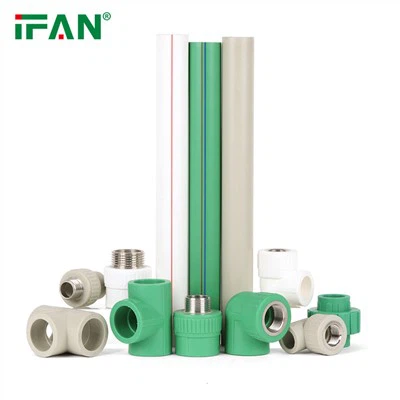

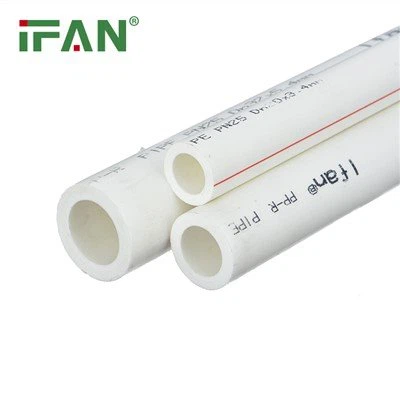


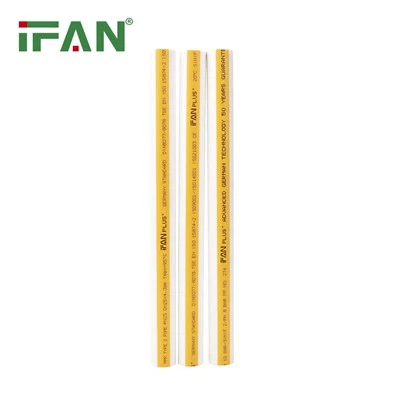


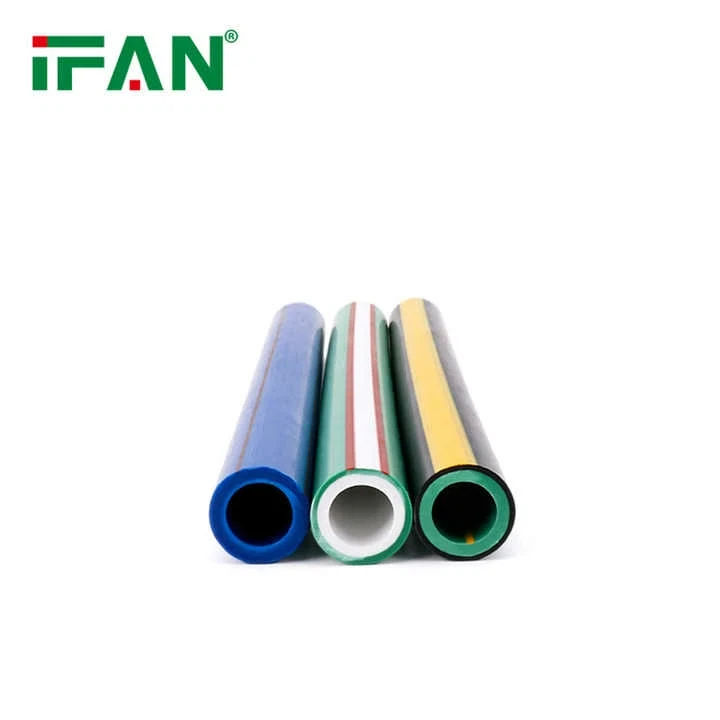


PPR, also known as Polypropylene Random Copolymer, is a straight and unbending cylindrical-shaped pipe produced using Polypropylene Random Copolymer plastic, delivered through a nonstop expulsion process. They are genlly presented in green or white shades.
PPR Pipes are known for sevl characteristics. However, their most common trait is that they can be used in the construction of cold and hot water systems. Apart from this, its properties of it incorporate lightweight development, erosion opposition, and simple joining and cutting. Genlly, these pipes are used in oil and gas exploration and water pipelines.
Benefits of PPR Pipe
Financial Big Data
PPR pipes have low thermal conductivity as the external temptures don’t reach the liquid inside the pipe. Due to this, these pipes minimize heat loss or heat gain during the transfer of cold and hot fluids.
High-tempture resistance
PPR pipes can withstand high temptures up to 95°C, making them suitable for use in hot water supply systems.
Long lasting
PPR pipes have a long lifespan of up to long-term durability according to standards or more under varying and extreme environmental conditions, making them a cost-effective option in the long term.
Environment and economic efficiency
PPR pipes are easy to transport, cut and join. These pipes are also easy to use and do not need additional chemicals and materials.
Corrosion-resistant
PPR pipes resist corrosion from acidic or alkaline substances, making them a good choice for water supply systems.
Easy to install
PPR pipes are lightweight and thus easy to install, which may help reduce our installation time and costs.
Types of PPR Pipe
Glass fiber composite ppr pipe
RIFENG/ Glass Fiber Composite PPR Pipe consists of PPR inner and outer layers and a special mixture of Glass Fiber (GF) and PPR in the middle layer. It increases the rigidity of the pipe, improves the strength of the pipe, and reduces the linear expansion coefficient of the pipe.
Antibacterial cmic ppr pipe
RIFENG's Antibacterial Cmic PPR pipe, combined with cmics to efficiently improve the smoothness of the inner wall. Compared with ordinary PPR pipes, the smoothness of the inner wall is improved by 100%. Work with high-efficiency nano-antibacterial technology, which can ensure that the antibacterial rate in the wall is as high as 99.99%, to better offer a healthy water solution.
Double layer ppr pipe
RIFENG double-layer PPR piping system, made from the latest scientific formula with high-quality polypropylene random copolymer, it’s non-toxic, ensuring people safe drinking water, which can be applied in both residential and commercial buildings. RIFENG keeps the outer layer white and the inner is green, which effectively helps prevent the permeation of oxygen and light, providing people with clean water.
Basalt fiber ppr pipe
Basalt Fiber is a new type of inorganic, environmentally friendly and high-performance fiber material. It is one of the most representative materials in the field of aerospace science and technology. With excellent rigidity, super pressure-bearing capacity and environmental protection, it is an ideal solution for hot water.
Anti-freeze ppr pipe
The PPR anti-freeze pipe adopts the integrated moulding technology of inner PERT and outer PPR to provide a strong defence against low tempture and cold brittleness, prevent the pipe from freezing and cracking, completely bid farewell to low-tempture anti-freezing trivial measures, easily deal with sub-zero temptures, and extend the service life of pipes.
PPR-C (chlorinated polypropylene) pipes
PPR-C pipes are made of a material that has been chlorinated. This process makes the pipes more durable, resistant to high temptures and pressure, and reduces the risk of static charges.
PPR-RCT (random copolymer polypropylene) pipes
PPR-RCT pipes are made of a type of polypropylene that has a random molecular structure, which gives the pipes improved mechanical and thermal properties compared to other pipes.
PPR-FR (fire retardant) pipes
PPR-FR pipes are made with a fire retardant additive that provides a high level of protection against fire hazards. These pipes are used in applications where a high degree of safety is required.
PPR-AL-PPR (aluminum-plastic-aluminum) pipes
PPR-AL-PPR pipes are made with a combination of aluminum and plastic layers that provide excellent mechanical strength, flexibility, and resistance to corrosion and tempture changes.
PPR-PE-PPR (polyethylene-plastic-polyethylene) pipes
PPR-PE-PPR pipes are a combination of polyethylene and plastic layers. These pipes are used for hot and cold water supply, as well as for industrial applications that require a certain level of flexibility and mechanical strength.
What Is Used for PPR Pipes?
The usage areas of PPR pipes and fittings are not limited to domestic water installations. It is used in numerous other applications in different fields.
PPR pipes and fittings are used;
- Water distribution in commercial buildings and hospitals,
- In the transportation of chilled water networks in air conditioning systems,
- Industrial chemicals transportation,
- In the transport of aggressive liquids,
- In agriculture and garden irrigation,
- In rainwater systems,
- In swimming pools,
- In HVAC and compressed air installations.


PPR pipe is made of a type of thermoplastic called polypropylene random copolymer (PP-R). This material is known for its high durability, heat resistance, chemical resistance, and ability to withstand high pressure. PP-R is a safe and non-toxic material, making it a popular choice for the transport of drinking water and other fluids in plumbing systems. It is also resistant to UV rays and is suitable for use in both indoor and outdoor applications.
Process of PPR Pipe
The final product is a PPR pipe that can endure heat and has physical and chemical properties that make it ideal for carrying potable water. It also finds use in the heating sector, rendering it versatile and extensively employed across various industries.
PPR pipes can withstand a constant tempture of 700°C. This means that they can easily carry hot water without the risk of bursting or degrading over time.
The manufacturing process begins with the transformation of the raw material
The high tempture exposes the material to plasticization, facilitating ease of work with the material. This influx of tempture also results in improved flexibility, making the material easier to extrude.
PPR pipes are created through the process of extrusion
The process involves forcing the heated material through a die that shapes and sizes the pipe. It forms the PPR pipe with a consistent internal diameter throughout its length.
The process of creating fittings used in PPR pipes involves moulding
It entails melting the raw material and pouring it into a mould of the desired shape and size. Afterwards, we cool and cut the moulded fitting to the appropriate dimensions.
How to Join PPR Pipe
Heating the Fusion Tool and Preparing the Pipe
Place the right-sized sockets onto the fusion tool. Most PPR fusion tools come with pairs of male and female sockets of various sizes, which correspond to common PPR pipe diameters. So, if you’re using PPR pipe that's 50 millimetres (2.0 in) in diameter, choose the socket pair marked for 50 mm.
Plug in the fusion tool to begin heating the sockets. Most fusion tools will plug into a standard 110v outlet. The tool will either start heating immediately, or you may have to turn on a power switch. Models vary, but it will likely take sevl minutes for the tool to heat the sockets to the necessary tempture.
Trim your pipe to length with a smooth, clean cut. While the fusion tool heats, mark and cut your pipe to the desired length using an effective tool to obtain a clean cut which is perpendicular to the axis. Many fusion tool sets come with a trigger- or pincer-style pipe cutter. When used according to the directions, these will create smooth, even cuts in PPR that are ideal for fusion welding.
Clean the PPR pieces with a cloth and the recommended cleaner. Your fusion tool kit will likely recommend, and may even come with, a specific cleaner to use with PPR pipe. Use this cleaner as directed on the outside of the pipe and the inside of the fitting to be joined. Let the pieces dry for a few moments.
Mark the welding depth on the joining end of the pipe. Your fusion toolset will likely come with a template for marking the proper welding depths onto various diameters of PPR pipe. Use a pencil to make the corresponding mark on the pipe.
Confirm that the fusion tool is fully heated. Many fusion tools have a display that tells you when the tool is heated and ready to go. The target tempture is typically 260 °C (500 °F).
Heating the Pipe and Fitting on the Fusion Tool
Protect your skin from the very hot fusion tool. Before you start softening PPR pipe on the fusion tool, put on heat-resistant work gloves and long sleeves. Also, tie back any loose hair and remove any dangling jewellery.
Press the PPR pieces straight into/onto their respective sockets. If you have a table-mounted fusion tool, hold the pipe in one hand and the fitting in the other so you can insert them simultaneously. If you have a handheld fusion tool, insert one piece then the other in rapid succession. Hold and insert the pieces straight in line with the sockets, not at an angle.
Start the heating timer if your model has one. Many fusion tools have built-in timers that will signal when your chosen diameter of PPR is ready to remove from the sockets. Refer to your owner’s manual for instructions on how to activate the timer.
Pull the PPR pieces straight off/out of the sockets. Just like when you put them in place on the sockets, don’t remove the pipe or fitting at an angle. Otherwise, you’ll deform the softened, nearly gooey PPR.
Fusing the Pipe and Fitting into One Piece
Push the pipe and fitting straight together immediately. As soon as you remove them from the fusion tool, insert the pipe straight into the fitting until it reaches the depth line marked on it. Don’t insert the pipe at an angle, and don’t twist either piece — just push the pipe straight in.
Hold the fused pipe pieces in place for 30 seconds. PPR pipe heats very quickly and cools very quickly. Within 30 seconds, the pieces will have cooled enough to have fused into one piece of PPR pipe. You can then put the fused pipe down and move on to your next task.
Put the pipe into service after it cools completely. Once the fused PPR pipe cools to room tempture again, it is ready to withstand its rated water pressure. Once your plumbing system is fully installed, you can turn on the water and check for leaks.
Certifications

Our Factory
IFAN factory started in 1993. And IFAN has workshop 120000 ㎡ with 610 staff. IFAN can design and produce all plumbing pipe and fitting include PPR PVC CPVC PPSU HDPE PEXA PEXB PERT pipe and fitting, brass fitting, brass ball valve, heating system, gas system, sanitary faucets and hose.


FAQ
Q: What is the quality of PPR pipe?
Q: How are PPR pipes made?
Q: Why is PPR pipes better?
Q: What is the life expectancy of PPR pipes?
Q: How durable is PPR pipe?
Q: Which is better PEX or PPR?
Q: Is PPR pipe safe for drinking water?
The PPR piping system comes with fittings, valve, fusing machine, and other accessories that are available for every size of the pipe. They are safe to use and are non-toxic, that's why this is the best choice when it comes to drinking water piping systems.
Q: Is PPR pipe toxic?
Q: What is the best brand of PPR pipe?
Q: Does PPR pipes freeze?
Q: Which is better HDPE or PPR pipe?
Q: Is PPR more expensive than PVC?
Q: Does PPR pipe need insulation?
Q: Can I use PPR pipes underground?
Q: What is the longest lasting plumbing pipe?
Drainage pipes are often made of cast iron or polyvinyl chloride, or PVC. Cast iron will last anywhere from 75-100 years while PVC wins the award for longest-lasting pipe material with an indefinite lifespan.
Q: Is PPR pipe food grade?
Q: Can PPR pipe be exposed to sunlight?
Q: What are the different classes of PPR pipes?
Q: What color are PPR pipes?
Q: What tempture can PPR pipe withstand?
As one of the leading ppr pipe manufacturers and suppliers in China, we warmly welcome you to buy or wholesale bulk cheap ppr pipe from our factory. All our products are with high quality and competitive price. Contact us for pricelist.
Plastic Ppr Pipe, Ppr Pipe Price, 25mm PPR Pipe