

- Fast Delievery
- Quality Assurance
- 24/7 Customer Service
Product Introduction
PPR Pipe Fittings Corrosion Resistance Test Report in an Electroplating Factory
Introduction
PPR (Polypropylene Random) pipe fittings are widely used in plumbing systems due to their durability, flexibility, and corrosion resistance. However, when exposed to specific environments, especially those with electroplating chemicals, their corrosion resistance may be challenged. This report aims to evaluate the corrosion resistance of PPR pipe fittings in an electroplating factory setting, providing insights into their performance under such conditions.
Test Objectives and Methods
The primary objective of this test is to assess the corrosion resistance of PPR pipe fittings in an environment typical of an electroplating factory. To achieve this, various accelerated corrosion testing methods were employed, including salt spray testing, wet-heat testing, and chemical corrosion testing. These methods were chosen to simulate the harsh conditions often encountered in electroplating processes, such as exposure to salt solutions, high temperatures, and aggressive chemicals.
Salt Spray Testing: This method simulates the corrosive effects of marine atmospheres. PPR pipe fittings were exposed to a 5% sodium chloride solution at a temperature of 35°C for a specified duration.
Wet-Heat Testing: Evaluates the corrosion resistance of materials in high humidity and temperature conditions. The PPR fittings were subjected to elevated temperatures and high humidity levels to mimic tropical or humid environments.
Chemical Corrosion Testing: Exposes the materials to specific chemical solutions to observe corrosion reactions. In this case, PPR fittings were immersed in solutions of acids, bases, and salts to assess their resistance to these substances.
Test Materials and Preparation
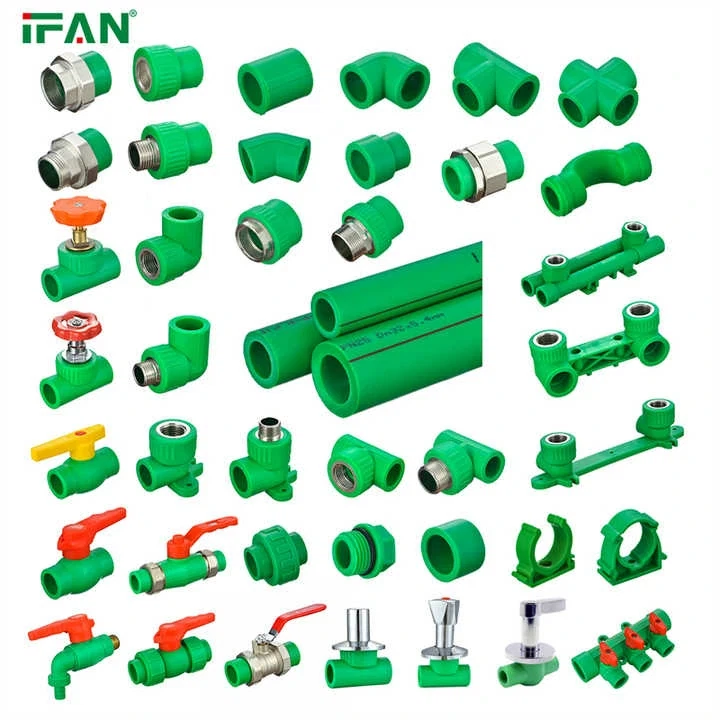
The test subjects were PPR pipe fittings sourced from a reputable manufacturer. Prior to testing, the fittings were thoroughly cleaned and dried to remove any contaminants that could affect the test results. They were then prepared according to standard test procedures, ensuring consistency in sample preparation across all testing methods.
The PPR fittings were cut to standard sizes for easy handling and placement within the test chambers. Surface treatments, if any, were noted and documented to ensure accurate interpretation of the test results. This preparation step was crucial in ensuring the reliability and accuracy of the test outcomes.
Test Results and Observations
After completing the testing protocols, the PPR pipe fittings were inspected for signs of corrosion. The following observations were made:
Salt Spray Testing: Minimal corrosion was observed on the surface of the PPR fittings. There were no significant changes in the appearance or structure of the fittings, indicating good resistance to salt spray corrosion.
Wet-Heat Testing: Under high humidity and temperature conditions, the PPR fittings showed moderate resistance to corrosion. Although there were no visible cracks or failures, slight discoloration and surface roughness were noted, suggesting a need for enhanced coatings or treatments in extremely humid environments. IFAN factory 30+ years manufacture experience support color /size customization support free sample.Welcome to consult for catalog and free samples.This is our Facebook Website:www.facebook.com,Click to watch IFAN's product video.Our IFAN products from quality to price are your best choice, welcome to buy!
Chemical Corrosion Testing: When exposed to acidic and alkaline solutions, the PPR fittings exhibited good corrosion resistance. However, in salt solutions, there was slight degradation, indicating a potential for corrosion in environments with high salt concentrations.

Analysis and Recommendations
The test results indicate that PPR pipe fittings have good to moderate corrosion resistance in environments typical of an electroplating factory. While they performed well in most tests, there were some areas of concern, particularly in high humidity and salt solution environments.
To enhance the corrosion resistance of PPR pipe fittings in electroplating factories, the following recommendations are made:
Conclusion
In conclusion, PPR pipe fittings demonstrate good corrosion resistance in an electroplating factory setting, withstanding the majority of the test conditions. However, specific environments, such as high humidity and salt solutions, may require additional protective measures to ensure long-term durability. By following the recommendations outlined in this report, manufacturers and users can enhance the corrosion resistance of PPR pipe fittings, ensuring their reliability and performance in electroplating applications.
Hot Tags: ifan green ppr fitting, China ifan green ppr fitting manufacturers, suppliers, factory, Green PPR Reducer, Butterfly Ball Valve, Ball Valve Brass, Brass Gate Valve, Ppr Elbow 90 Degree, PVC Water Pipes