


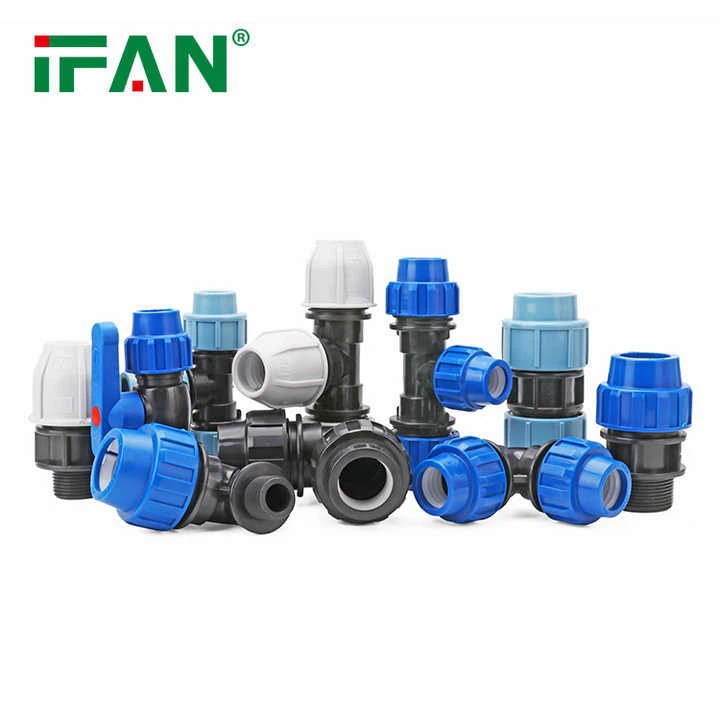


Water Supply HDPE Pipe Fitting
Thermal Conductivity of HDPE Pipe Fittings in Heating Applications
- Fast Delievery
- Quality Assurance
- 24/7 Customer Service
Product Introduction
Thermal Conductivity of HDPE Pipe Fittings in Heating Applications
High-Density Polyethylene (HDPE) pipe fittings are widely used across various industries because of their strength, flexibility, and corrosion resistance. One of the most important performance factors to consider in heating applications is thermal conductivity-the ability of a material to transfer heat. While metals such as copper and steel are known for their high thermal conductivity, HDPE offers unique advantages in heating systems where controlled heat transfer and energy efficiency are priorities. Understanding how thermal conductivity impacts HDPE fittings in heating applications helps engineers and contractors make informed decisions.

1. What is Thermal Conductivity?
Thermal conductivity is the rate at which heat passes through a material. In piping systems, this property affects how efficiently heat is transferred from hot water or fluids inside the pipe to the surrounding environment. Materials with high thermal conductivity, like metals, allow rapid heat loss, while materials with low conductivity, such as plastics, retain heat longer. HDPE falls into the latter category, with a much lower conductivity compared to copper or steel.
2. Thermal Properties of HDPE in Comparison to Metals
HDPE has a thermal conductivity of approximately 0.4–0.5 W/m·K, significantly lower than copper (~400 W/m·K) and steel (~50 W/m·K). This difference means that HDPE pipe fittings retain heat more effectively, minimizing energy loss in heating applications. While metal pipes may lose heat quickly, HDPE's insulating properties make it particularly suitable for systems where maintaining fluid temperature is critical, such as underfloor heating, geothermal systems, or hot water distribution.
3. Benefits of Low Thermal Conductivity in Heating Applications
The low thermal conductivity of HDPE pipe fittings provides several advantages:
Energy Efficiency: Less heat escapes through the pipe walls, reducing the need for continuous reheating and lowering energy costs.
Comfort in Heating Systems: In underfloor or radiant heating, HDPE fittings help maintain consistent temperatures across the system.
Reduced Condensation Risk: By minimizing temperature fluctuations, HDPE lowers the chance of condensation forming on pipe surfaces.
Longevity of Systems: Lower heat transfer to the surrounding environment prevents excessive thermal stress on surrounding materials and structures.
These benefits make HDPE an effective choice where energy conservation and system reliability are priorities.
4. Engineering Considerations in Heating Applications
While HDPE's low thermal conductivity is beneficial, engineers must account for several factors in system design:
Expansion and Contraction: HDPE expands more than metals when exposed to heat. Proper allowances for thermal expansion must be included during installation.
Operating Temperature Limits: Standard HDPE can handle continuous service temperatures of up to 60°C, with some grades capable of withstanding higher. Designers must ensure fittings are rated for the intended application.
Insulation Needs: Although HDPE itself acts as an insulator, in high-temperature heating systems, additional insulation may still be recommended to maximize efficiency.
Flow Rate and Heat Delivery: Since HDPE retains heat, engineers may need to carefully calculate flow rates to ensure effective heat transfer to the end application.
Hot Tags: water supply hdpe pipe fitting, China water supply hdpe pipe fitting manufacturers, suppliers, factory, Compression HDPE Pipe Fittings, HDPE Compression Fittings, HDPE Elbow 90, HDPE Pipe Compression Fittings, HDPE Pipe Fitting, HDPE Pipe Socket


