


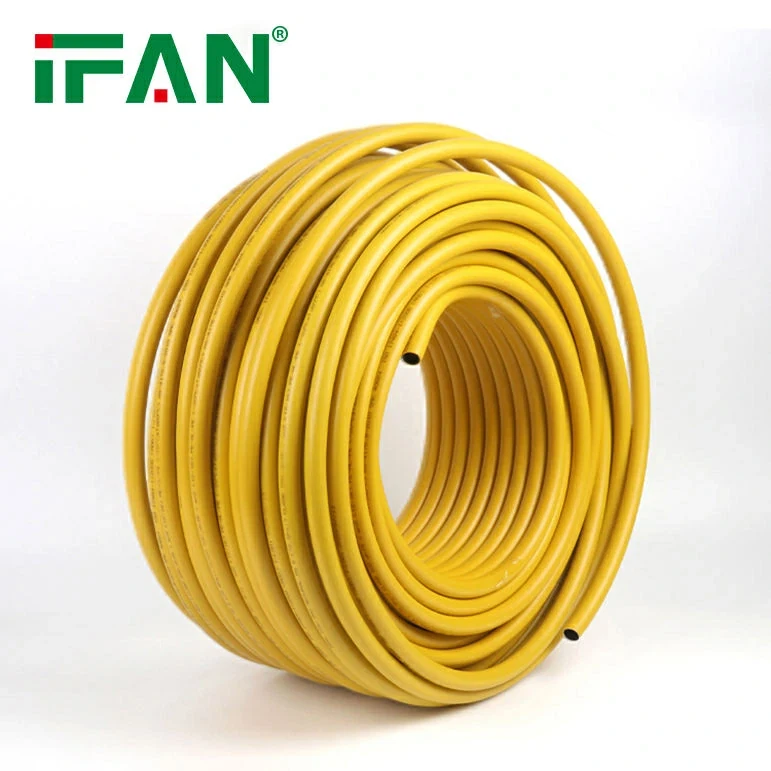
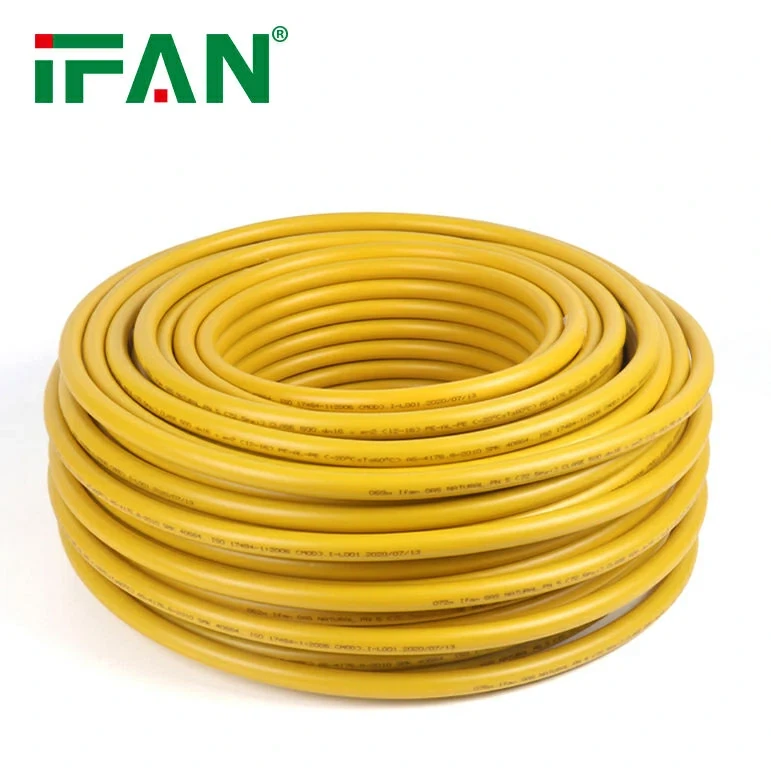

High Pressure Pex Gas Pipe
PType:PEX Gas Pipe
Length:100m-200m
Brand:IFAN/OEM
Applications:Gas Systems
Color:Yellow,Purple Or Customized
Sample:Free
- Fast Delievery
- Quality Assurance
- 24/7 Customer Service
Product Introduction
Introduction
High pressure gas distribution systems require piping materials that can withstand extreme internal forces while maintaining structural integrity over long periods of operation. High Pressure PEX gas pipe is engineered specifically for these demanding environments, where stability, safety, and resistance to deformation are critical. Unlike conventional piping materials that may suffer from corrosion or fatigue under sustained pressure, high-pressure PEX systems are designed using cross-linked polyethylene that enhances molecular bonding and improves mechanical strength. This allows the pipe to maintain performance even under fluctuating load conditions. In modern energy infrastructure, the demand for safer and more flexible high-pressure gas transport solutions has led to increased interest in advanced PEX-based systems.

| Product Name | High Quality Pex Gas Pipe |
| Size | 16-32mm Or Customized |
| Color |
Yellow Or Customized |
| Package | IFAN standard packaging |
| Connection | Compression/Press/Sliding Fittings |
| Sample | Sample Free |
| Contact | Click HERE to contact us now! |
Welcome to contact IFAN, we are online 24 hours a day to answer your questions!

Material Engineering for High Pressure Performance
The foundation of High Pressure PEX gas pipe lies in its unique molecular structure. Through a controlled cross-linking process, polyethylene chains are chemically bonded to form a three-dimensional network. This structure significantly increases tensile strength, creep resistance, and pressure tolerance. In high-pressure applications, the pipe must resist expansion and maintain dimensional stability even when subjected to continuous internal force. Engineering enhancements often include multi-layer construction, where the inner layer handles gas compatibility, the middle layer provides pressure reinforcement, and the outer layer adds environmental protection. This layered approach ensures that the pipe performs reliably in demanding gas transmission systems where consistent pressure control is essential.
Pressure Resistance and Safety Characteristics
One of the defining features of High Pressure PEX gas pipe is its ability to maintain integrity under elevated pressure conditions without cracking or permanent deformation. The material's elasticity allows it to absorb transient pressure spikes, commonly known as surges, which are frequent in high-pressure gas networks. Instead of failing under stress, the pipe flexes within controlled limits and returns to its original shape. Safety is further enhanced through resistance to micro-crack formation, which is a common failure point in rigid piping systems. Additionally, the smooth internal surface reduces turbulence, helping maintain stable flow dynamics even at high operating pressures. These properties collectively reduce the risk of catastrophic failure in critical gas infrastructure.
Installation Requirements in High Pressure Systems
Installing High Pressure PEX gas pipe requires careful planning and adherence to strict engineering guidelines. Because high-pressure systems operate under significant stress, proper jointing methods and certified fittings are essential to ensure leak-free performance. Installers typically use specialized compression or heat-fusion connectors designed specifically for high-pressure applications. Routing must also account for pressure load distribution, avoiding sharp bends or unnecessary mechanical stress points. In many cases, protective conduits or reinforced bedding materials are used in underground installations to shield the pipe from external pressure and environmental forces. Professional installation is mandatory, as incorrect assembly can compromise system integrity and reduce long-term reliability.
Testing, Standards, and Compliance
High Pressure PEX gas pipe must undergo rigorous testing before being approved for use in critical gas systems. Pressure endurance tests simulate long-term operational conditions by exposing the pipe to sustained internal loads significantly higher than normal working pressure. Burst pressure testing is also conducted to determine the maximum threshold before structural failure occurs. In addition, thermal cycling tests evaluate performance under temperature fluctuations that may affect pressure stability. Compliance with international and regional standards ensures that the pipe meets safety requirements for high-pressure gas transmission. These standards typically regulate material composition, pressure ratings, and installation procedures to ensure consistent performance across different environments and use cases.
Applications, Limitations, and System Design
High Pressure PEX gas pipe is commonly used in industrial gas networks, large-scale energy distribution systems, and infrastructure projects requiring long-distance high-pressure transport. Its flexibility allows engineers to design complex routing systems without relying heavily on rigid fittings, reducing potential failure points. However, despite its advanced capabilities, it is not universally applicable to all extreme industrial conditions, especially those involving exceptionally high temperatures or corrosive chemical environments. System designers must carefully evaluate pressure requirements, environmental exposure, and operational lifespan before selecting PEX for high-pressure applications. When properly specified, it provides a balance of strength, flexibility, and installation efficiency that supports modern energy infrastructure needs.




Hot Tags: high pressure pex gas pipe, China high pressure pex gas pipe manufacturers, suppliers, factory


