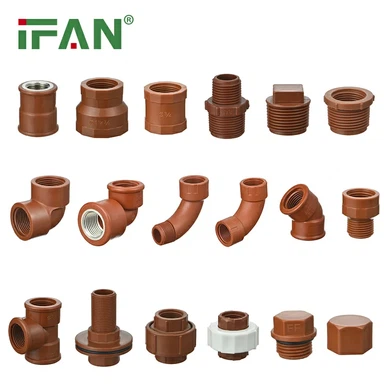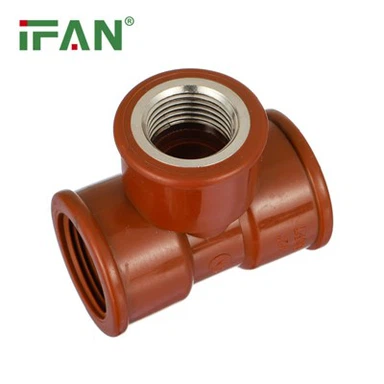


PPH Pipe Fittings Support Corrosive Applications
Type:PPH Pipe Fittings
Brand:IFAN
Connecting method:Thread
Applications:Water Systems
Color:Brown
- Fast Delievery
- Quality Assurance
- 24/7 Customer Service
Product Introduction

| Product Name | PPH Pipe Fittings |
| Size | 1/2"-2" Or Customized |
| Color |
Brown Or Customized |
| Package | IFAN standard packaging |
| Connection | Thread |
| Sample | Sample Free |
| Contact |
Welcome to contact IFAN, we are online 24 hours a day to answer your questions!
PPH Fittings in Corrosive Environments
Corrosive applications place specific demands on piping components because the transported media may gradually attack exposed surfaces. PPH pipe fittings are designed for use with piping systems in which corrosive fluids are part of the normal process. Unlike conventional metal fittings, PPH components are made from polypropylene homopolymer, so their interaction with aggressive process media is based on polymer compatibility rather than metallic corrosion mechanisms.
This characteristic makes PPH fittings suitable for various process environments where acidic, alkaline, saline, or chemically contaminated liquids are conveyed. The fitting material forms the connection between sections of piping while maintaining the intended flow path through the system. Selecting the fitting material according to the actual process conditions is therefore an important part of designing a piping network for corrosive service.
Handling Acidic Process Fluids
Acid-handling systems are among the applications where PPH fittings may be considered. Industrial processes can involve sulfuric acid, hydrochloric acid, nitric acid, or other acidic solutions at different concentrations. When the operating conditions fall within the applicable material specifications, PPH fittings can be incorporated into piping arrangements that transport these fluids.
The suitability of a fitting depends on more than the presence of an acid. Concentration, temperature, contact conditions, and the presence of other substances must be evaluated together. Particularly aggressive acid mixtures may require separate technical verification. For this reason, PPH fittings should be selected using application-specific compatibility information instead of treating all acidic fluids as equivalent.
Use in Alkaline and Caustic Systems
Corrosive service is not limited to acidic liquids. Many industrial systems use alkaline or caustic solutions for processing, cleaning, treatment, and pH control. PPH fittings can be incorporated into piping networks handling suitable alkaline media, providing connections between pipes, valves, tanks, pumps, and other process equipment.
The actual operating environment determines whether a particular PPH fitting is appropriate. A concentrated caustic solution at an elevated temperature presents different conditions from a diluted alkaline solution at ambient temperature. Engineers therefore need to consider the chemical concentration and process temperature together when specifying fittings. This approach helps ensure that the selected PPH material corresponds to the intended corrosive service.
Supporting Chemical Processing Systems
Chemical processing facilities often contain several piping circuits with different process fluids. One section may transport an acidic solution, while another may handle alkaline chemicals, treated water, or process mixtures. PPH fittings can be used in appropriate sections of these systems to create elbows, tees, reducers, couplings, flanges, and other required connection points.
The selection process should begin with the process fluid rather than the fitting shape. Once the material is confirmed as suitable for the intended medium and operating conditions, the required fitting configuration can be determined. This sequence avoids choosing components solely according to dimensions while overlooking the corrosive characteristics of the service.
Applications in Water and Wastewater Treatment
Water and wastewater treatment systems can contain chemically aggressive liquids during neutralization, disinfection, filtration, and other treatment stages. Chemical dosing may introduce acids, alkalis, salts, or treatment agents into different parts of the piping network. PPH fittings can be applied in suitable sections where the process conditions match the material's specified service range.
In these systems, the composition of the liquid may change during different treatment stages. A fitting exposed to untreated water may experience a different environment from one located near a chemical dosing point. Therefore, each section should be assessed according to its actual process conditions. PPH fittings are particularly relevant where the piping design requires non-metallic components for contact with selected treatment chemicals.
Connections Around Chemical Equipment
Corrosive process systems rarely consist of straight pipe runs alone. Fittings are needed wherever the piping changes direction, branches into another line, reduces in diameter, or connects with process equipment. PPH elbows, tees, reducers, unions, and flanged components can therefore form important parts of piping arrangements around chemical tanks, pumps, reactors, scrubbers, and treatment equipment.
These connection points should be specified with the same attention given to the pipe itself. A chemically suitable pipe paired with an incompatible fitting can create a weak point within the process system. Using PPH fittings that correspond to the service conditions helps maintain consistent material selection throughout the connected piping sections.
Considerations for Installation in Corrosive Service
The installation method also needs to match the requirements of the PPH piping system. Depending on the fitting design, connection methods may include heat fusion or mechanical connections. Proper preparation of joining surfaces and correct installation procedures are necessary to establish the intended connection between components.
Corrosive applications also require attention to transitions between different materials. Where PPH piping connects to metallic equipment, valves, instruments, or other materials, the interface should be designed according to the specific process conditions. The chemical environment, connection method, and operating temperature should all be considered when creating these transitions.
Choosing PPH for the Actual Process Conditions
PPH pipe fittings can support corrosive applications when their material characteristics correspond to the fluids and conditions encountered in service. The correct selection process should identify the process chemical, concentration, temperature, pressure, exposure conditions, and any relevant mixture components. Manufacturer technical data should then be used to verify whether the fitting is suitable.
A well-designed corrosive-fluid piping system does not rely on a general assumption that one material is suitable for every chemical. Instead, each application is evaluated according to its specific operating environment. By matching PPH fittings to the appropriate corrosive service, designers can develop piping connections suited to chemical processing, treatment, and other applications where aggressive fluids are routinely handled.


Hot Tags: pph pipe fittings support corrosive applications, China pph pipe fittings support corrosive applications manufacturers, suppliers, factory, PPH Fittings, PPH Pipe Fitting