

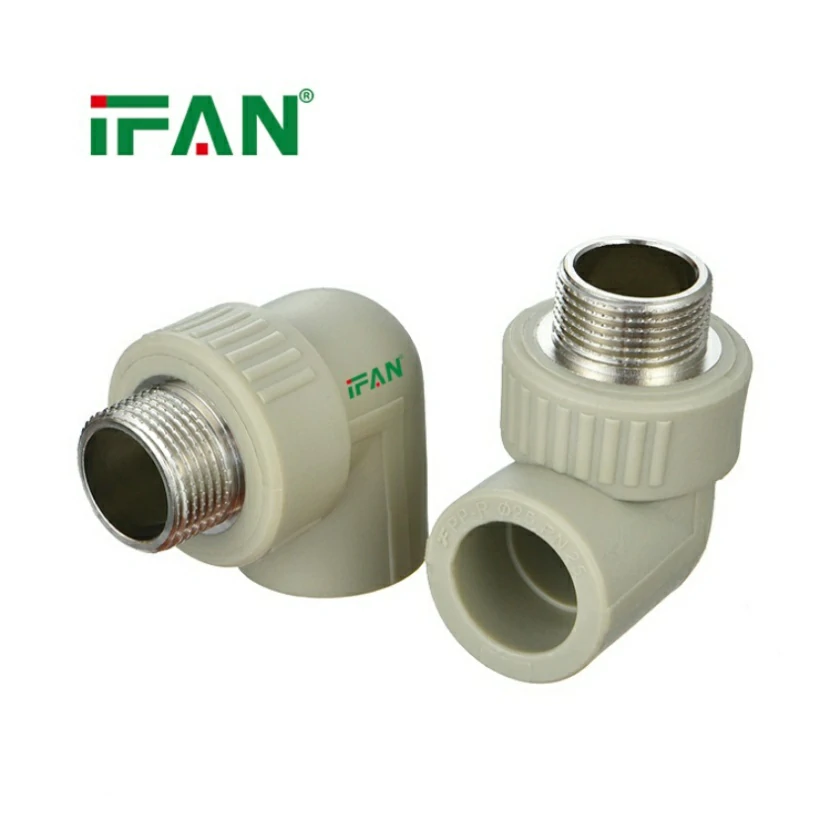


Gray PPR Fittings Ensure Reliable Water Connections
Type:PPR Fittings
Brand: IFAN
Connecting method:Hot Melt
Applications:Water Supply
Color:Gray
- Fast Delievery
- Quality Assurance
- 24/7 Customer Service
Product Introduction

| Product Name | PPR Fitting |
| Size | 20-110mm |
| Color | Gray Color Or Customized |
| Connection | Hot Melt |
| MOQ | 100PCS |
| Sample | Sample Free |
| Contact | Click HERE to contact us now! |
Welcome to contact IFAN, we are online 24 hours a day to answer your questions!
Understanding Grey PPR Fittings
Grey PPR fittings are connection components used with polypropylene random copolymer piping systems to create continuous water pathways. They are commonly manufactured in shapes such as elbows, tees, couplings, reducers, and threaded adapters, allowing installers to construct piping layouts according to the requirements of a building or water system.
Their grey appearance provides a recognizable visual identity while the fitting itself is designed to work with compatible PPR pipes. Proper matching between the fitting dimensions and the pipe specification is essential because a water connection depends on accurate alignment, suitable joint formation, and consistent internal passageways. When these elements are correctly combined, the piping route can carry water through changes in direction, branches, and connection points without unnecessary interruptions.
Heat-Fused Connections
A key feature of PPR installation is heat fusion. During this process, the outside surface of the pipe and the inside socket of the fitting are heated to the specified temperature. Once the surfaces reach the appropriate condition, they are joined and allowed to cool.
The resulting connection forms a continuous material interface rather than relying on conventional mechanical threads at every joint. This method can reduce the number of separate sealing components required within the water pathway. For reliable water connections, the heating time, insertion depth, alignment, and cooling period all need to follow the fitting manufacturer's installation requirements. Incorrect heating or movement during cooling can affect the quality of the joint and may create a potential leakage point.
Maintaining Proper Water Flow
Reliable water connections depend not only on preventing leakage but also on maintaining a suitable flow path. Grey PPR fittings are available in different configurations to guide water around corners, divide supply lines, or connect pipes with different arrangements.
An elbow can redirect the pipeline, while a tee can create a branch for another water outlet. Couplings join pipe sections along the same route, and reducers provide a transition between different pipe sizes. Selecting the correct fitting for each section helps maintain a logical piping layout and prevents unnecessary changes that could interfere with water movement.
The internal geometry of the connection should also be considered during installation. Pipes should be fully inserted to the required depth without excessive deformation. A properly formed joint keeps the water passage aligned with the connected pipe.
Accurate Installation Matters
Even a correctly manufactured fitting cannot provide a dependable water connection if installation procedures are inconsistent. Before assembly, installers should check the pipe and fitting for contamination, damage, or deformation. Clean contact surfaces help ensure that the fusion process can take place correctly.
Alignment is equally important. Pipes and fittings should remain in the intended position while the fused joint cools. Applying force too soon may disturb the connection before the material has sufficiently set. Installers should also avoid twisting the components during assembly unless the manufacturer's instructions specifically permit such movement.
For larger water systems, a planned installation sequence can make it easier to maintain consistent connections throughout the network. Marking insertion depths and checking pipe alignment before heating can provide additional control during the work.
Managing Threaded Transitions
Some water systems require PPR piping to connect with metal valves, faucets, pumps, or other threaded equipment. In these locations, PPR fittings with integrated threaded sections can provide a transition between the fused piping system and external components.
The threaded section must be selected according to the required connection standard and equipment specification. During assembly, excessive tightening should be avoided because unnecessary mechanical force can place stress on the fitting. Thread-sealing practices should also be appropriate for the particular connection.
A well-planned transition keeps the PPR portion of the water system properly connected while allowing compatible equipment to be installed at service points. This is especially important where maintenance components need to be removed or replaced without disturbing the surrounding fused pipework.
Pressure Testing the Water Network
After installation, pressure testing provides an important way to verify the reliability of water connections before the system enters normal service. The completed piping network should be tested according to the applicable project requirements and the fitting manufacturer's instructions.
During testing, installers can inspect joints, transitions, and connection points for visible leakage or unexpected pressure changes. Areas that show irregularities should be examined before the system is put into operation.
Testing should be performed only after the required joints have had adequate time to cool and settle. A systematic inspection of the entire network helps identify connection problems while they are still accessible, rather than after walls, ceilings, or other construction elements have concealed the pipework.
Reliable Connections Through Consistent Practice
Grey PPR fittings support reliable water connections when the components, installation process, and testing procedure are properly coordinated. Correct fitting selection establishes the appropriate route for the water supply, while heat fusion creates the primary joint between compatible PPR components.
Attention to insertion depth, heating conditions, alignment, cooling time, threaded transitions, and pressure testing helps keep each connection consistent. Rather than depending on a single component characteristic, reliable water service comes from controlling every stage of the connection process.
For residential, commercial, and other water distribution systems, this approach provides a clear installation framework. Grey PPR fittings can therefore serve as practical connection points within a properly designed and correctly installed water piping network.


Hot Tags: gray ppr fittings ensure reliable water connections, China gray ppr fittings ensure reliable water connections manufacturers, suppliers, factory, Gray PPR Connector, Plastic Pipe Fitting, Ppr Elbow, PPR Pipe Elbow, Ppr Pipes And Fittings, Water Pipe Fitting


