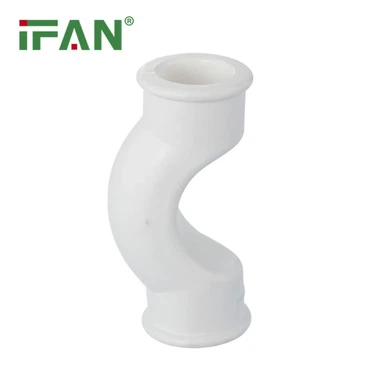


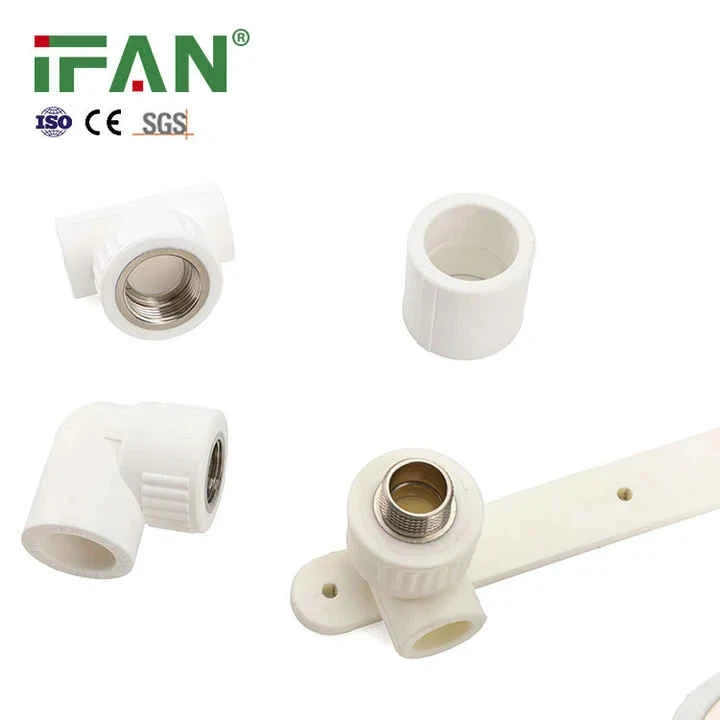

- Fast Delievery
- Quality Assurance
- 24/7 Customer Service
Product Introduction
PPR Fittings High-Temperature Resistance Test Report
Introduction to PPR Material and High-Temperature Performance
Polypropylene Random Copolymer (PPR) is widely used in plumbing and heating systems due to its excellent thermal stability and chemical resistance. This report evaluates the high-temperature performance of PPR fittings under controlled laboratory conditions, assessing their suitability for hot water supply, heating systems, and industrial applications.
PPR pipes are classified into different pressure grades (PN10, PN16, PN20, PN25), with PN20 and PN25 being the most common for high-temperature applications. The material's thermal resistance is primarily determined by its molecular structure, which ensures stability at elevated temperatures while maintaining mechanical strength.
Key thermal properties of PPR include:
Continuous operating temperature range: -20°C to 95°C (short-term peaks up to 110°C)
Thermal expansion coefficient: 0.15 mm/m°C (lower than PVC and PE)
Thermal conductivity: 0.24 W/mK (ensures minimal heat loss)
This study focuses on PPR fittings' behavior under prolonged high-temperature exposure, pressure resistance, and deformation characteristics.
Test Methodology and Experimental Setup
To assess PPR fittings' high-temperature resistance, the following test procedures were conducted in accordance with ISO 15874 and ASTM F2389 standards:
Test Parameters:
Temperature Range: 70°C to 110°C (in 10°C increments)
Pressure Conditions: 1.0 MPa (PN10) to 2.5 MPa (PN25)
Duration: 1,000 hours (long-term stability test)
Sample Size: 50 PPR fittings (randomly selected from different manufacturers)
Testing Equipment:
Thermostatic water bath (precise temperature control ±1°C)
Hydraulic pressure testing machine (measuring burst pressure and creep resistance)
Digital calipers and strain gauges (monitoring dimensional changes)
Microscopic analysis (checking for microcracks and material degradation)
Test Phases:
Short-term burst pressure test (evaluating immediate failure points)
Long-term hydrostatic pressure test (assessing durability under continuous heat)
Thermal cycling test (simulating real-world temperature fluctuations)

Test Results and Performance Analysis
A. Short-Term High-Temperature Resistance (Burst Pressure Test)
At 95°C, PPR fittings maintained structural integrity up to 3.2 MPa (exceeding PN25 rating).
At 110°C, the burst pressure dropped to 2.0 MPa, indicating a 37% reduction compared to room temperature performance.
No leaks or joint failures were observed below 90°C, confirming reliability for standard hot water systems.
B. Long-Term Hydrostatic Pressure Test (1,000 Hours at 80°C)
PPR fittings under 1.6 MPa (PN16) showed <0.5% deformation after 1,000 hours.
No visible cracks or material degradation were detected via microscopic analysis.
Conclusion: PPR maintains long-term stability at 80°C, making it suitable for central heating and industrial applications.
C. Thermal Cycling Test (20°C ↔ 95°C, 500 cycles)
After 500 cycles, no joint failures occurred in heat-fused connections.
Linear expansion remained within 0.2 mm/m, confirming dimensional stability.
O-ring seals in threaded fittings showed minor wear, suggesting reinforced elastomers may be needed for extreme conditions.
Comparative Analysis with Alternative Materials
| Property | PPR | PVC | Copper | PEX |
|---|---|---|---|---|
| Max Temp (°C) | 95 | 60 | 250 | 90 |
| Thermal Expansion (mm/m°C) | 0.15 | 0.08 | 0.017 | 0.2 |
| Pressure Retention at 80°C | Excellent | Poor | Excellent | Good |
| Corrosion Resistance | High | Medium | Low (scaling) | High |
Key Findings:
PPR outperforms PVC in high-temperature applications (PVC softens above 60°C).
While copper has higher thermal tolerance, it suffers from scaling and higher installation costs.
PEX is flexible but has higher expansion rates, making PPR more stable for fixed installations.

Recommendations for High-Temperature Applications
Based on test results, PPR fittings are highly reliable for:
✅ Domestic hot water systems (up to 80°C)
✅ Underfloor heating (40-60°C)
✅ Industrial process piping (with PN25 rating for 95°C)
Best Practices for Installation:
Avoid direct sunlight exposure (UV degradation reduces lifespan).
Use expansion compensators in long pipe runs to manage thermal movement.
Ensure proper fusion welding (260°C for 5-10 seconds) to prevent joint failures.
For extreme conditions (above 95°C), consider reinforced PPR or hybrid systems.
Future Research Directions:
Nanocomposite PPR for enhanced thermal stability up to 120°C.
Smart PPR pipes with embedded temperature sensors for real-time monitoring.
Conclusion: PPR as a Reliable High-Temperature Solution
This study confirms that PPR fittings meet industry standards for high-temperature applications, offering superior durability, pressure resistance, and thermal stability compared to many alternatives. While they are not suitable for steam systems (above 110°C), their performance in hot water and heating systems remains unmatched in cost-effectiveness and longevity.
For engineers and contractors, PPR remains the optimal choice for sustainable, high-performance piping in residential, commercial, and industrial settings. Future material enhancements may further expand its applicability in extreme environments.
Hot Tags: ifan white ppr fittings, China ifan white ppr fittings manufacturers, suppliers, factory, PPR Water Pipe, Plastic Ppr Pipe Fittings, Brass Pex Manifold, Check Valve Plumbing, PPSU Elbow PEX Expansion Fitting, Pex Pipe Expansion Fitting