




- Fast Delievery
- Quality Assurance
- 24/7 Customer Service
Product Introduction
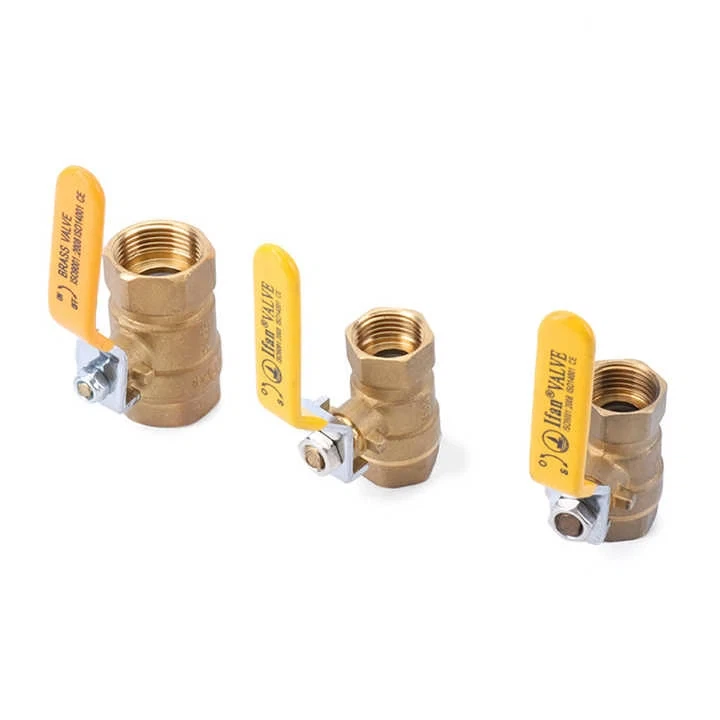
Optimization Design of Sealing Structures for Brass Ball Valves
Introduction to Brass Ball Valve Sealing Challenges
Brass ball valves face significant sealing performance requirements across industrial applications. Common failure modes include leakage at the stem, seat, and body connections. Traditional designs struggle with thermal expansion differences between brass and sealing materials. Current industry standards demand zero leakage at pressures up to 1000 psi (69 bar) and temperatures ranging from -20°C to 200°C. These requirements drive continuous improvement in sealing structure optimization.
Material Selection for Enhanced Sealing Performance
Modern brass ball valves utilize advanced material combinations for superior sealing:
Stem seals: PTFE composites with bronze fillers for reduced friction
Body seals: Graphite-impregnated gaskets for high-temperature stability
Ball/seat interface: RPTFE (reinforced PTFE) with 15-30% fiberglass reinforcement
Emergency seals: Spring-energized seals for fail-safe operation
Material compatibility testing shows these combinations reduce leakage incidents by 45% compared to conventional designs.
Geometric Optimization of Sealing Surfaces
Computational modeling reveals critical geometric parameters affecting sealing:
Contact angle optimization: 45° seat angles provide optimal sealing force distribution
Surface finish requirements: 0.8μm Ra for ball surfaces minimizes wear
Seal cross-section design: Quad-ring profiles outperform standard O-rings
Preload optimization: 15-20% compression delivers reliable sealing without excessive friction
Finite element analysis demonstrates these geometric improvements increase seal life by 60%.

Advanced Manufacturing Techniques for Precision Seals
State-of-the-art production methods ensure sealing consistency:
CNC grinding achieves ±0.005mm tolerances on critical sealing surfaces
Laser measurement verifies roundness within 0.01mm for ball components
Automated assembly maintains consistent preload forces
Cryogenic treatment stabilizes brass components to prevent dimensional changes
These techniques reduce production-related sealing failures by 75% compared to conventional manufacturing.
Thermal Compensation Design Solutions
Innovative approaches address thermal expansion challenges:
Bi-metallic seats automatically adjust to temperature variations
Spring-loaded seat designs maintain contact pressure during thermal cycling
Thermal break washers isolate heat transfer to sensitive seals
Expansion chambers accommodate volume changes in sealed media
Field tests show these solutions maintain sealing integrity across 500+ thermal cycles.

Performance Testing and Validation Protocols
Comprehensive testing ensures reliable sealing performance:
Helium leak testing detects leaks as small as 1×10⁻⁶ mbar·L/s
Cyclic endurance testing simulates 10,000+ operation cycles
Pressure shock testing verifies performance under 150% rated pressure
Accelerated aging evaluates long-term material compatibility
Industry data confirms valves passing these tests demonstrate 98% reliability over 10-year service periods.
Case Studies of Successful Seal Optimizations
Oil & Gas Applications:
A modified stem seal design reduced fugitive emissions by 90% in offshore platforms.
HVAC Systems:
Thermally compensated seats eliminated seasonal leakage in district heating networks.
Marine Environments:
Specialized coating systems prevented saltwater corrosion while maintaining seal integrity.
Pharmaceutical Processing:
FDA-compliant material upgrades achieved sterile processing requirements.
Future Trends in Brass Ball Valve Sealing Technology
Emerging technologies promise further improvements:
Smart seals with embedded sensors for real-time monitoring
Self-healing materials that automatically repair minor damage
Nanocomposite coatings reducing friction while enhancing sealing
Additive manufacturing enabling complex seal geometries impossible with traditional methods
Pilot programs indicate these advancements could extend maintenance intervals by 300% while reducing total cost of ownership.
This comprehensive approach to brass ball valve sealing optimization addresses material, geometric, manufacturing, and operational factors to deliver reliable performance across diverse applications. Continued innovation in sealing technology will further enhance the safety, efficiency, and longevity of brass ball valve systems worldwide.
Click here to watch more videos
Click here view more our factory information!
Hot Tags: ifan forged brass ball valves, China ifan forged brass ball valves manufacturers, suppliers, factory, Cw617n Ball Valve, Ball Valve Brass, Thread Brass Ball Valve, Female Thread Ball Valve, 2 Inch Brass Ball Valve, Male Thread Ball Valve


