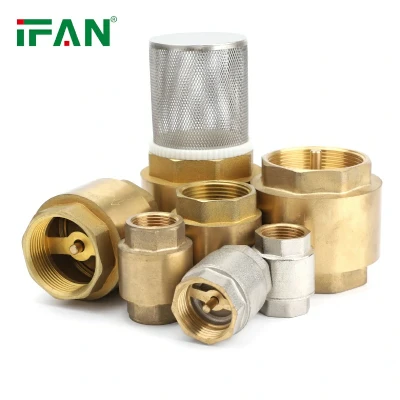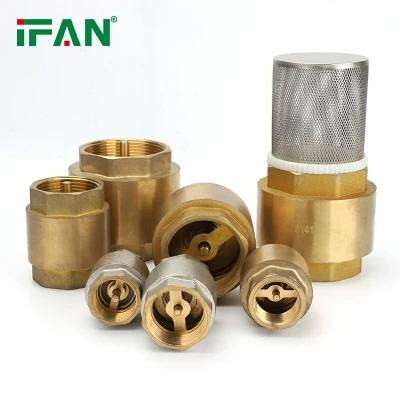


Non Return Valve Improves Fire Protection Systems
Brand: IFAN
Materials:Brass
Size:1/2"-4"
Sample: Free Sample
Service: OEM&ODM
- Fast Delievery
- Quality Assurance
- 24/7 Customer Service
Product Introduction

| Product Name | Non Return Valve |
| Color | Brass or Sliver Color |
| Size | 1/2''-2'' |
| Brand | IFAN or Customized |
| OEM |
Support |
| Sample | Free |
| Experience | 30+Years |
Welcome to contact IFAN, we are online 24 hours a day to answer your questions!

Maintaining the Correct Water Flow in Fire Protection Networks
A fire protection system must deliver water or another approved extinguishing medium to the required location when an emergency occurs. Behind the visible sprinklers, hydrants, and hose connections, a network of pipes, pumps, storage tanks, and control devices works together to establish the necessary flow and pressure. Each component must perform according to the system's design, particularly when demand changes suddenly during a fire.
A non return valve, commonly known as a check valve, helps control the direction of water movement within this network. It allows water to pass toward designated discharge points while restricting reverse flow when pressure conditions change. This function is especially relevant in systems that use fire pumps, elevated storage tanks, or connections between different sections of a distribution network.
The valve does not independently guarantee fire protection, but it plays a specific role in maintaining the intended hydraulic arrangement. Its selection, installation, and testing must follow the applicable fire protection standards and the approved system design. Understanding how the valve operates helps engineers integrate it correctly into a fire protection installation.
Supporting Fire Pump Discharge Systems
Fire pumps are designed to supply the flow and pressure required by a fire protection network when the normal water supply cannot meet demand. During operation, a pump raises the pressure of the water and sends it through the discharge piping toward sprinkler systems, standpipes, hydrants, or other designated outlets.
When the pump stops, pressure in the discharge line may cause water to move backward toward the pump. This reverse movement can affect the pump's operating condition and interfere with the intended arrangement of the discharge system. In certain installations, it may also contribute to reverse rotation or unwanted pressure changes.
A properly selected non return valve installed in the appropriate discharge location helps restrict this backward movement. The valve closes automatically as forward pressure decreases and reverse pressure develops. This allows the system to maintain its intended flow direction without requiring an operator to close the valve manually during every pump shutdown.
Fire pump installations must follow the applicable codes and manufacturer requirements. Valve location, pressure rating, connection arrangement, and testing procedures should be determined as part of the complete fire pump design rather than through isolated component selection.
Maintaining Pressure Separation Between System Sections
Large buildings and industrial facilities may contain several fire protection zones supplied by different pumps, risers, or water sources. These arrangements allow water to reach areas with different elevations and hydraulic requirements. However, pressure differences between connected sections can cause water to move in an unintended direction when operating conditions change.
A non return valve helps restrict reverse flow between selected sections of the network. For example, in a properly designed arrangement involving separate pumping branches, check valves can limit water from passing backward through an inactive pump or supply connection when another part of the system remains pressurized.
This directional control must be coordinated with other equipment, including isolation valves, pressure-regulating devices, and supervisory controls. A check valve does not independently regulate pressure or provide positive isolation for maintenance work.
Engineers should evaluate the full hydraulic configuration, including the static pressure created by elevation, the expected demand at fire protection outlets, and the interaction between multiple supply sources. Correct valve placement helps maintain the intended relationship between the different sections without introducing unnecessary restrictions to emergency water delivery.
Inspection, Testing, and System Readiness
Fire protection equipment must be inspected and tested according to applicable codes, standards, and manufacturer instructions. A non return valve should be examined for leakage, corrosion, physical damage, and signs of restricted movement. Internal deposits or worn seating surfaces may prevent complete closure and allow reverse flow.
Testing should verify the valve's operation without compromising the readiness of the fire protection system. Procedures may differ according to the valve's location and the overall system configuration. Work must be coordinated so that any temporary impairment is managed under the facility's fire protection procedures.
Maintenance personnel should also review pressure readings and investigate unusual changes that may indicate a valve problem or another hydraulic issue. Documented inspections make it easier to identify recurring defects and confirm that corrective work has been completed.


Hot Tags: non return valve improves fire protection systems, China non return valve improves fire protection systems manufacturers, suppliers, factory, Brass Non Return Valve