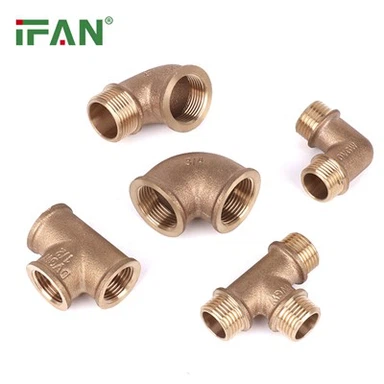


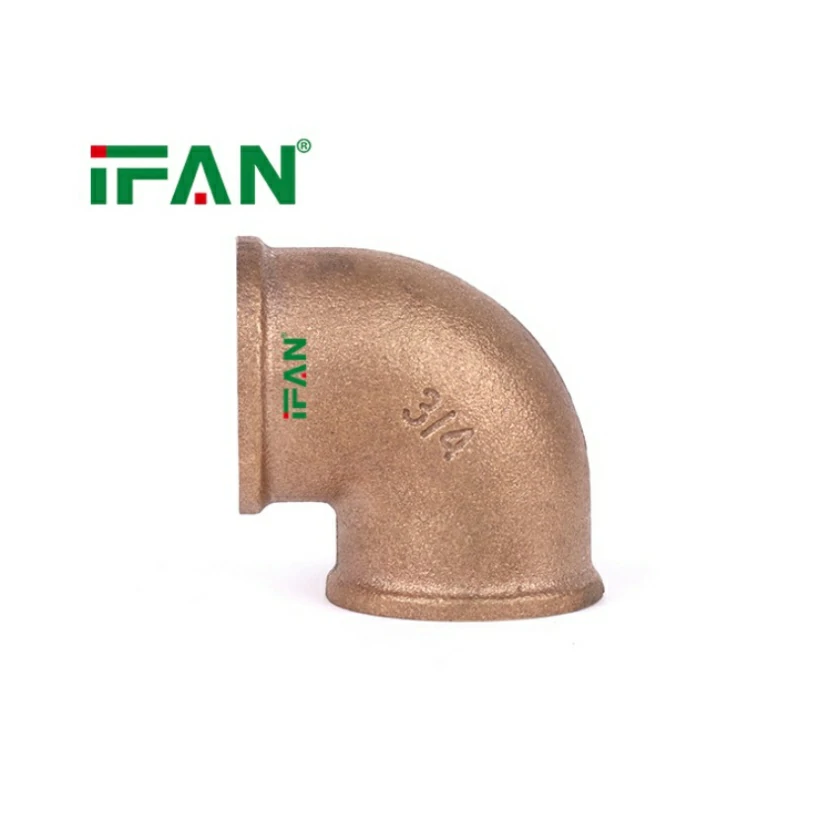


Bronze Threaded Fittings Resist Corrosion Effectively
Type:Stainless steel pipe fittings
Brand:IFAN
Connecting method:Thread
Applications:Water Systems
Color:Sliver
- Fast Delievery
- Quality Assurance
- 24/7 Customer Service
Product Introduction


| Product Name | IFAN Bronze Threaded Fittings |
| Size | 1/2"-1" Or Customized |
| Color |
Yellow Or Customized |
| Package | IFAN standard packaging |
| Features | Durable |
| Sample | Sample Free |
| Contact | Click HERE to contact us now! |
Welcome to contact IFAN, we are online 24 hours a day to answer your questions!
Understanding Bronze Corrosion Resistance
Bronze threaded fittings are commonly selected for plumbing and fluid-handling systems where resistance to corrosion is an important material consideration. Bronze is a copper-based alloy, typically containing tin and other alloying elements, and its corrosion behavior differs from that of ordinary iron or steel.
When exposed to water and air, bronze does not normally develop the same type of red-brown iron rust associated with ferrous metals. Instead, the surface can undergo a slower chemical reaction that may produce a thin patina. This surface change is not automatically a sign of destructive corrosion. In many environments, the resulting surface layer can act as a barrier that limits further interaction between the underlying metal and its surroundings.
The actual corrosion behavior depends on alloy composition, water chemistry, temperature, flow conditions, and contact with other metals. Therefore, bronze should always be selected according to the specific service environment.
Copper-Based Alloy Structure
The corrosion resistance of bronze begins with its copper-based composition. Copper and many copper alloys have relatively stable behavior in ordinary water environments. Bronze combines copper with alloying elements that modify its mechanical and chemical characteristics while maintaining a predominantly copper-based structure.
When the fitting surface contacts water, the material does not undergo the rapid rusting process associated with exposed iron. Instead, the surface chemistry develops differently. Depending on the environment, a thin oxide or patina layer may gradually form.
This distinction is important when evaluating threaded fittings. Corrosion resistance is not simply a matter of whether the metal changes color. A surface may develop a natural patina while the underlying fitting remains chemically stable enough for its intended plumbing application.
Resistance to Ordinary Water Exposure
Bronze threaded fittings are often used in water systems because their material composition is compatible with many common plumbing environments. Normal exposure to treated water does not produce conventional iron rust on the bronze surface.
Water chemistry still matters. Dissolved minerals, oxygen content, pH, temperature, and treatment chemicals can influence the interaction between the fluid and the fitting. A bronze alloy that performs appropriately in one water system may require additional evaluation in a more aggressive environment.
For standard plumbing applications, the important point is that bronze does not rely on a painted surface or external coating to avoid ordinary iron rust. Its corrosion behavior comes primarily from the alloy itself and the chemical stability of the copper-based material.
The Role of Surface Patina
A bronze fitting may gradually develop a darker or greenish surface under certain environmental conditions. This appearance is generally associated with patina formation. Patina is a surface reaction involving the metal and substances in the surrounding environment.
The presence of patina should not automatically be interpreted as failure. In many copper-based materials, the altered surface can reduce the rate of further chemical reaction by forming a relatively stable layer.
However, not every surface deposit is necessarily protective. Heavy mineral accumulation, chemical deposits, or localized attack should be evaluated separately. If a fitting is exposed to unusual water chemistry, inspection should consider both the appearance of the surface and the actual condition of the metal.
Threaded Areas and Corrosion Control
The threaded portion of a bronze fitting requires particular attention because it creates direct mechanical contact with another component. Threads must remain properly formed so that the connection can be assembled and sealed as intended.
When bronze fittings are connected to compatible components, the alloy provides corrosion resistance at the threaded interface as well as on the external surface. Appropriate thread sealant should be selected according to the fluid, pressure, temperature, and connection requirements.
The sealing material and fitting should also be chemically compatible. An unsuitable sealant or contaminant can introduce problems that are unrelated to the natural corrosion resistance of bronze itself.
Proper thread preparation is therefore part of maintaining a controlled connection environment.
Water Chemistry Still Matters
No metal alloy is immune to every form of chemical attack. Bronze threaded fittings should be evaluated against the actual water or fluid being transported. Highly acidic, alkaline, saline, or chemically treated fluids may create conditions that require a more detailed material compatibility assessment.
Flow conditions can also influence corrosion behavior. Extremely high flow velocities, turbulence, or abrasive particles suspended in the water may affect the internal surface differently from ordinary low-velocity service.
For drinking-water and general plumbing installations, the applicable bronze alloy should meet the relevant material and regulatory requirements. Manufacturers' technical data should be consulted when the system involves unusual temperatures, chemical concentrations, or operating conditions.
Interaction With Other Metals
A plumbing system may contain bronze, copper, brass, stainless steel, galvanized steel, and other metallic components. When different metals are connected while exposed to an electrically conductive liquid, galvanic corrosion can occur under certain conditions.
The possibility of galvanic interaction depends on the metal combination, water chemistry, electrical contact, and relative surface areas. Bronze itself may be corrosion-resistant, but pairing it with a significantly different metal can change the electrochemical environment at the connection.
For this reason, material selection should consider the complete assembly rather than evaluating the bronze fitting independently. Where necessary, approved isolation components or appropriate transition methods can be used to control unwanted galvanic interaction.
Installation Helps Preserve Corrosion Resistance
Correct installation does not create bronze's inherent corrosion resistance, but it helps prevent external conditions from undermining the fitting. Threads should be clean before assembly, and the fitting should not be contaminated with unsuitable chemicals or materials.
Excessive tightening should also be avoided. The fitting should be assembled according to the manufacturer's instructions and the applicable plumbing requirements. Mechanical damage to the threads or body can create local areas where contaminants accumulate or where the connection no longer performs as intended.
Once installed, fittings should remain accessible where inspection is required. Checking threaded connections and surrounding components can help identify unusual deposits, discoloration, or signs of localized corrosion at an early stage.
Bronze Provides Controlled Corrosion Behavior
Bronze threaded fittings resist corrosion effectively because their copper-based alloy does not undergo the conventional rusting process associated with iron and ordinary steel. Under suitable water-service conditions, the surface can develop a relatively stable patina rather than rapidly forming destructive iron oxide.
The degree of corrosion resistance still depends on the specific alloy and operating environment. Water chemistry, temperature, flow velocity, threaded connections, sealants, and contact with other metals all deserve consideration when selecting bronze fittings.


Hot Tags: bronze threaded fittings resist corrosion effectively, China bronze threaded fittings resist corrosion effectively manufacturers, suppliers, factory, Bronze Fitting, Bronze Pipe Fitting, Bronze Plumbing Fitting