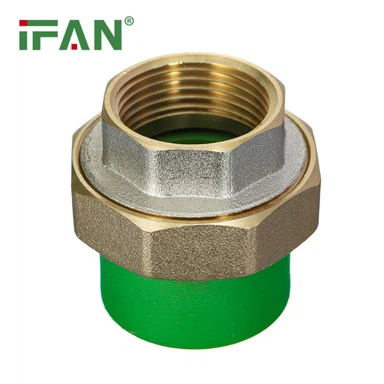


HDPE Butt Fusion Fittings Ensure Leakproof Connections
Brand: IFAN
Materials:PE
Size:63-400mm
Sample: Free Sample
Service: OEM&ODM
- Fast Delievery
- Quality Assurance
- 24/7 Customer Service
Product Introduction
| Product Name | HDPE Butt Fusion Fittings |
| Size | 63-400mm |
| Color | Black Color Or Customized |
| Connection | Welding |
| MOQ | 100PCS |
| Sample | Sample Free |
| Contact |
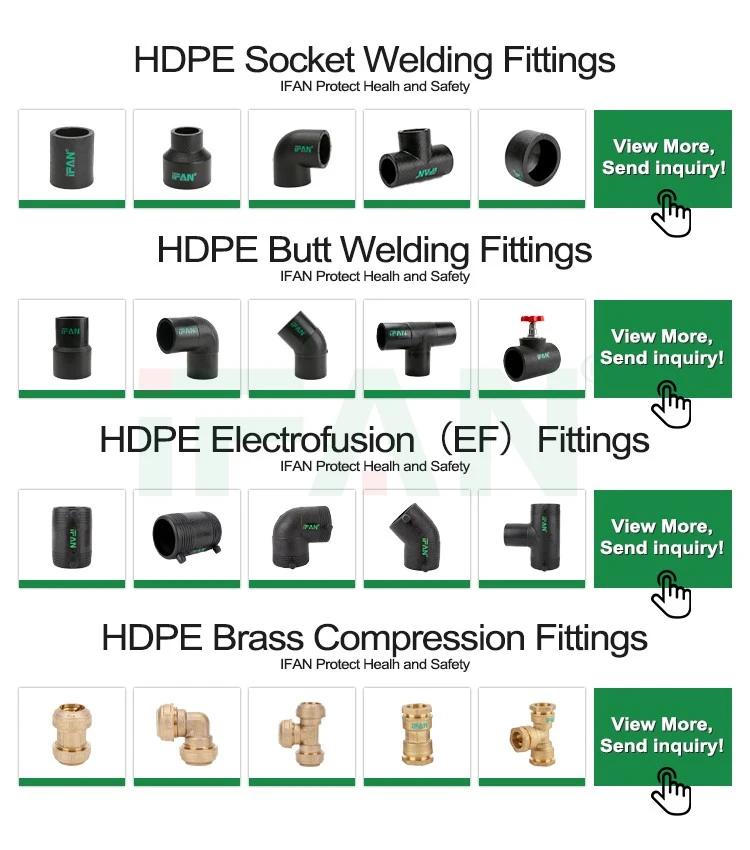
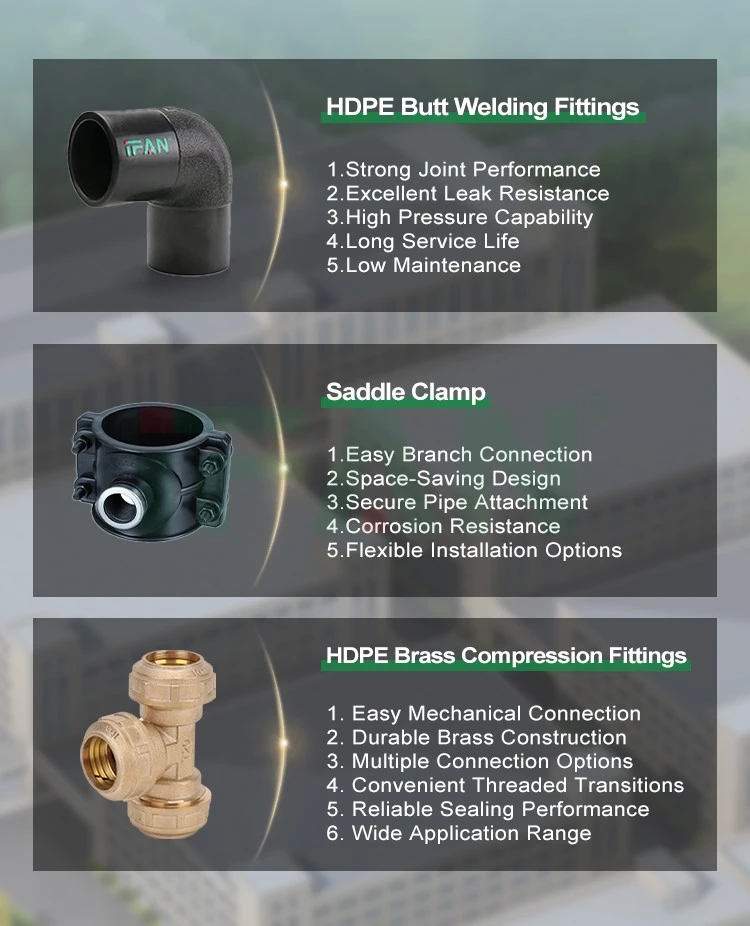
Understanding the Role of HDPE Butt Fusion Fittings
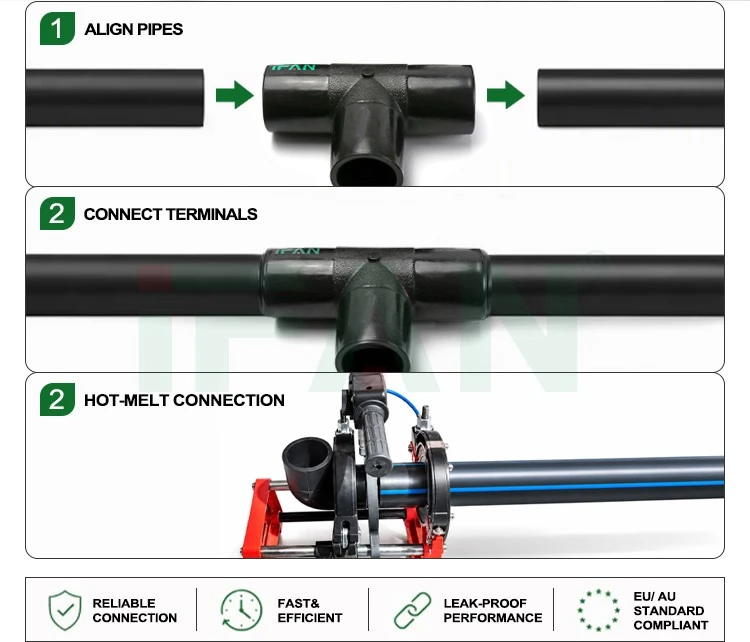
HDPE butt fusion fittings are used to connect high-density polyethylene pipes in systems that require controlled fluid transfer. These fittings are joined to compatible pipes through a heat fusion process, in which the connecting surfaces are heated and pressed together under specified conditions. When the procedure is performed correctly, the pipe and fitting form a continuous joint without relying on separate mechanical seals, threaded connections, or adhesives.
Ensuring leak-proof connections requires more than selecting the correct fitting. Pipe compatibility, surface preparation, heating conditions, alignment, joining pressure, and cooling time all influence the final joint. Each stage must be managed carefully because even a small deviation can create an area where fluid may escape. Understanding these factors helps installation teams establish consistent joining procedures and maintain control over connection quality.
Preparing Fusion Surfaces Correctly
Surface preparation is a critical stage in creating a leak-proof HDPE connection. Before fusion, the pipe ends and fitting surfaces must be free from dirt, moisture, grease, and other contaminants that may interfere with molecular bonding. Even a thin layer of foreign material can prevent the heated polyethylene surfaces from joining evenly.
Pipe ends should be cut squarely so that the mating surfaces meet across their full cross-section. Where required by the approved procedure, the ends must be faced with suitable equipment to remove oxidation and establish clean, parallel surfaces. After facing, the prepared areas should be protected from handling and environmental contamination. Installers should avoid touching the fusion surfaces with bare hands or placing them on dirty work surfaces. If contamination occurs, the affected components must be cleaned or prepared again according to the applicable instructions.
Controlling Temperature and Heating Time
Correct temperature control is essential because polyethylene must reach an appropriate molten condition before the pipe and fitting can be joined. If the heating temperature is too low, the surfaces may not soften sufficiently to form an effective bond. Excessive temperature or inappropriate heating time can also affect the material and create irregularities within the joint.
The heating tool should be clean, properly maintained, and operated within the temperature range specified by the fitting manufacturer or approved fusion procedure. Installers must allow the equipment to reach its required operating temperature before starting the joining cycle. Heating time should correspond to the pipe dimensions, wall thickness, material requirements, and prescribed process parameters.
Environmental conditions should also be considered. Wind, low ambient temperatures, rain, and other site conditions can influence heat transfer or introduce contamination. Where necessary, protective enclosures should be used to maintain suitable working conditions throughout the fusion process.
Maintaining Alignment and Applying Joining Pressure
Accurate alignment helps ensure that the heated surfaces contact one another evenly. During butt fusion, the pipe and fitting should be secured in the appropriate machine clamps, with their centerlines aligned before the joining stage begins. Misalignment can produce uneven bead formation, reduce the effective bonding area, and create localized weaknesses that may become leakage paths under operating pressure.
After heating, the components must be brought together promptly in accordance with the approved fusion sequence. The specified joining force should be applied in a controlled manner rather than through sudden or excessive movement. Insufficient pressure may leave incomplete contact between the molten surfaces, while excessive or incorrectly applied force can displace material from the joint interface.
Installers should follow the machine manufacturer's instructions for pressure settings, movement, and transition time. These parameters must be controlled as a coordinated process, since correct heating alone cannot compensate for poor alignment or improper joining pressure.
Verifying Leak Tightness
After cooling, each connection should undergo a visual inspection in accordance with the relevant installation standard. The external fusion bead should be examined for consistency, symmetry, and signs of contamination, excessive displacement, or incomplete joining. Misalignment, abnormal bead formation, or visible defects should be assessed by qualified personnel before the pipeline proceeds to testing.



Hot Tags: hdpe butt fusion fittings ensure leakproof connections, China hdpe butt fusion fittings ensure leakproof connections manufacturers, suppliers, factory, Compression HDPE Pipe Fittings, HDPE Elbow 90, HDPE Pipe Compression Fittings, HDPE Pipe Fitting, HDPE Water Pipe Fittings, PE Pipe
No Information