

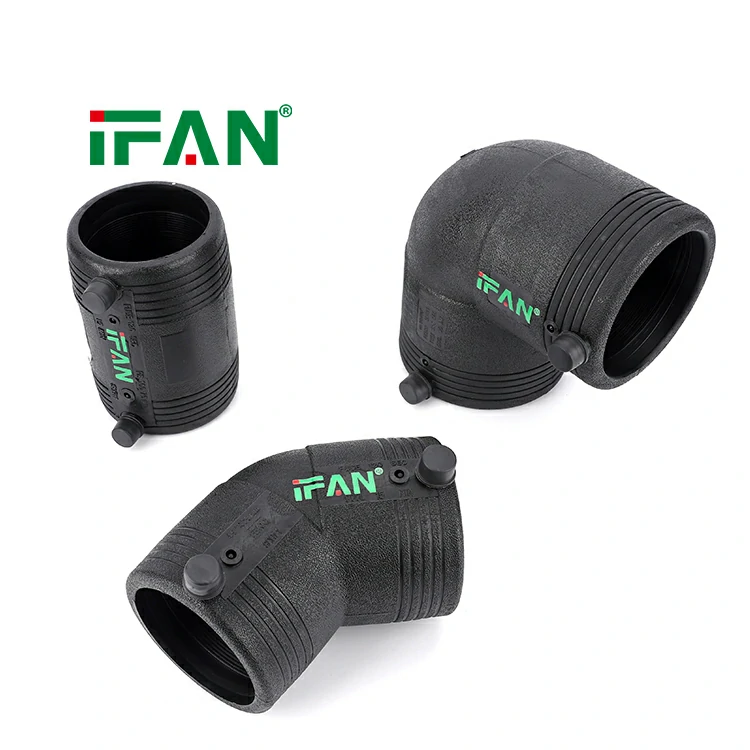

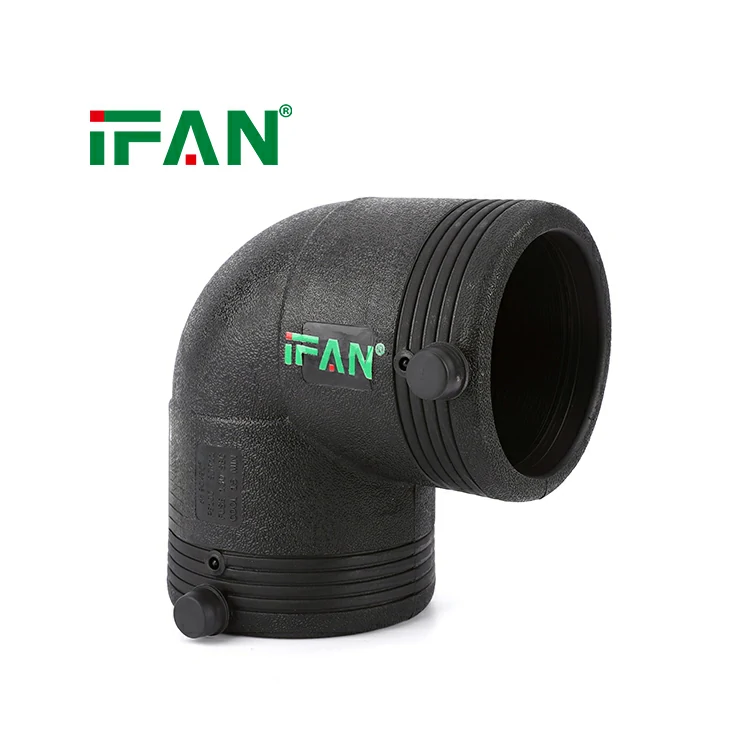
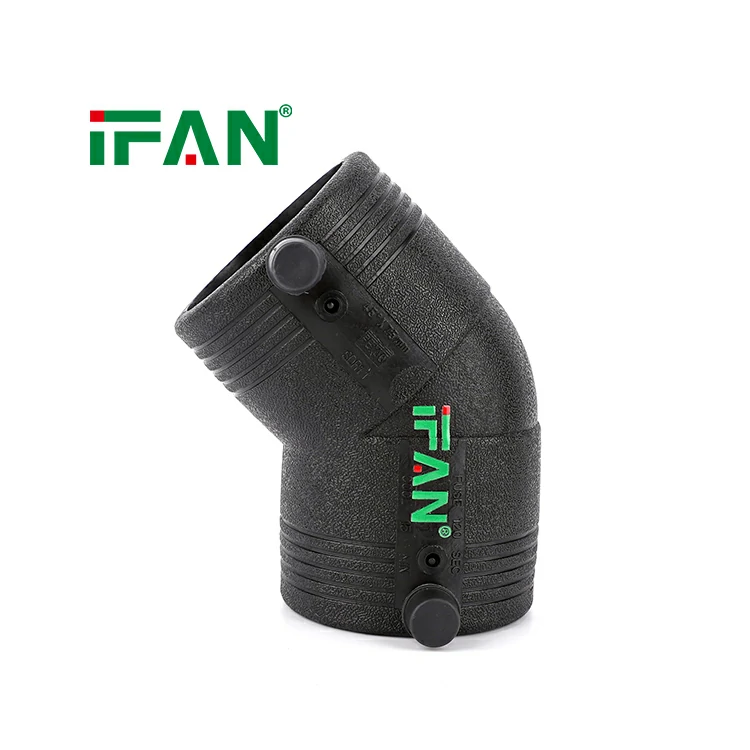
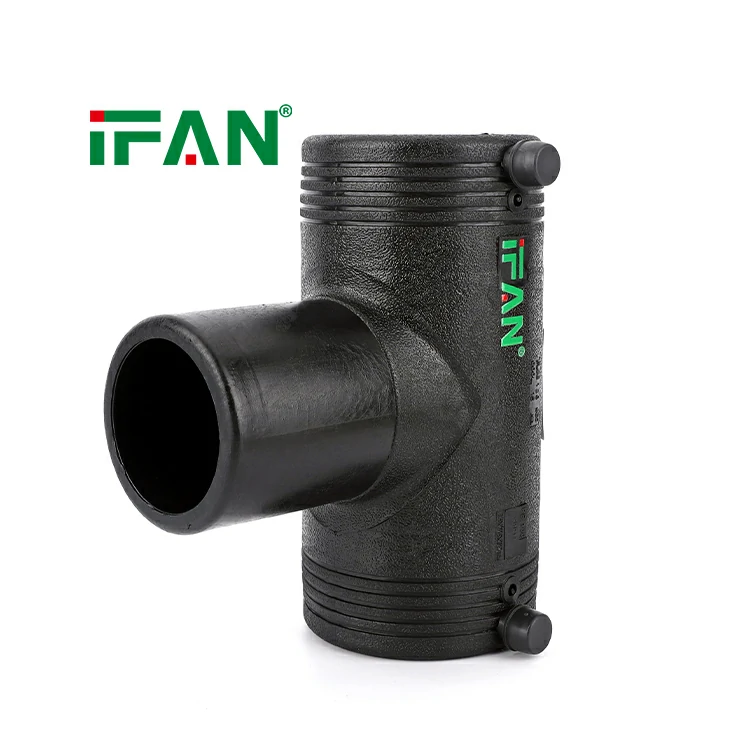
Reliable Pipeline Connections With HDPE Electrofusion Fitting
Brand: IFAN
Materials:PE
Size:50-630mm
Sample: Free Sample
Service: OEM&ODM
- Fast Delievery
- Quality Assurance
- 24/7 Customer Service
Product Introduction
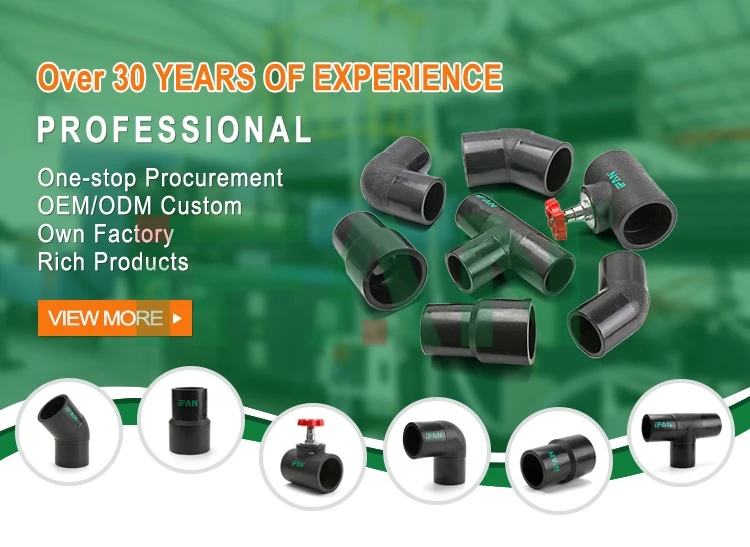
| Product Name | HDPE Electrofusion Fitting |
| Size | 63-400mm |
| Color | Black Color Or Customized |
| Connection | Electrofusion |
| MOQ | 100PCS |
| Sample | Sample Free |
| Contact |
Understanding HDPE Electrofusion Fittings
Reliable pipeline connections are essential in water supply networks, gas distribution systems, industrial installations, and underground utility projects. Every joint must be formed according to the pipeline's material specifications and operating requirements to control leakage and maintain the intended system pressure. HDPE electrofusion fittings provide a specialized joining method for compatible high-density polyethylene pipes, using electrical resistance heating to fuse the contacting surfaces.
An electrofusion fitting typically contains an embedded resistance wire within its joining zone. When connected to a compatible electrofusion control unit, the wire generates heat that softens the surrounding polyethylene. Under the prescribed conditions, the pipe's outer surface and the fitting's inner surface fuse together as the material cools.
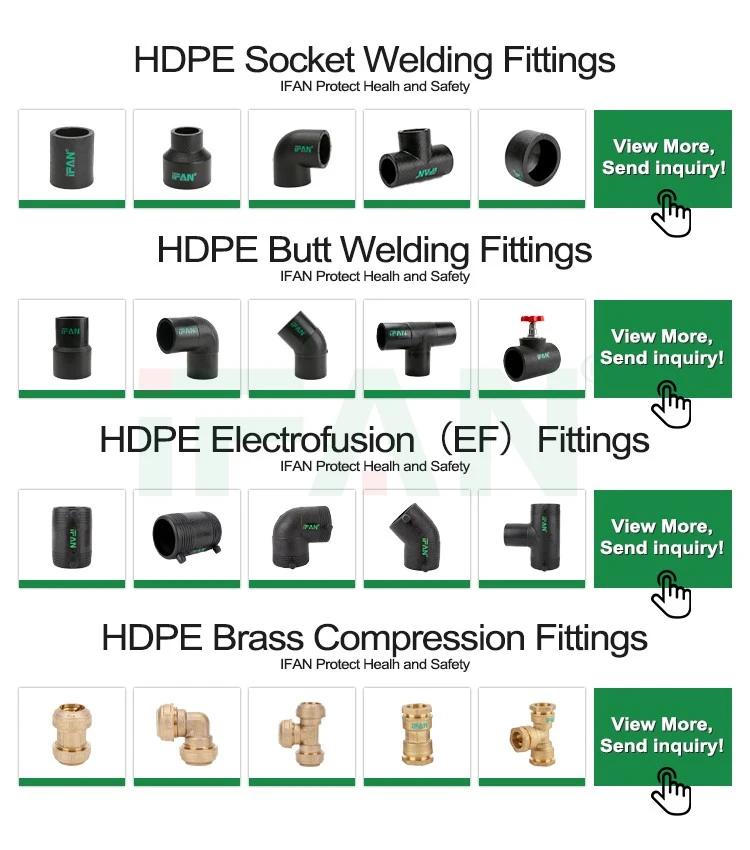
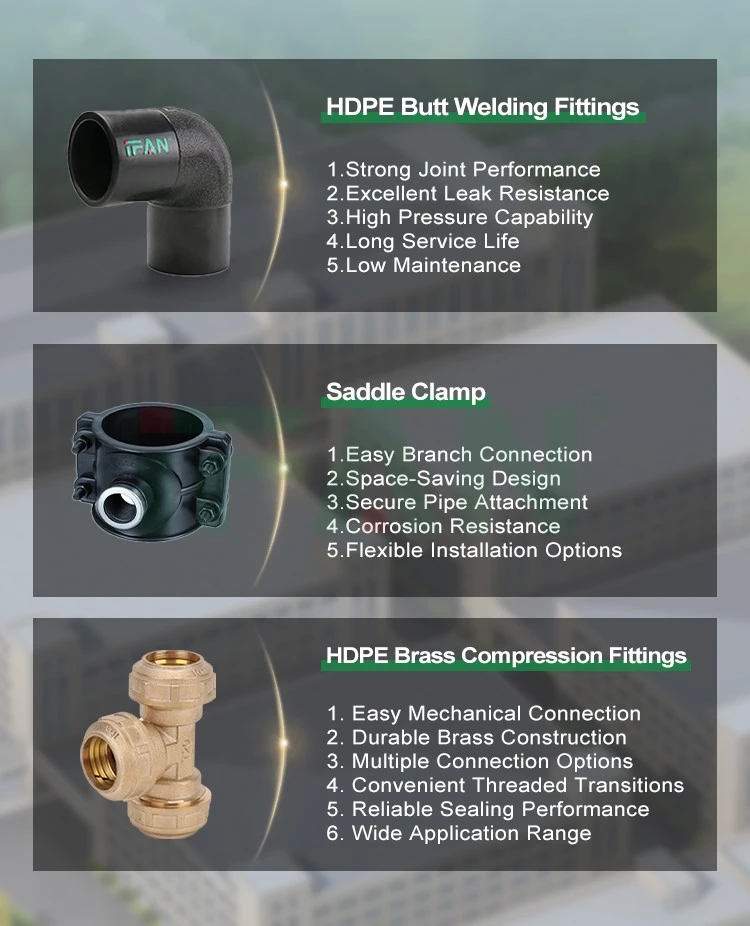
Common electrofusion products include couplers, elbows, tees, reducers, and tapping fittings. Each configuration serves a specific connection purpose, from joining straight pipe sections to creating branches or connecting service lines. Selecting the correct fitting requires checking pipe dimensions, material compatibility, pressure classification, and the manufacturer's installation requirements.
How Electrofusion Creates a Reliable Joint
The electrofusion process relies on controlled electrical energy rather than an external heating plate. After the pipe and fitting have been prepared and positioned, the control unit supplies the specified energy to the resistance wire inside the fitting. The resulting heat softens the adjoining polyethylene surfaces and allows fusion to develop across the designated interface.
The quality of the joint depends on several closely related factors. Pipe preparation must expose a clean, suitable surface, while the fitting must be positioned correctly over the joining area. The electrical parameters, ambient conditions, and cooling period must remain consistent with the approved procedure.
If the pipe surface is not prepared correctly, contamination or an unsuitable surface layer may interfere with fusion. Incorrect alignment can also affect the contact between the components. For this reason, operators should not assume that a fitting has formed an acceptable joint simply because the control unit completes its heating cycle.
Reliable connections require correct preparation, compatible materials, accurate positioning, and adherence to the manufacturer's specified fusion parameters.
Pipe Preparation and Surface Cleaning
Surface preparation is one of the most important stages in electrofusion installation. The outside surface of the pipe must be prepared according to the fitting manufacturer's instructions, which commonly require controlled scraping of the designated fusion zone. This removes the oxidized surface layer that can interfere with molecular bonding.
After scraping, the prepared area must remain clean and protected from contamination. Dust, oil, moisture, fingerprints, and other foreign substances may compromise the joining interface. Suitable cleaning products and procedures should be used where specified, and the prepared surface should not be touched unnecessarily.
The pipe end must also be cut squarely and checked for deformation or damage. Out-of-round pipe may require an approved rounding tool to establish the correct fit within the fitting. The required insertion depth should be marked clearly so that the pipe can be positioned accurately.
These preparation steps are particularly important for underground installations, where individual joints may become difficult to access after backfilling. Completing the preparation correctly before energizing the fitting helps establish the conditions required for a controlled fusion process.
Distinguishing Electrofusion from Socket Welding
HDPE electrofusion fittings and HDPE socket welding fittings may look similar in some applications, but they use different heating methods and require different installation procedures.
Electrofusion fittings contain an embedded resistance wire that generates heat when connected to a compatible control unit. The pipe is inserted into the fitting's designated fusion zone, and electrical energy is applied according to the fitting's specified parameters. The fitting itself controls the location of the heating element.
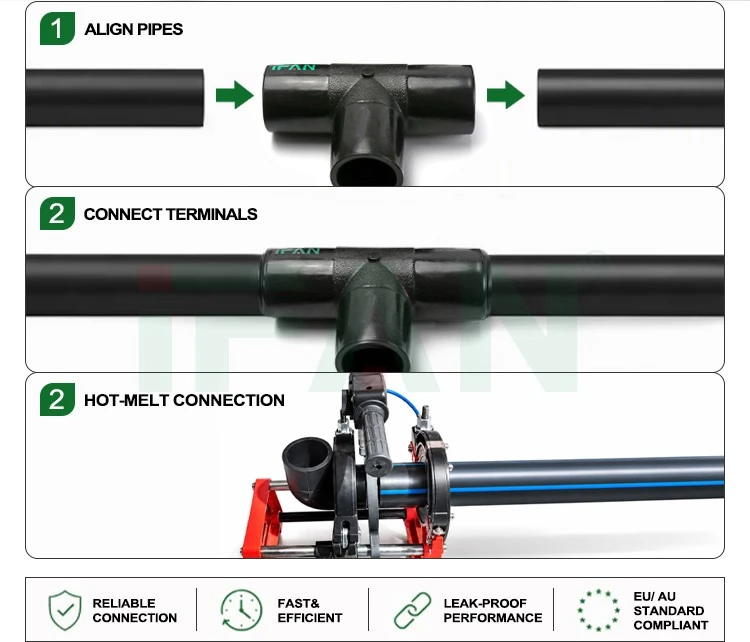
Socket welding, by contrast, uses an external heating tool with matching surfaces. One part heats the outside of the pipe end, while another heats the inside of the fitting socket. The heated components are then assembled by inserting the pipe to the prescribed depth. The operator must control heating time, insertion depth, alignment, and cooling.
The two methods are not interchangeable. Electrofusion requires compatible electrical equipment, fitting-specific fusion data, and appropriate cable connections. Socket welding depends on the correct heating tool, temperature, and assembly sequence. Installers must identify the fitting type before beginning work and follow the corresponding procedure rather than applying the requirements of one method to the other.
Equipment Control and Fusion Parameters
A reliable electrofusion connection requires a control unit that matches the fitting's specifications. Depending on the product, the unit may read a barcode, accept manually entered fusion data, or use another approved method to establish the required electrical settings.
The control unit regulates the energy supplied to the resistance wire. Fusion time and other parameters must correspond to the fitting instructions and the conditions specified by the manufacturer. Operators should verify the input data before starting the cycle and ensure that the power supply meets the equipment requirements.
During fusion, the pipe and fitting must remain securely positioned. Movement can disturb the developing joint, while premature handling may affect the cooling process. The assembly should remain undisturbed for the specified cooling period, even after the control unit indicates that the electrical cycle has finished.
Fusion equipment should be inspected and maintained according to its operating instructions. Fault messages, interrupted cycles, or uncertain parameter entries require appropriate investigation. An interrupted fusion cycle should not simply be restarted unless the manufacturer's approved procedure specifically permits it.
Joint Alignment and Mechanical Restraint
Correct alignment helps maintain uniform contact between the pipe and fitting. Before fusion begins, installers should check that the pipe is inserted to the required depth and that the fitting sits squarely on the pipe. Suitable clamps or alignment devices may be needed to prevent movement during heating and cooling.
Mechanical restraint is particularly important where pipes are under tension, bent, or affected by external forces. Uncontrolled movement can place stress on the joint before the fused interface has cooled sufficiently. Pipe supports, trench arrangements, and installation sequencing should therefore be considered before the fusion cycle begins.
The pipeline design must also account for operating pressure, temperature, and external loading. A correctly formed electrofusion joint cannot compensate for unsuitable pipe dimensions, excessive mechanical stress, or components that do not meet the system requirements.
Inspection, Testing, and Traceability
After the specified cooling period, the joint should be inspected according to the applicable standards and project requirements. Visual checks may identify incorrect insertion, visible damage, or other signs of an installation problem. Where the fitting design includes fusion indicators, these should be assessed in accordance with the manufacturer's instructions.
Visual inspection alone cannot confirm every aspect of the internal fusion interface. Approved pressure or leakage testing may therefore be required before the pipeline enters service. Test pressure, stabilization time, and acceptance criteria must follow the relevant specifications and safety procedures.
Installation records should include fitting identification, fusion parameters, operator details, equipment information, and inspection or test results where required. These records help establish traceability and support investigations if a connection later requires examination.



Hot Tags: reliable pipeline connections with hdpe electrofusion fitting, China reliable pipeline connections with hdpe electrofusion fitting manufacturers, suppliers, factory, Compression HDPE Pipe Fittings, HDPE Compression Fittings, HDPE Elbow 90, HDPE Pipe Fitting, HDPE Water Pipe Fittings, PE Pipe
No Information


