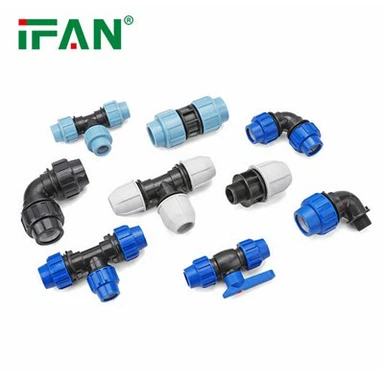


PE100 HDPE Pipe PP Fittings
ISO standards play a vital role in the production, testing, and application of HDPE pipe fittings.
- Fast Delievery
- Quality Assurance
- 24/7 Customer Service
Product Introduction

1. Why ISO Standards Are Important for HDPE Fittings
ISO standards provide a universal benchmark for manufacturing and testing HDPE pipe fittings. Without such standards, variations in quality and design could lead to unsafe installations and premature failures. By following ISO guidelines, manufacturers ensure that fittings are reliable, compatible across different systems, and suitable for long-term use. For engineers and contractors, ISO-certified fittings provide confidence that the materials meet strict requirements for pressure, dimensions, and durability, reducing the risk of costly system breakdowns.
2. Key ISO Standards Relevant to HDPE Fittings
Several ISO standards apply directly to HDPE pipe fittings:
ISO 4427: Specifies requirements for polyethylene pipes and fittings for water supply, including dimensions, performance, and testing methods.
ISO 4437: Defines standards for polyethylene fittings used in gas distribution networks.
ISO 9621: Covers mechanical jointing methods for fittings to ensure leak-proof connections.
ISO 21307: Provides guidelines for polyethylene pipe jointing methods such as butt fusion and electrofusion.
ISO 12162: Classifies thermoplastics materials for pipe systems based on long-term hydrostatic strength.
These standards collectively guarantee that fittings are produced under strict regulations for safety and efficiency.
3. Quality Assurance Through Testing and Certification
ISO standards emphasize not only design but also rigorous testing. HDPE fittings must undergo hydrostatic pressure testing, tensile strength analysis, impact resistance evaluation, and thermal stability checks. Certification bodies verify compliance with these tests before approving products for use. This process ensures that fittings can withstand the pressures and conditions they are designed for. For contractors, using ISO-certified fittings minimizes risks of leakage, failure, or non-compliance with local regulations, ultimately protecting both infrastructure and end-users.
Conclusion: ISO Standards as the Foundation of Reliability
ISO standards play a vital role in the production, testing, and application of HDPE pipe fittings. They provide consistency, ensure safety, and support global trade while encouraging sustainable practices. For manufacturers, compliance builds credibility; for engineers and contractors, it guarantees dependable performance in the field. As infrastructure demands continue to grow worldwide, adherence to ISO standards will remain a cornerstone in delivering safe, efficient, and long-lasting piping systems.
Hot Tags: pe100 hdpe pipe pp fittings, China pe100 hdpe pipe pp fittings manufacturers, suppliers, factory, Compression HDPE Pipe Fittings, HDPE Compression Fittings, HDPE Elbow 90, HDPE Pipe Compression Fittings, HDPE Pipe Fitting, HDPE Pipe Socket