

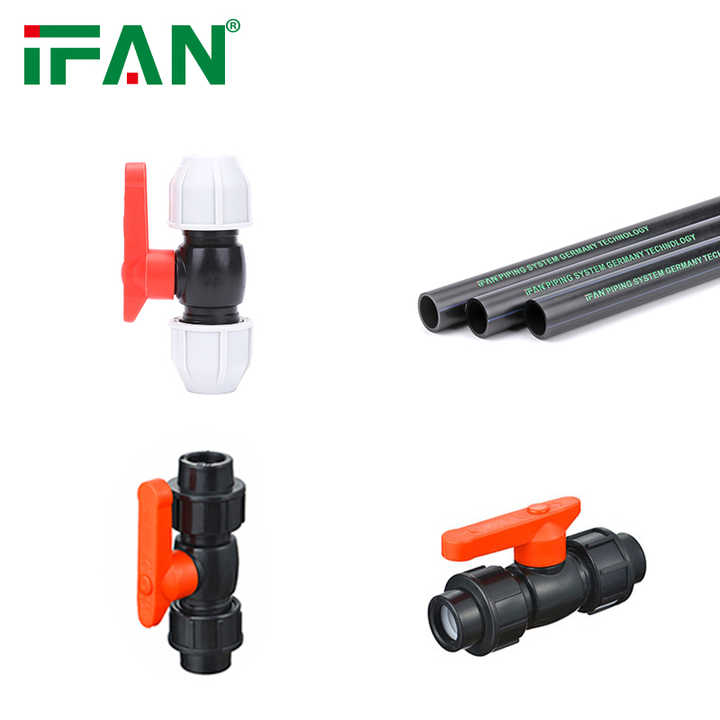


HDPE Pipe PP Elbow Fitting
The density and grade of HDPE are critical factors in determining the performance, durability, and safety of pipe fittings.
- Fast Delievery
- Quality Assurance
- 24/7 Customer Service
Product Introduction
Understanding the Density and Grades of HDPE for Pipe Fittings
High-Density Polyethylene (HDPE) has become one of the most widely used materials in piping systems around the world. Its strength, flexibility, and resistance to corrosion make it ideal for producing pipe fittings used in water supply, sewage, gas distribution, and industrial applications. However, not all HDPE is the same. Variations in density and grades significantly affect the performance of pipe fittings, influencing their durability, chemical resistance, and pressure handling capacity. Understanding the density and grades of HDPE is essential for engineers, contractors, and decision-makers in infrastructure projects.

1. What is HDPE and Why Density Matters?
HDPE is a thermoplastic polymer made from petroleum. Its defining feature is its high strength-to-density ratio. The density of HDPE generally ranges between 0.93 and 0.97 g/cm³, which may seem small, but slight differences in density can dramatically affect mechanical properties. Higher density HDPE tends to be more rigid, stronger, and better suited for high-pressure applications, while lower density variations provide more flexibility. For pipe fittings, choosing the correct density ensures a balance between durability, performance, and ease of installation.
2. Different Grades of HDPE for Pipe Fittings
HDPE is available in several grades, each tailored for specific applications. The most common classifications include:
PE63: Offers moderate strength, often used in low-pressure applications such as irrigation systems.
PE80: A medium-grade HDPE with improved pressure resistance and durability, suitable for water supply and gas distribution in moderate conditions.
PE100: The most advanced grade, designed for high-pressure systems and long-term durability. PE100 fittings have excellent crack resistance and are widely used in municipal water networks, industrial pipelines, and mining.
Each grade comes with specific testing and certification standards, ensuring that fittings meet the safety and reliability requirements of their intended applications.
3. How Density and Grades Affect Performance
The performance of HDPE pipe fittings is directly linked to their density and grade. For example, PE100 fittings are preferred for high-pressure water and gas pipelines because their higher density provides superior strength and crack resistance. In contrast, PE63 fittings, being more flexible, are often chosen for short-term or low-pressure systems where cost savings are important.
Additionally, fittings made from higher-density HDPE are more resistant to creep, stress cracking, and mechanical wear. This means they perform better in demanding environments where pipes are subjected to external loads, temperature fluctuations, or aggressive soil conditions. Selecting the right grade not only ensures system safety but also reduces maintenance costs over time.
4. Standards and Testing for HDPE Grades
To ensure quality and consistency, HDPE pipe fittings are manufactured and tested according to international standards. Common references include ISO 4427, ISO 4437, and EN 12201, which specify material requirements, pressure ratings, and testing methods. Tests such as hydrostatic pressure testing, stress crack resistance, and impact resistance are used to confirm performance under real-world conditions.
These standards also classify fittings by their Minimum Required Strength (MRS), which is directly related to the HDPE grade. For example, PE100 fittings have an MRS of 10 MPa, while PE80 fittings have an MRS of 8 MPa. Understanding these values helps engineers match fittings to the right pressure class and application.
Conclusion: Choosing the Right HDPE for Reliable Fittings
The density and grade of HDPE are critical factors in determining the performance, durability, and safety of pipe fittings. Higher-density grades such as PE100 offer superior strength and crack resistance, making them suitable for demanding infrastructure projects, while lower-density options provide flexibility and cost benefits for less intensive applications. By understanding how density and grades influence mechanical properties and compliance with standards, engineers and contractors can make informed choices that ensure long-term reliability and efficiency in piping systems.
Hot Tags: hdpe pipe pp elbow fitting, China hdpe pipe pp elbow fitting manufacturers, suppliers, factory, Compression HDPE Pipe Fittings, HDPE Compression Fittings, HDPE Elbow 90, HDPE Pipe Compression Fittings, HDPE Pipe Fitting, HDPE Pipe Socket


