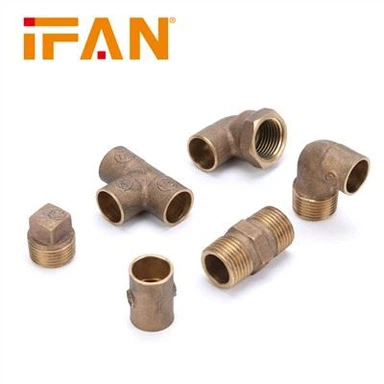

Brass Gas Valve Enables Precise Flow Control
Sep 21, 2026

|
Product Name |
Brass Gas Valve |
|
Color |
Yellow Color |
|
Size |
1/2" 3/4" |
|
Brand |
IFAN or Customized |
|
OEM |
Support |
|
Sample |
Free |
|
Experience |
30+Years |
|
Contact Us |
Welcome to contact IFAN, we are online 24 hours a day to answer your questions!
Controlling Gas Flow Through Valve Movement
Gas systems require controlled movement of fuel through pipelines and equipment. The amount of gas entering a particular section can influence appliance operation, pressure conditions, and overall system behavior. A suitable brass gas valve provides a mechanical means of controlling this flow within its specified operating range.
The valve works by changing the position of an internal component inside the flow passage. When the valve opens, gas can move through the internal channel. When it closes, the passage becomes restricted or blocked, depending on the valve design.
The relationship between valve position and gas flow depends on the internal geometry. A quarter-turn ball valve, for example, uses a rotating ball with a passage through its center. The position of this passage determines whether gas can move through the valve.
Precise control therefore begins with selecting a valve design that matches the required operating function.
Internal Geometry Influences Flow
The internal passage is an important part of gas valve design. Its shape, diameter, and surface characteristics influence how gas travels from the inlet to the outlet.
A valve with a relatively unobstructed passage can allow gas to move efficiently when fully open. As the internal mechanism changes position, the available flow area changes accordingly.
Different valve designs produce different flow characteristics. A valve intended primarily for shutoff may not provide the same type of regulation as a valve designed specifically for throttling.
For this reason, users should distinguish between isolation and precise flow adjustment. Not every gas valve should be used to continuously regulate flow.
The manufacturer's technical documentation should identify the intended operating function and limitations of the product.
Brass Provides a Suitable Valve Body
Brass is commonly selected for valve bodies because it can be machined into accurate shapes and detailed internal passages. This allows manufacturers to produce valve components with controlled dimensions.
The valve body surrounds the internal mechanism and provides the connection points for the gas piping. Its dimensions and construction must correspond to the pressure and temperature conditions specified for the product.
Different brass alloys can have different mechanical and chemical characteristics. Therefore, the specific alloy and product construction should be considered when evaluating a gas valve.
Brass construction alone does not establish gas compatibility. The complete valve must be designed and approved for the intended fuel gas service.
Consistent Valve Position Supports Control
The operating handle provides a direct way to change the valve position. For many residential and commercial gas valves, a quarter-turn movement changes the internal passage between open and closed positions.
Clear position indication helps operators understand the valve state. When the handle position corresponds consistently with the internal mechanism, users can identify whether the valve is open or closed more easily.
For applications requiring frequent adjustment, the operating mechanism must respond smoothly and consistently. Mechanical resistance, wear, or damage can affect operation and should be investigated by qualified personnel.
The operating method depends on the valve design. Users should follow the manufacturer's instructions instead of applying force when the valve does not operate normally.
Matching Flow Control With Gas Pressure
Gas flow and pressure are closely related. Changes in the available flow area can influence pressure conditions within a connected system.
However, a valve should not be used as a substitute for a properly designed pressure regulation system. Where pressure reduction is required, an approved regulator designed for that purpose should be used.
The valve's pressure rating must correspond to the system's maximum allowable operating conditions. Pressure ratings can vary according to valve design, size, temperature, and certification.
System designers should therefore evaluate both flow requirements and pressure conditions before selecting a valve. A suitable valve must perform within all specified limits.
Selecting the Correct Valve Size
Valve size directly affects the available flow passage. A valve that is too small for the intended application may create unnecessary pressure loss or restrict the required gas supply.
A larger valve does not automatically provide better control. The correct size depends on the required gas flow, system pressure, pipe dimensions, and equipment specifications.
Engineers should use appropriate sizing information when designing a gas system. Manufacturer flow data can help determine whether a particular valve corresponds to the required operating conditions.
The connection size should also match the piping arrangement. Adapters should only be used when they are appropriate for the application and approved connection method.
Flow Control in Gas Appliances
Gas appliances require controlled fuel delivery to support their intended operation. A valve may form part of the gas supply arrangement leading to an appliance.
For example, a manual valve can provide an on-off control point before an appliance connector. However, the appliance itself may contain dedicated components that manage the gas flow required for combustion.
The manual valve should not be treated as a replacement for the appliance's internal control system. Each component has a defined role within the overall gas installation.
Correct installation ensures that the valve, connector, regulator, and appliance operate as an integrated system.
Installation Affects Flow Performance
Installation quality can influence how effectively a gas valve performs. Incorrect pipe alignment, unsuitable sealing materials, or debris inside the connection can interfere with the intended flow path.
The valve should be installed according to the manufacturer's instructions. Connection surfaces should remain clean, and the internal passage should be protected from contamination during installation.
The valve should also remain accessible when its operating position needs to be adjusted or checked.
After installation, qualified personnel should conduct the required testing and commissioning procedures. Gas systems must meet applicable codes and local requirements before being placed into operation.
Maintaining Predictable Operation
A valve used for gas flow control should operate consistently throughout its intended service conditions. Regular inspection can identify visible damage, leakage, corrosion, or changes in operating behavior.
Operators should pay attention to unusual stiffness or difficulty when turning the valve. Forcing a damaged mechanism may create additional problems.
Maintenance procedures depend on the product and installation. Some valves are designed for specific service intervals, while others require replacement when a problem is identified.
Only procedures approved by the manufacturer and applicable regulations should be used when servicing gas equipment.
Conclusion
A brass gas valve enables controlled gas movement by changing the available flow passage inside the valve. Its internal geometry, operating mechanism, size, and pressure rating all influence how gas travels through the system.
Precise flow control requires the correct valve type for the intended function. A shutoff valve should not automatically be treated as a throttling device, and pressure regulation should use equipment designed specifically for that purpose.
Proper sizing, compatible installation, technical specifications, and qualified testing are essential for gas applications. When these factors are considered together, a suitable brass gas valve can provide controlled and predictable gas flow within its intended operating range.