

Installation Best Practices for Long-Lasting PPR Fittings
Jun 28, 2025
Understand Material Characteristics Before Installation
Before beginning installation, it's essential to understand the basic properties of PPR materials. PPR is thermoplastic, designed to be joined using heat fusion. It expands and contracts with temperature changes, resists corrosion, and offers a long service life-often exceeding long-term durability according to standards. However, it requires care during cutting, heating, and jointing. Familiarity with PPR's behavior under pressure and temperature will guide your preparation, prevent common errors, and ensure that the fittings perform reliably under real-world conditions.
Use Only Compatible and Certified Components
All pipes and fittings should be from the same certified system. Mixing PPR fittings and pipes from different manufacturers can result in poor joint compatibility, improper pressure handling, or chemical incompatibility. Certified components are tested for quality, uniform wall thickness, dimensional accuracy, and fusion compatibility. Always confirm that fittings comply with standards such as ISO 15874 or DIN 8077/8078. Using genuine, compatible parts from trusted suppliers ensures uniform thermal behavior and maximizes joint strength.
Prepare Tools and Work Area Properly
Installing PPR fittings requires specific tools: a pipe cutter, fusion welding machine, deburring tool, and tape measure. Ensure all tools are clean, functional, and calibrated. The work area should be dry, clean, and protected from dust and wind, especially during welding. A clean environment minimizes contamination during jointing, while dry conditions prevent moisture-related defects. Organize tools and fittings in advance to streamline the process and reduce the chance of contamination or damage during handling.
Accurate Pipe Cutting and Measurement
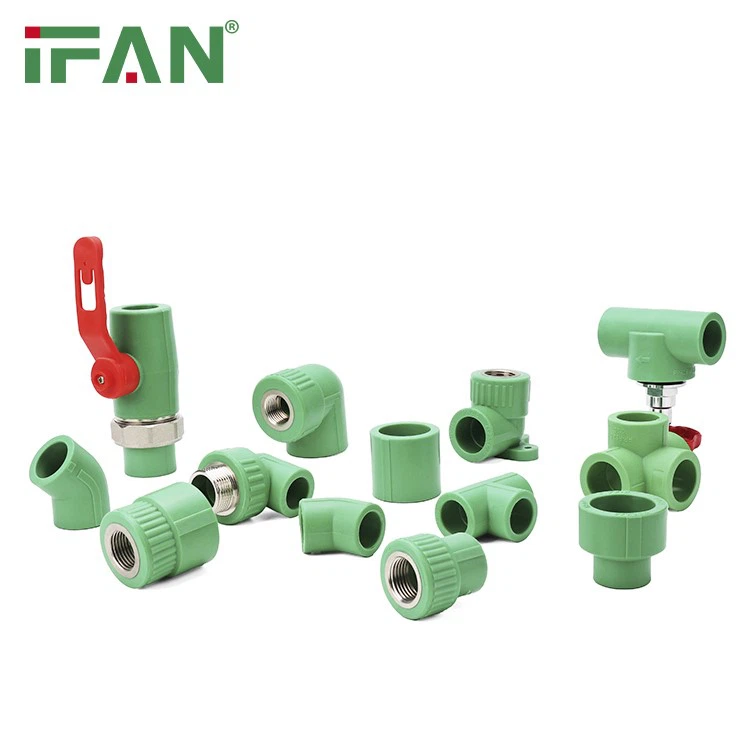
Precise measurement and clean pipe cutting are foundational to a strong installation. Use a sharp PPR pipe cutter to make clean, square cuts. Avoid saws, which may leave rough edges or plastic debris inside the pipe. After cutting, use a deburring tool to smooth out the internal and external edges. This ensures the pipe fits evenly into the fitting socket and allows proper heat contact during welding. Inaccurate cuts can compromise fusion quality, leading to weak or leaky joints.
Follow Correct Heat Fusion Procedures
Socket fusion is the most common method for joining PPR fittings. It involves heating both the pipe and fitting for a specific time and pressing them together to form a homogeneous bond. Preheat the welding machine to the correct temperature-usually around 260°C. Insert the pipe and fitting simultaneously into the heating sockets, wait for the specified duration, then quickly remove and join them without twisting. Hold the joint in place for several seconds until it stabilizes. Always refer to the manufacturer's time and temperature charts based on pipe size.
Avoid Overheating or Underheating
One of the most frequent causes of failure in PPR fittings is improper heating. Overheating can deform the fitting or create excessive melt, weakening the joint. Underheating may result in incomplete bonding. Both conditions reduce the joint's ability to handle pressure and thermal stress. Use a timer and thermometer if necessary to maintain consistent heating duration. Be attentive to signs of overheating, such as dripping melt, burning smell, or deformation, and adjust the process accordingly.
Prevent Contamination of Joint Surfaces
During the welding process, cleanliness is crucial. Even small amounts of dirt, grease, or moisture on the pipe or fitting can compromise the bond. Before welding, clean the pipe ends and fitting sockets with a lint-free cloth. Do not touch the heated surfaces with your hands or allow them to come into contact with dust or moisture. Avoid using chemical cleaners unless recommended by the manufacturer. Ensuring a clean fusion area leads to a stronger, leak-free connection.
Allow Adequate Cooling Time
After fusion, it is essential to allow each joint to cool naturally before moving or pressurizing the system. Cooling typically takes 30–60 seconds, depending on pipe size. Do not apply force, twist, or adjust the joint during this period. Premature movement can lead to microcracks or weak bonding. Avoid exposing the joint to water or cold air during cooling. A fully stabilized joint ensures mechanical strength and long-term integrity in the piping system.
Plan for Thermal Expansion and Contraction
PPR pipes expand and contract with temperature changes. To accommodate this, include expansion loops, bends, or flexible couplings in long pipe runs, especially in hot water systems. Use sliding or fixed pipe supports based on system layout. Improper planning for thermal movement can result in pipe buckling, stress at joints, and long-term fatigue. Follow spacing guidelines for pipe clamps and provide adequate room for expansion within pipe channels and wall chases.
Ensure Proper Pipe Support and Alignment
Support structures must be designed to hold pipes without putting stress on joints. Use plastic or coated metal clamps that do not bite into the pipe. Follow recommended spacing based on pipe diameter and application (e.g., hot vs. cold water). Misaligned pipes or unsupported spans can exert mechanical pressure on fittings, leading to joint failure over time. Carefully align pipes during installation to ensure straight runs and prevent torque or bending at fusion joints.
Conduct Pressure Testing Before Commissioning
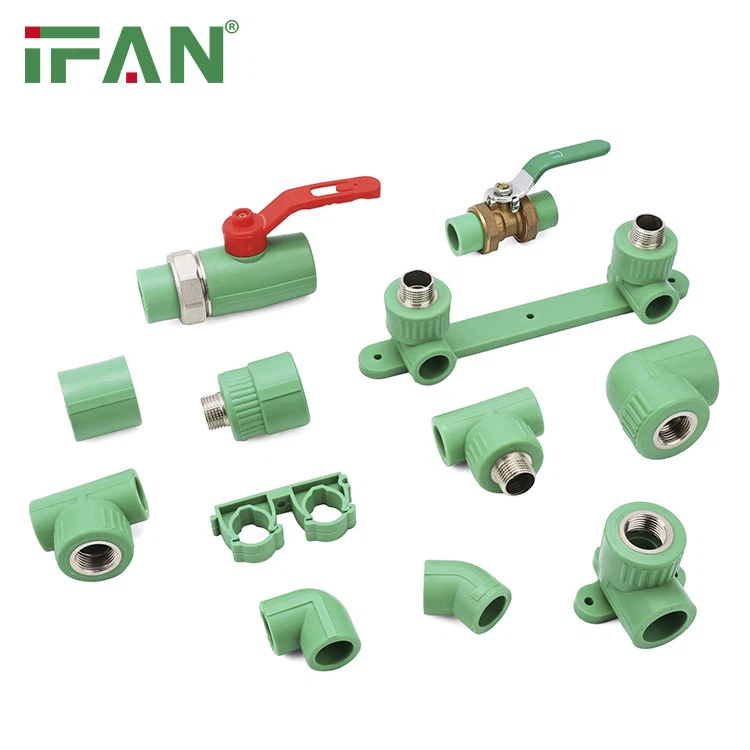
After completing installation, always perform pressure testing before the system is commissioned. Follow local codes and manufacturer guidelines for test pressure and duration. Typically, the test pressure is 1.5 times the operating pressure and held for at least 30 minutes. Check all joints for leaks, deformation, or drops in pressure. Any failed sections should be replaced and retested. Pressure testing validates the installation's quality and ensures the system is safe for long-term use.
Train Personnel and Follow Installation Guidelines
Professional training is essential for installers working with PPR systems. Many manufacturers offer installation courses and provide detailed manuals. Proper training ensures that installers understand the material behavior, welding process, and system design requirements. Supervision, especially for large or complex installations, helps maintain consistency and detect issues early. Investing in proper training and following best practices reduces installation errors and enhances system durability.
Conclusion
Installing PPR fittings correctly is essential to achieving their full performance potential and ensuring a long service life. By understanding the material's properties, using proper tools, maintaining clean working conditions, and following precise welding techniques, you can prevent failures and extend the life of the piping system. From pipe cutting to pressure testing, each step in the installation process plays a critical role in the success of the entire network. Adopting these best practices not only improves reliability but also supports energy efficiency, water conservation, and sustainability goals in modern plumbing systems.
Click here to watch more videos


