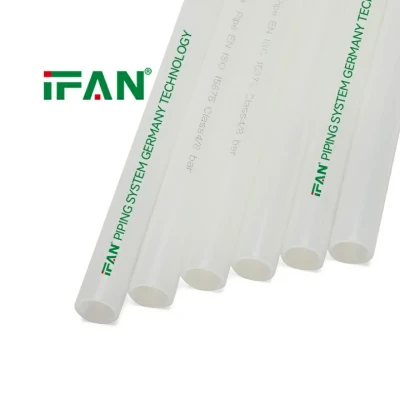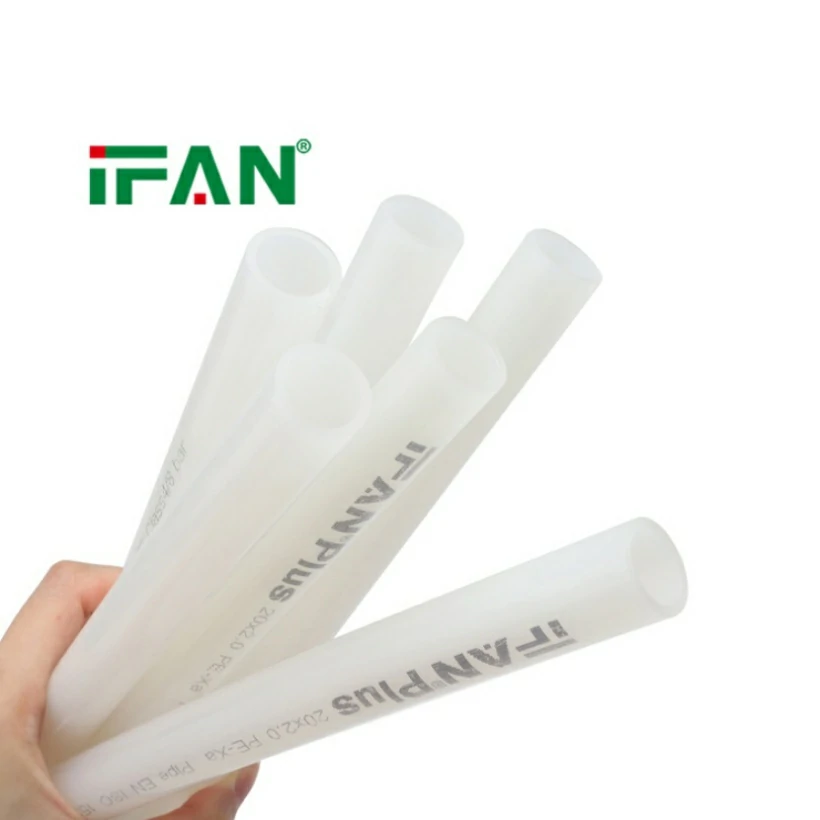

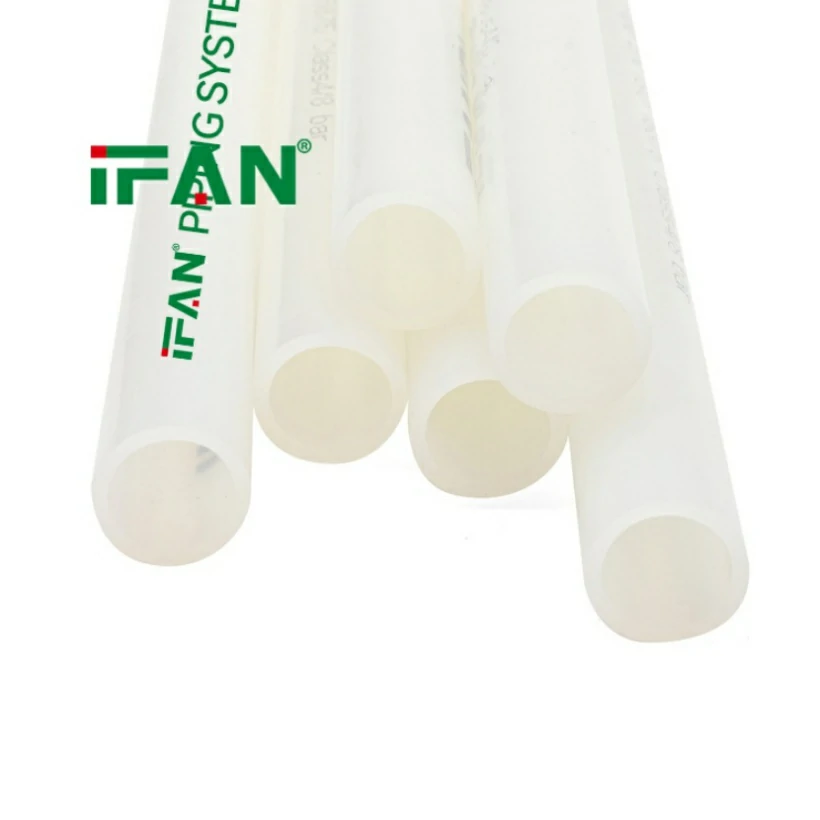
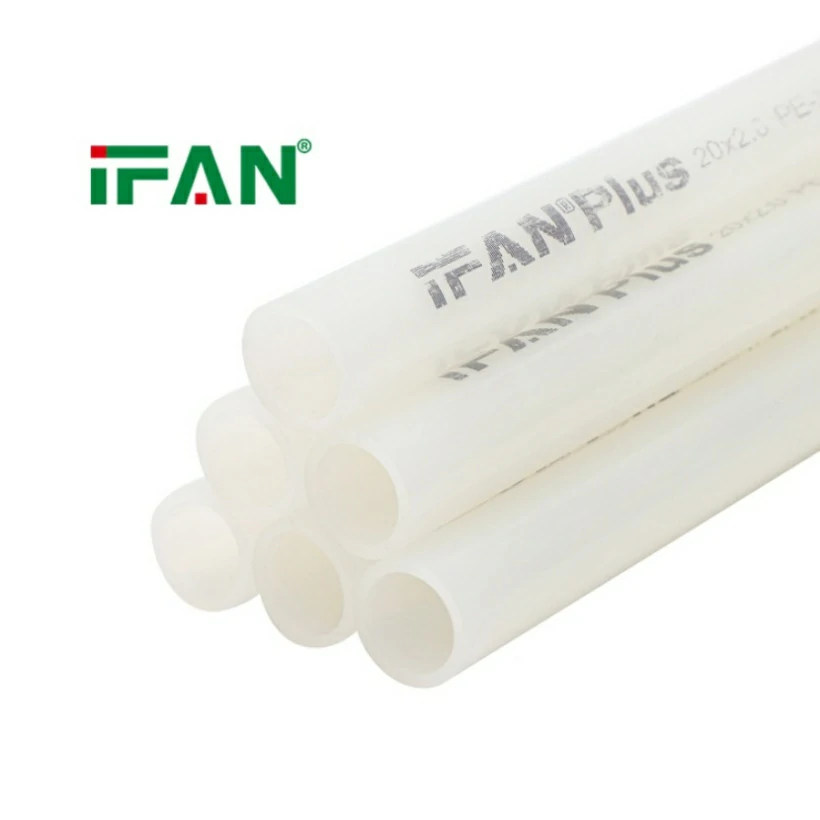
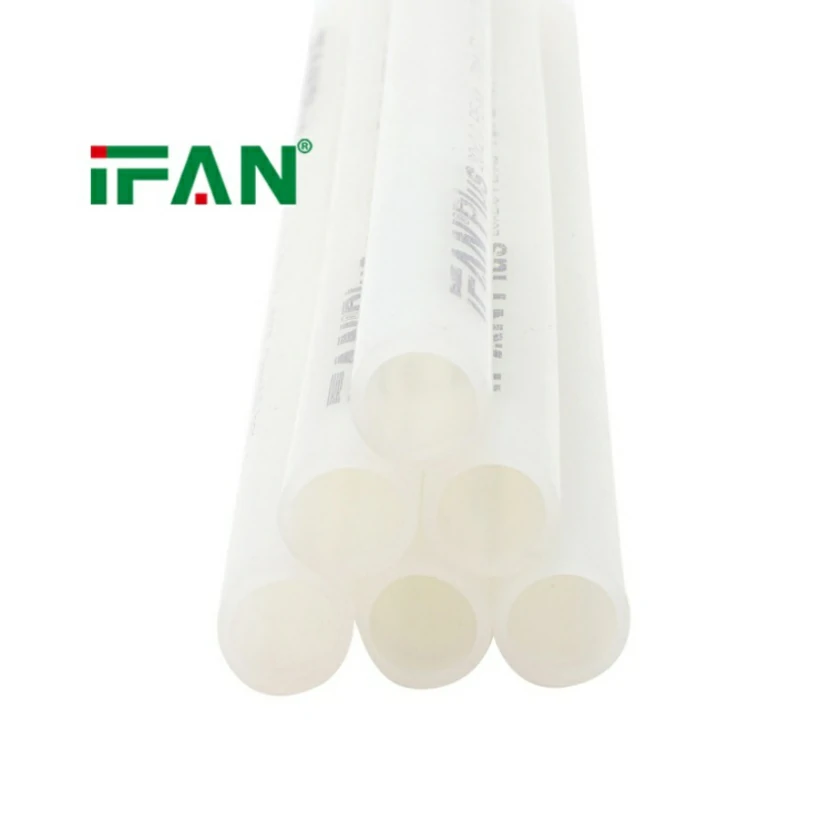
PEXA Pipe Supports Efficient Heating Systems
PType:PEXa Pipe
Length:100m-200m
Brand:IFAN/OEM
Applications:Water Systems
Color:White,Grey,Purple Or Customized
Sample:Free
- Fast Delievery
- Quality Assurance
- 24/7 Customer Service
Product Introduction
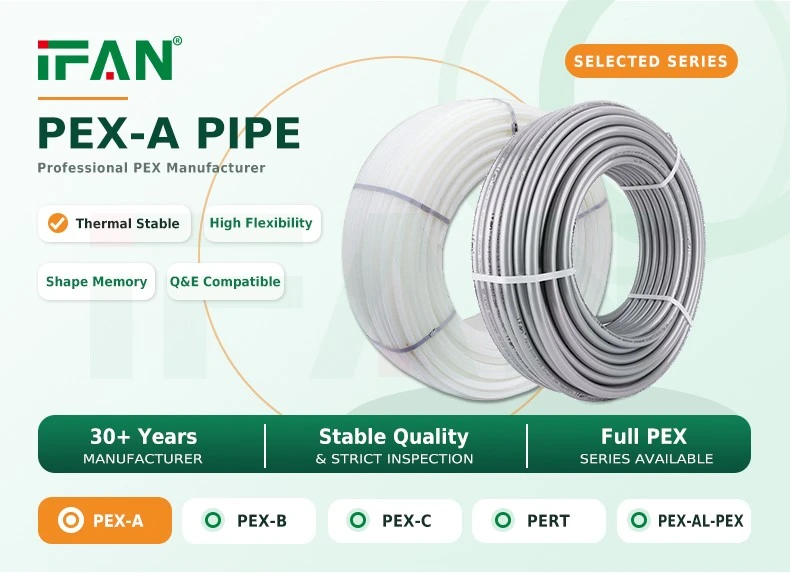
| Product Name | IFAN PEXa Pipe |
| Size | 16-32mm Or Customized |
| Color |
White,Grey,Purple Or Customized |
| Package | IFAN standard packaging |
| Features | Oxygen Barrier,Flexible,Inhibits Bacteria,Extends Lifespan |
| Sample | Sample Free |
| Contact | Click HERE to contact us now! |
Welcome to contact IFAN, we are online 24 hours a day to answer your questions!

Introduction
An efficient heating system depends on more than the heat source itself. The way heated water or another heating medium moves through the distribution network has a direct influence on temperature control, heat delivery, and overall system operation. PEXA pipe is used in various plumbing and heating installations to create pathways for circulating heated water between the heating unit and connected terminal equipment. Its characteristics allow it to be incorporated into different heating configurations, including underfloor heating and radiator distribution systems. To understand its role in heating efficiency, it is important to examine how pipe routing, heat transfer, circulation, and temperature regulation work together. When these elements are properly coordinated, PEXA pipe can support an organized heating network that distributes thermal energy according to the requirements of each space.
Supporting Hot Water Circulation
Hot water circulation is a central part of many hydronic heating systems. Water is heated by a boiler, heat pump, or another suitable heating source before being transported through pipes to radiators, floor heating circuits, or other heat-emitting components. After releasing thermal energy, the cooler water returns to the heating unit to be reheated.
PEXA pipe serves as a transportation channel within this circulation process. Its internal dimensions and installation configuration influence the volume of water that can move through the network. Appropriate pipe sizing helps maintain the required flow rate without creating excessive resistance.
The circulation process must also be coordinated with the heating equipment. Pumps, valves, and distribution manifolds work together to regulate the movement of heated water. When these components are correctly selected and configured, the pipe network can support a stable circulation pattern and help deliver heat to the intended areas.
Reducing Unnecessary Heat Loss
Heat loss during transportation is an important consideration in heating system design. As heated water travels through a pipe, some thermal energy may transfer to the surrounding environment. The amount of heat lost depends on water temperature, pipe surface area, surrounding temperature, insulation, and the length of the distribution route.
PEXA pipe is commonly incorporated into heating installations where appropriate thermal insulation can be applied to the distribution lines. Insulating pipes, particularly those passing through unheated spaces, helps limit unwanted heat transfer before the water reaches its destination.
The placement of the pipe network also deserves attention. Routes passing through cold basements, external service areas, or unconditioned spaces may require additional insulation considerations. By evaluating the surrounding environment during installation, designers can manage heat loss and ensure that more of the transported thermal energy reaches the intended heating zones.
Application in Underfloor Heating Systems
Underfloor heating is one of the important applications of PEX-based piping. Unlike conventional radiator systems, underfloor heating distributes warm water through circuits installed beneath the floor surface. The floor then releases heat gradually into the occupied space.
PEXA pipe can be arranged in carefully planned loops to provide relatively even heat distribution across different sections of a room. The distance between pipe runs, circuit length, water temperature, and floor construction all influence the resulting heating performance.
A manifold is generally used to distribute water among individual heating circuits. Each circuit can be adjusted according to its hydraulic requirements and the heating demand of the corresponding area. This arrangement allows installers to manage different zones within the same building.
Correct circuit planning is essential. If pipe spacing is inconsistent or circuit lengths are not properly calculated, certain areas may become warmer than others. A balanced layout helps create a more uniform floor temperature and supports controlled heat delivery.
Maintaining Balanced Water Flow
Heating efficiency is closely connected to the balance of water circulation throughout the pipe network. In systems containing multiple radiators or underfloor heating circuits, water may follow several different routes. Each route has its own hydraulic resistance, which can affect the amount of water reaching individual heating components.
PEXA pipe installations must therefore be designed with appropriate attention to internal diameter, circuit length, bends, and connection arrangements. If one circuit creates significantly more resistance than another, the distribution of heated water may become uneven.
Hydraulic balancing helps address this issue. By adjusting balancing valves, manifold flow meters, or other control components, installers can regulate the flow through individual branches. The objective is to provide each heating zone with the water volume required for its calculated thermal demand.
This process helps prevent some areas from receiving excessive circulation while others remain undersupplied. A balanced network supports more consistent heating throughout the building.
Working with Modern Heating Equipment
Modern heating systems often combine different technologies, including condensing boilers, air-source heat pumps, and ground-source heat pumps. These systems may operate with different water temperatures and circulation requirements.
PEXA pipe can be incorporated into compatible hydronic configurations, provided that the selected pipe specification meets the system's operating temperature and pressure requirements. This is particularly relevant for low-temperature heating applications, where heat pumps supply water at temperatures suitable for underfloor heating or appropriately sized radiators.
System compatibility must always be assessed before installation. Designers need to consider the manufacturer's temperature and pressure ratings, connection standards, and applicable installation requirements.
The relationship between the heating source and the distribution network is equally important. Correctly matched circulation pumps, control valves, and pipe dimensions help the system operate according to its intended heating conditions.
Temperature Regulation and Zoning
Different rooms rarely require identical heating conditions. Bedrooms, living rooms, bathrooms, and commercial spaces may have different temperature requirements depending on their use, occupancy, and insulation characteristics.
A PEXA pipe network can be arranged to serve separate heating zones when the overall system design supports independent control. Thermostats, zone valves, and manifold controls can regulate the supply of heated water to different areas.
For example, an underfloor heating installation may divide a building into several circuits, with each circuit connected to a designated room or zone. Temperature sensors provide feedback to the control system, allowing heating operation to respond to changes in room conditions.
Accurate control helps avoid unnecessary heating and reduces differences between the requested and actual indoor temperatures. The pipe network provides the circulation pathways, while the control equipment determines when and how much heated water is delivered.
Installation Planning and Heating Performance
The installation process has a direct influence on how effectively a heating network operates. Before laying PEXA pipe, installers should review the heating load calculations, building layout, pipe dimensions, circuit lengths, and equipment specifications.
Particular attention should be given to bend radius, pipe spacing, fixing arrangements, and connection locations. In underfloor heating applications, the pipe layout must correspond with the floor construction and the planned positions of manifolds and heating controls.
Pressure testing should also be completed according to the applicable manufacturer's instructions and local installation standards before the system is covered or placed into normal operation. This helps identify installation problems before they become difficult to access.
Proper commissioning is another essential step. The system should be filled, purged of trapped air, hydraulically balanced, and checked under operating conditions to confirm that water circulation and temperature control function as intended.






Hot Tags: pexa pipe supports efficient heating systems, China pexa pipe supports efficient heating systems manufacturers, suppliers, factory, Pex Multilayer Pipe, Pex Pipe Plumbing, Pex Tubing