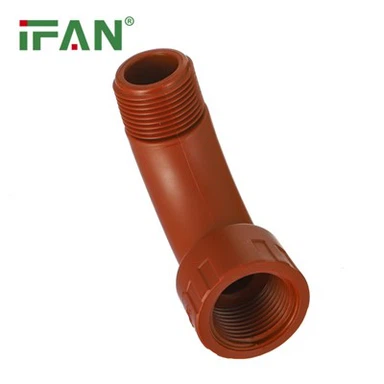


PPH Pipe Fittings Deliver Reliable Connections
Type:PPH Pipe Fittings
Brand:IFAN
Connecting method:Thread
Applications:Water Systems
Color:Brown
- Fast Delievery
- Quality Assurance
- 24/7 Customer Service
Product Introduction

| Product Name | PPH Pipe Fittings |
| Size | 1/2"-2" Or Customized |
| Color |
Brown Or Customized |
| Package | IFAN standard packaging |
| Connection | Thread |
| Sample | Sample Free |
| Contact |
Welcome to contact IFAN, we are online 24 hours a day to answer your questions!
The Role of Fittings in Pipeline Connections
A piping system depends on more than the quality of its straight pipe sections. Every change in direction, branch, diameter, or equipment interface introduces a connection point that must be properly designed and assembled. PPH pipe fittings provide dedicated components for these locations, creating a coordinated connection between individual sections of polypropylene piping.
Elbows, tees, reducers, couplings, flanges, and other PPH fittings are manufactured for specific connection arrangements. Their dimensions are designed to correspond with compatible pipe sizes, allowing the components to be assembled into a continuous piping network. When the fitting type and pipe specification are correctly matched, the connection can follow the intended geometry of the system without relying on improvised transitions.
Heat Fusion Creates Integrated Joints
One of the important connection methods used with PPH piping is heat fusion. During this process, the joining surfaces of the pipe and fitting are heated under controlled conditions. Once the material reaches the required fusion state, the prepared surfaces are brought together and allowed to cool.
The result is a joint formed from the thermoplastic material itself rather than from a separate adhesive layer. Proper temperature, heating time, alignment, and joining pressure are essential to the process. If these parameters are controlled correctly, the pipe and fitting become closely integrated at the connection area. Installation personnel therefore need to follow the manufacturer's specified fusion procedure rather than relying on visual judgment alone.
Precise Fitting and Pipe Compatibility
Reliable connections begin with dimensional compatibility. PPH fittings are produced in different nominal sizes and configurations, so the selected component must correspond to the pipe used in the system. Differences in outside diameter, wall thickness, fitting dimensions, or connection standards can affect the assembly process.
Before installation, pipe and fitting specifications should be checked against the system drawings and material documentation. The fitting should sit correctly with the pipe and provide the intended connection geometry. This basic verification is especially important when components from different suppliers or production batches are being considered for the same project.
Maintaining Correct Alignment
Alignment is another important factor in producing consistent PPH connections. A fitting that is installed at an unintended angle can introduce stress into the connected piping and make subsequent assembly more difficult. This is particularly relevant for elbows, tees, and equipment connections where the direction of the pipeline must correspond accurately with the system layout.
During installation, pipe sections should be properly positioned before the joint is completed. Temporary supports or alignment tools may be used where appropriate to prevent movement during connection. Once the fitting and pipe have been positioned correctly, the joining process can proceed according to the specified installation procedure.
Flanged Connections for Equipment Interfaces
Not every PPH connection needs to be permanently fused. Flanged fittings provide a practical method for connecting polypropylene piping to pumps, valves, tanks, instruments, and other equipment. In these arrangements, the PPH component interfaces with another flange through bolts and a suitable gasket or sealing arrangement.
The quality of a flanged connection depends on correct alignment and controlled tightening. Excessive or uneven bolt loading can affect the sealing arrangement, while poor alignment may place unnecessary mechanical stress on the connection. For this reason, flange faces should be positioned correctly and bolts should be tightened according to the applicable installation requirements.
Connection Quality Depends on Preparation
Even a properly designed fitting cannot compensate for poor preparation. Before joining PPH components, the relevant surfaces should be clean and free from contaminants that could interfere with the connection process. Pipe ends should be prepared according to the selected joining method, while damaged or incorrectly prepared sections should not be forced into service.
Installation conditions also matter. Dust, moisture, excessive movement, or unsuitable working temperatures can interfere with connection procedures. Establishing a controlled installation sequence allows workers to check each stage before proceeding. This approach is particularly useful when a pipeline contains a large number of fittings and connection points.
Inspection of Completed Connections
Inspection provides an important final check after PPH fittings have been installed. For fusion joints, installers can examine the finished connection for visible irregularities and confirm that the fusion process followed the specified parameters. For flanged joints, alignment, bolt condition, gasket placement, and connection configuration should be checked.
Inspection records can also document fitting type, pipe size, joining method, and relevant installation conditions. Such information creates a reference for future maintenance or modification work. If a pipeline is expanded later, existing documentation can help personnel identify the correct connection standards and fitting specifications.
Designing Connections for Actual Service Conditions
Reliable PPH connections ultimately depend on coordination between component selection, system design, and installation practice. The fitting must correspond to the pipe dimensions and connection method, while the completed joint must be suitable for the mechanical and operating conditions of the pipeline.
For this reason, connection reliability should be considered from the design stage rather than only during installation. Pipe routing, support arrangement, thermal movement, equipment interfaces, and access for joining should all be reviewed before construction begins. When these factors are addressed together, PPH pipe fittings can provide clearly defined connection points throughout the piping system and support a consistent approach to pipeline assembly.


Hot Tags: pph pipe fittings deliver reliable connections, China pph pipe fittings deliver reliable connections manufacturers, suppliers, factory, PPH Fittings, PPH Pipe Fitting