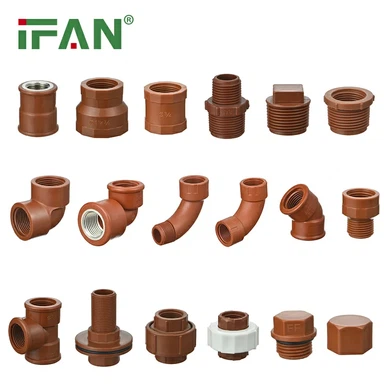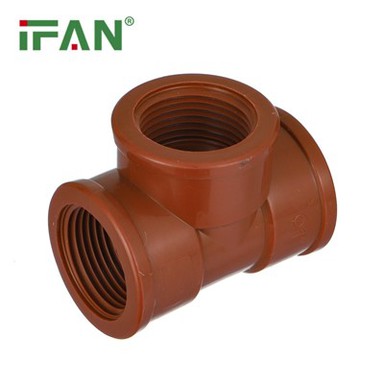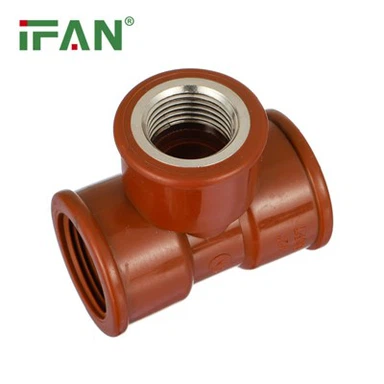


PPH Pipe Fittings Handle High Purity Fluids
Type:PPH Pipe Fittings
Brand:IFAN
Connecting method:Thread
Applications:Water Systems
Color:Brown
- Fast Delievery
- Quality Assurance
- 24/7 Customer Service
Product Introduction

| Product Name | PPH Pipe Fittings |
| Size | 1/2"-2" Or Customized |
| Color |
Brown Or Customized |
| Package | IFAN standard packaging |
| Connection | Thread |
| Sample | Sample Free |
| Contact |
Welcome to contact IFAN, we are online 24 hours a day to answer your questions!
PPH Fittings in High Purity Fluid Systems
High purity fluid systems require careful control over every component that comes into contact with the process medium. Even a small amount of foreign material introduced through a pipe, fitting, joint, or storage container can affect the quality of the fluid. PPH pipe fittings can be incorporated into selected high purity applications where polypropylene homopolymer is compatible with the process requirements and the specified cleanliness level.
In these systems, fittings are not simply connection accessories. Elbows, tees, reducers, couplings, and other components form part of the internal flow path. Their material, surface condition, manufacturing quality, storage method, and installation procedure must therefore be considered together. The objective is to maintain the intended purity of the transported fluid from one section of the pipeline to the next.
Controlling Material Contact
The first consideration in a high purity system is the material that comes into contact with the fluid. PPH provides a non-metallic contact surface, which can be appropriate for certain purified water and chemical process applications when the material has been confirmed for the intended service.
Material selection should be based on the actual fluid rather than the general category of the application. The fluid composition, temperature, concentration, and required purity level should all be identified before fittings are specified. If the process includes additives, cleaning agents, or periodic chemical treatments, these fluids should also be included in the material assessment.
Smooth Internal Flow Paths
The internal surface of a fitting becomes part of the fluid pathway. Irregularities, contamination, or poorly finished connection areas can create locations where unwanted material may accumulate or where cleaning becomes more difficult.
PPH fittings are manufactured with internal passages intended to connect with compatible pipe sections. When the fitting is correctly selected and installed, the internal geometry can form a continuous route for the process fluid. Attention should be given to fitting configuration because unnecessary branches, dead ends, or abrupt transitions may complicate the management of high purity fluids.
Cleanliness Before Installation
High purity performance begins before the fittings are installed. Components should be protected from dust, moisture, oils, and other contaminants during transportation and storage. Packaging should remain intact until the fitting is ready for installation whenever the manufacturer's handling procedure requires it.
Once the packaging is opened, fittings should be handled using clean procedures appropriate to the application. Internal surfaces should not be touched unnecessarily, and components should be protected from contact with contaminated tools or work surfaces. These simple controls help prevent contamination from entering the pipeline before the system has even been commissioned.
Clean Connection Procedures
The connection process is particularly important because joints become permanent parts of the internal fluid path. For PPH systems using heat fusion, pipe and fitting surfaces must be prepared according to the specified procedure before heating and joining.
Fusion equipment should be maintained in a clean condition, and the joining surfaces should be protected from contamination. Operators need to control heating parameters, alignment, and joining pressure according to the manufacturer's requirements. A consistent connection procedure helps prevent foreign material from becoming trapped at the joint and supports a controlled internal surface throughout the assembled pipeline.
Minimizing Contamination at Joints
Connection points can present special concerns in high purity systems because they involve changes in geometry and the meeting of separate components. An improperly prepared joint may introduce particles, irregular material, or other contamination into the flow path.
For this reason, installation personnel should inspect completed connections according to the project requirements. Any visible residue, damaged surface, or abnormal joint condition should be evaluated before the pipeline is placed into service. The objective is to ensure that the internal side of the fitting remains suitable for contact with the high purity fluid.
Managing High Purity Water
Purified and high purity water is used in a range of industrial processes where control of contaminants is essential. PPH fittings can be considered for appropriate water systems when the material specification and cleanliness requirements are compatible with the application.
The entire system needs to be evaluated rather than selecting fittings in isolation. Water quality, temperature, circulation conditions, sanitization procedures, and cleaning chemicals can all affect material selection. Fittings used in these systems should therefore correspond to the same technical requirements established for the associated pipe and other wetted components.
Supporting Controlled Chemical Processes
Some high purity systems transport specially prepared chemical solutions in which even minor contamination can influence downstream processing. In such applications, PPH fittings may be used where the polymer has been confirmed as suitable for the specific chemical and purity requirements.
The concentration of the process chemical and the required cleanliness level should be documented during system design. Cleaning and flushing procedures should also be reviewed because the fitting may come into contact with several different fluids during its operating cycle. Compatibility with the process fluid alone is not enough if the cleaning or sanitization medium creates a more demanding condition.
Inspection and Purity Verification
High purity piping systems require appropriate inspection after installation. Visual examination can identify contamination or installation issues, while system cleaning, flushing, or other verification procedures can be carried out according to the process specification.
Documentation is also important. Records can identify fitting materials, connection methods, cleaning procedures, and inspection results. If a purity issue occurs later, these records provide information that can help trace the relevant section of the pipeline and determine whether the problem may be associated with material selection, installation, or contamination control.
Maintaining High Purity Conditions
PPH pipe fittings can be incorporated into high purity fluid systems when their material and manufacturing specifications match the requirements of the process. Maintaining fluid purity requires attention to the complete path, including fittings, joints, equipment interfaces, storage conditions, and cleaning procedures.
The most effective approach is to control contamination from material selection through installation and commissioning. PPH fittings should be handled under suitable cleanliness conditions, joined using controlled procedures, and inspected before the system enters service. With these measures in place, the fittings can form an appropriate part of a controlled piping system designed to transport high purity fluids.


Hot Tags: pph pipe fittings handle high purity fluids, China pph pipe fittings handle high purity fluids manufacturers, suppliers, factory, PPH Fittings, PPH Pipe Fitting