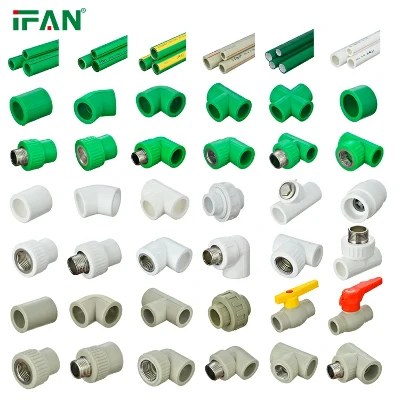


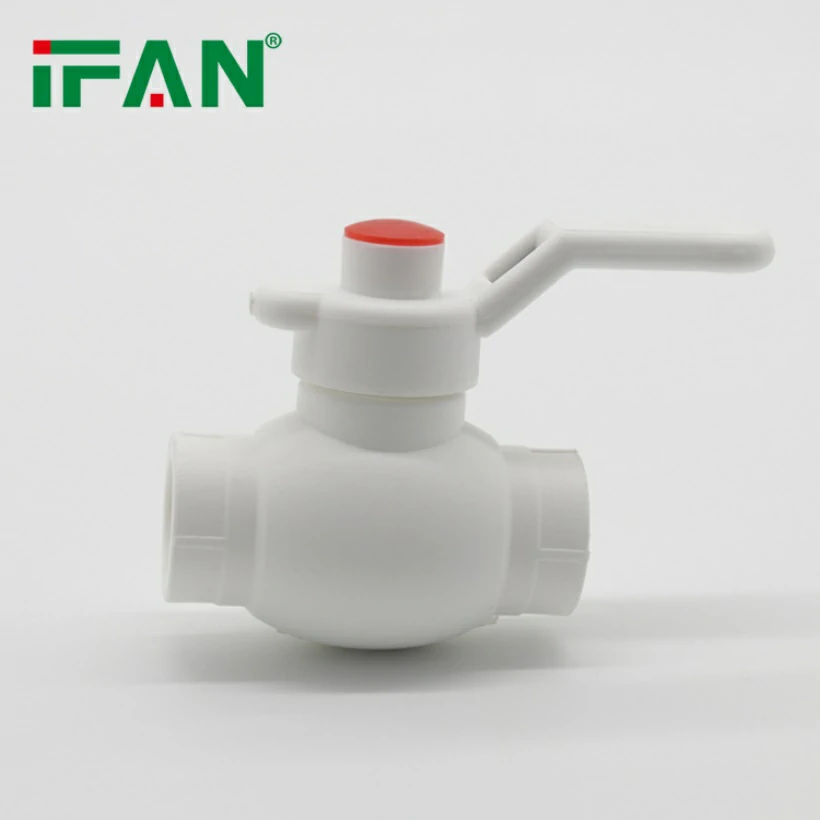
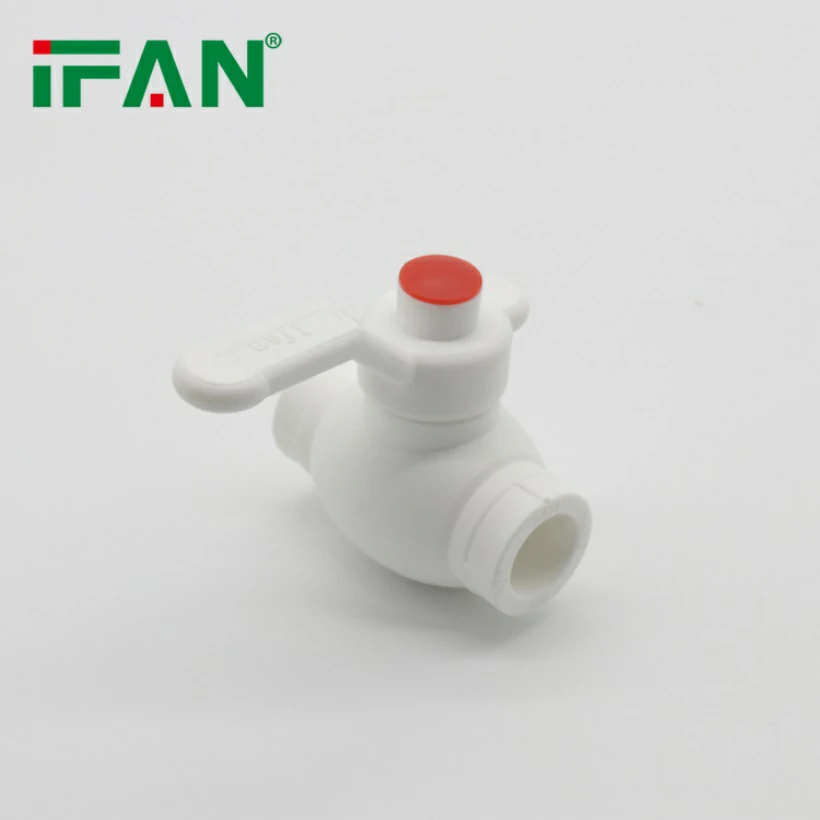
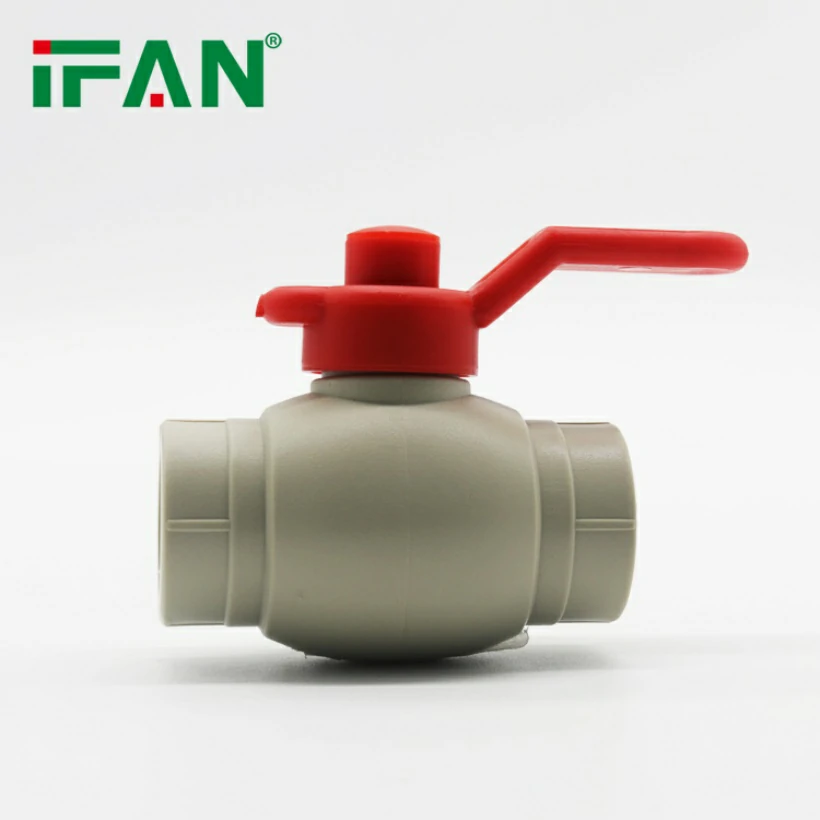
Corrosion Resistance PPR Ball Valve
Type:PPR Ball Valve
Brand:IFAN
Connecting method:Hot Melt
Applications:Water Systems
Color:Green,White,Blue
- Fast Delievery
- Quality Assurance
- 24/7 Customer Service
Product Introduction

| Product Name | PPR Ball Valve |
| Size | 20-63mm Or Customized |
| Color |
Green,White,Blue Or Customized |
| Package | IFAN standard packaging |
| Connection | welding |
| Sample | Sample Free |
| Contact |
Welcome to contact IFAN, we are online 24 hours a day to answer your questions!
Understanding the Corrosion Resistance of PPR Ball Valves
Corrosion is a common concern in piping systems, particularly when valves are exposed to water, dissolved minerals, chemical substances, and changing environmental conditions. In conventional metal valves, prolonged contact with certain fluids may cause oxidation, chemical reactions, or surface deterioration. These processes can gradually affect the material structure and internal surfaces.
A PPR ball valve addresses this issue through the use of polypropylene random copolymer (PPR), a thermoplastic material with specific chemical resistance characteristics. Unlike conventional metallic materials, PPR does not undergo electrochemical rusting when exposed to water and oxygen. Its polymer structure also limits its reaction with many substances commonly encountered in water distribution systems.
The corrosion resistance of a PPR ball valve is closely related to the chemical composition of the material, the nature of the transported medium, and the surrounding operating conditions. Examining these factors helps explain how the valve maintains its material integrity when installed in different piping environments.
Chemical Structure of PPR Material
Polypropylene random copolymer is produced by incorporating ethylene units into a polypropylene molecular chain. This arrangement influences the physical and chemical characteristics of the resulting polymer. Its molecular structure contains a predominantly nonpolar hydrocarbon backbone, which generally has limited interaction with water and many common inorganic substances.
Unlike metals, PPR does not rely on a protective oxide layer to resist corrosion. Its resistance comes primarily from the chemical stability of the polymer itself. Water cannot cause the same oxidation and electrochemical reactions commonly associated with iron-based materials.
This distinction is particularly relevant in water supply installations. When water flows through a PPR valve, the material does not develop conventional rust or release corrosion products associated with metallic oxidation. However, chemical compatibility must still be considered because certain aggressive substances, solvents, and extreme operating conditions can affect polymer materials.
Resistance to Acids and Alkaline Substances
Chemical exposure is another important factor when evaluating the corrosion resistance of a PPR ball valve. PPR generally demonstrates resistance to many dilute acids and alkaline solutions. This characteristic makes the material suitable for various applications where compatible chemical substances may come into contact with the valve.
The polymer structure is not easily affected by many common aqueous acidic and alkaline environments. Unlike certain metals, it does not readily undergo acid-induced oxidation or alkaline corrosion under suitable conditions.
Nevertheless, resistance varies according to chemical concentration, temperature, exposure duration, and the specific composition of the transported medium. Strong oxidizing acids and highly concentrated chemicals may cause changes in polymer properties. Therefore, PPR should not be regarded as universally resistant to every chemical substance.
Before selecting a valve for chemical transportation, the compatibility of the exact PPR grade with the intended medium should be verified through the manufacturer's chemical resistance information.
No Rust Formation on Internal Surfaces
One noticeable characteristic of PPR ball valves is that their internal surfaces do not produce conventional iron oxide or rust. In metallic piping systems, corrosion may generate particles that separate from the pipe wall and enter the transported fluid. This process can influence water appearance and contribute to deposits within downstream components.
Because PPR is a nonmetallic material, this type of iron-based corrosion does not occur on its surface. The ball, valve body, and other PPR components do not develop rust through ordinary contact with water.
This distinction is relevant in water distribution systems where the condition of the internal flow path needs to be considered. However, the absence of rust does not mean that the valve is completely free from internal contamination. External particles, mineral deposits, and residues introduced during installation may still collect inside the valve and require appropriate cleaning.
Influence of Temperature on Corrosion Resistance
Temperature is an important variable in the chemical behavior of polymer materials. Although PPR has resistance to many substances under normal operating conditions, its chemical compatibility may change when temperature increases.
Higher temperatures can accelerate chemical reactions between a polymer and an incompatible medium. They may also influence molecular movement and alter certain material properties over time. Consequently, a chemical substance that is compatible with PPR at room temperature may require additional evaluation when transported at elevated temperatures.
For hot water applications, the valve should operate within the temperature and pressure ranges specified by its manufacturer. Chemical resistance data should also correspond to the actual operating temperature rather than relying exclusively on room-temperature test results.
Environmental Factors and Material Compatibility
The surrounding installation environment can also influence the condition of a PPR ball valve. Contact with soil moisture, atmospheric humidity, and ordinary water exposure does not create conventional metallic corrosion in PPR. However, prolonged exposure to ultraviolet radiation, certain organic solvents, and incompatible chemicals may affect the polymer surface.
The transported medium should therefore be evaluated before the valve is installed. Factors such as chemical composition, concentration, pH, operating temperature, and exposure time provide useful information for material selection.
It is also important to distinguish between corrosion resistance and resistance to every form of material degradation. PPR resists many chemical corrosion processes, but it can still be affected by unsuitable environmental conditions, mechanical damage, or chemical agents outside its compatibility range.


Hot Tags: corrosion resistance ppr ball valve, China corrosion resistance ppr ball valve manufacturers, suppliers, factory, Green PPR Reducer, Male PPR Pipe Socket, PPR Coupling Adaptor, Ppr Male Threaded Elbow, PPR Plumbing Fittings, PPR Tee