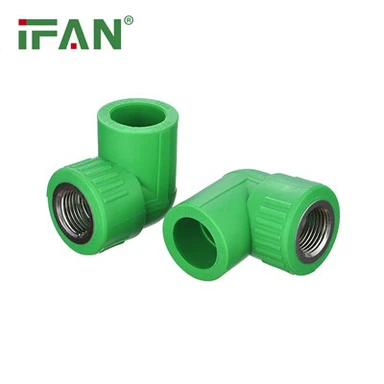


Stainless Steel Pipe Fittings Support High-pressure
Type:Stainless steel pipe fittings
Brand:IFAN
Connecting method:Thread
Applications:Water Systems
Color:Sliver
- Fast Delievery
- Quality Assurance
- 24/7 Customer Service
Product Introduction


| Product Name | IFAN Brass Thread Fittings |
| Size | 1/2"-2" Or Customized |
| Color |
Yellow/White Or Customized |
| Package | IFAN standard packaging |
| Features | Durable |
| Sample | Sample Free |
| Contact | Click HERE to contact us now! |
Welcome to contact IFAN, we are online 24 hours a day to answer your questions!
Introduction
Pressure is one of the most critical factors in the design and operation of piping systems. In industries such as petrochemicals, hydraulic engineering, power generation, and industrial processing, fluids and gases are often transported under substantial pressure levels. Every component within the pipeline must be capable of handling these forces safely and consistently. Among the various connection components used in piping networks, stainless steel pipe fittings are widely selected for high-pressure service because of their mechanical properties and structural characteristics. Their ability to withstand intense internal forces allows them to function effectively in systems where pressure control is a primary requirement.
Understanding Pressure Loads in Piping Systems
When fluid moves through a pipeline under pressure, forces are exerted on every section of the system. Straight pipes distribute these forces along their length, while fittings experience additional stress because they alter flow direction, connect different pipe sections, or regulate movement within the network. Elbows, tees, reducers, and couplings often encounter concentrated pressure loads due to changes in flow patterns.
As operating pressure increases, these localized stresses become more significant. Pipe fittings must therefore possess sufficient strength and structural consistency to accommodate the force generated within the system. Stainless steel fittings are engineered to meet these requirements, making them suitable for applications where pressure levels remain high throughout operation.
High Yield Strength for Pressure Containment
One important characteristic that supports high-pressure performance is yield strength. Yield strength refers to the amount of stress a material can withstand before permanent deformation occurs. In pressurized piping systems, maintaining dimensional stability is essential because even slight distortion can affect system operation.
Stainless steel pipe fittings exhibit high yield strength, enabling them to resist the forces generated by compressed liquids and gases. This property allows the fittings to maintain their original geometry even when subjected to demanding operating pressures. Because the fittings retain their shape, flow pathways remain consistent and connection points continue to function as intended. This mechanical stability is a key factor in their widespread use within high-pressure installations.
Maintaining Wall Integrity Under Internal Pressure
Internal pressure continuously pushes outward against the walls of a fitting. If the material lacks sufficient strength, the wall may expand excessively or become unable to contain the pressure safely. The design of stainless steel fittings addresses this challenge by combining appropriate wall thickness with material properties capable of handling substantial internal loads.
The metal structure distributes stress throughout the fitting body, helping to manage pressure concentration in critical areas. This characteristic is especially important in forged and seamless fittings that are commonly specified for demanding pressure applications. By maintaining wall integrity under significant internal force, stainless steel fittings contribute to stable system operation.
Performance in Dynamic Pressure Conditions
Not all pressure systems operate at a constant level. Pumps starting and stopping, valve operations, and process adjustments can create rapid pressure changes. These fluctuations generate varying stress levels that affect fittings throughout the piping network.
Stainless steel pipe fittings are commonly used in systems where pressure cycles occur repeatedly. Their mechanical properties allow them to accommodate changing stress conditions while maintaining operational consistency. This capability is particularly important in industrial environments where pressure surges, temporary spikes, or fluctuating flow rates are part of normal operations. Stable performance under dynamic pressure conditions helps maintain process continuity and operational control.
Secure Joining in High-Pressure Networks
A high-pressure system is only as strong as its connection points. Fittings are responsible for joining pipe sections while ensuring that pressure remains contained within the network. Poorly designed connections can create weak areas where pressure concentration increases.
Stainless steel fittings are manufactured with precise dimensions and strict quality standards to ensure compatibility with pressure-rated piping systems. Whether connected through welding, threading, or compression methods, the fittings are designed to maintain a secure interface between adjoining components. Accurate manufacturing contributes to uniform pressure distribution throughout the connection, supporting the overall performance of the system under elevated operating conditions.
Suitability for Industrial Pressure Requirements
Many industrial sectors require piping systems that operate at pressures far beyond those encountered in residential or commercial installations. Oil transportation systems, hydraulic circuits, steam distribution networks, and chemical processing units frequently function under demanding pressure specifications.
Stainless steel pipe fittings are often selected for these environments because they can be produced according to recognized pressure standards and industry requirements. Their mechanical characteristics make them compatible with applications that require precise pressure management and reliable containment. Engineers frequently specify stainless steel fittings when designing systems that must operate safely under challenging pressure conditions.
Consistency Across Different Fitting Configurations
High-pressure systems require a variety of fitting types to accommodate changes in direction, pipe size, and flow distribution. Regardless of whether the fitting is an elbow, tee, cap, union, or reducer, pressure-handling capability must remain consistent throughout the network.
Stainless steel can be manufactured into numerous fitting configurations while maintaining the material characteristics necessary for pressure service. This consistency allows engineers to design complex piping layouts without compromising pressure performance. Each fitting type can fulfill a specific operational role while remaining aligned with the pressure requirements of the overall system.
Conclusion
Stainless steel pipe fittings support high-pressure applications through a combination of mechanical strength, pressure containment capability, structural stability, and precise manufacturing. They are designed to withstand the forces generated within pressurized systems, maintain dimensional accuracy, and provide secure connections throughout the piping network. From constant-pressure operations to systems experiencing frequent pressure fluctuations, stainless steel fittings play an essential role in managing internal forces and ensuring that pressure remains effectively controlled. Their suitability for demanding pressure environments has made them a standard component in many industrial piping systems around the world.


Hot Tags: stainless steel pipe fittings support high-pressure, China stainless steel pipe fittings support high-pressure manufacturers, suppliers, factory, Stainless Steel Threaded Pipe Fittings