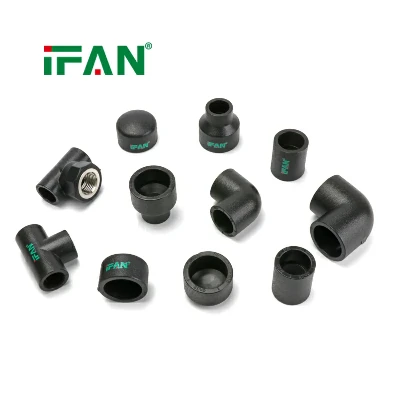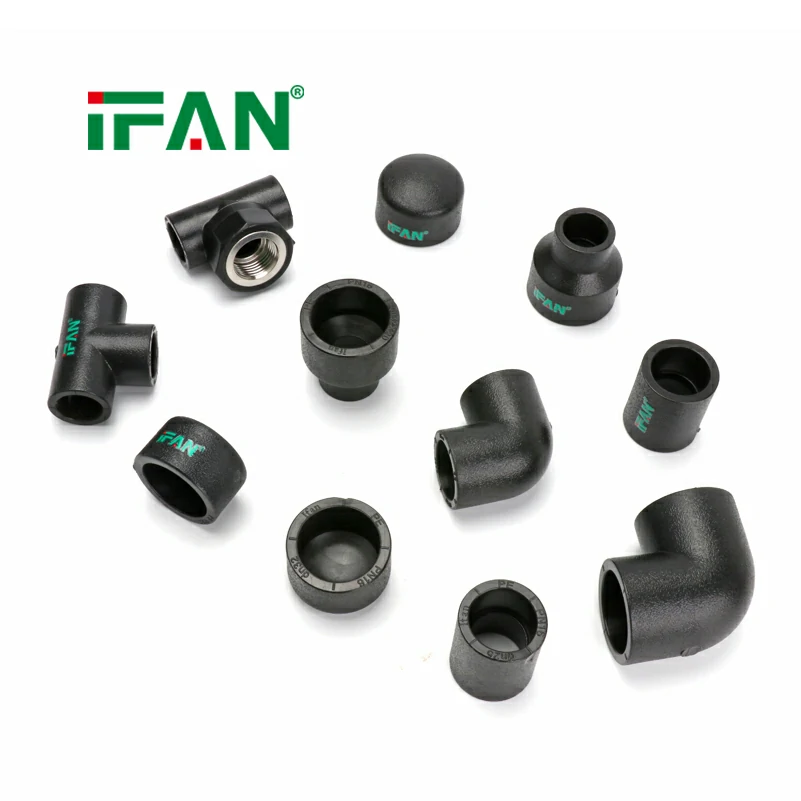

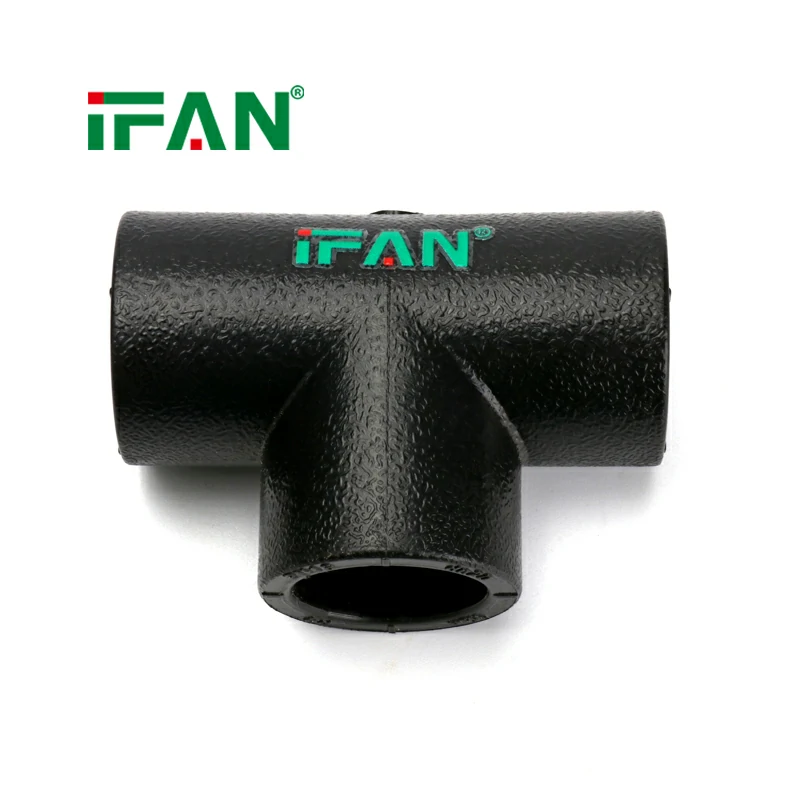
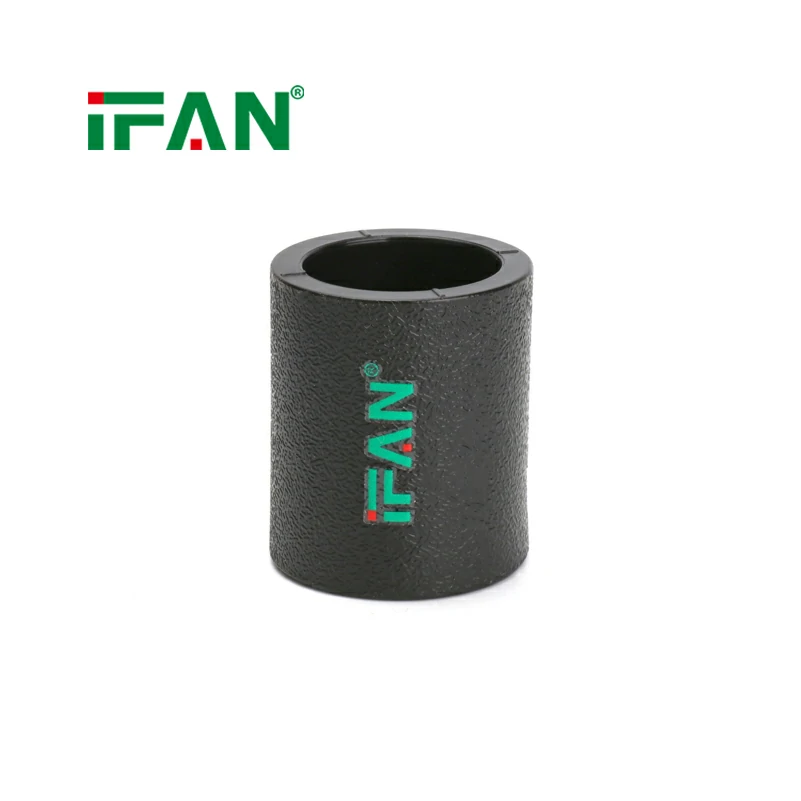
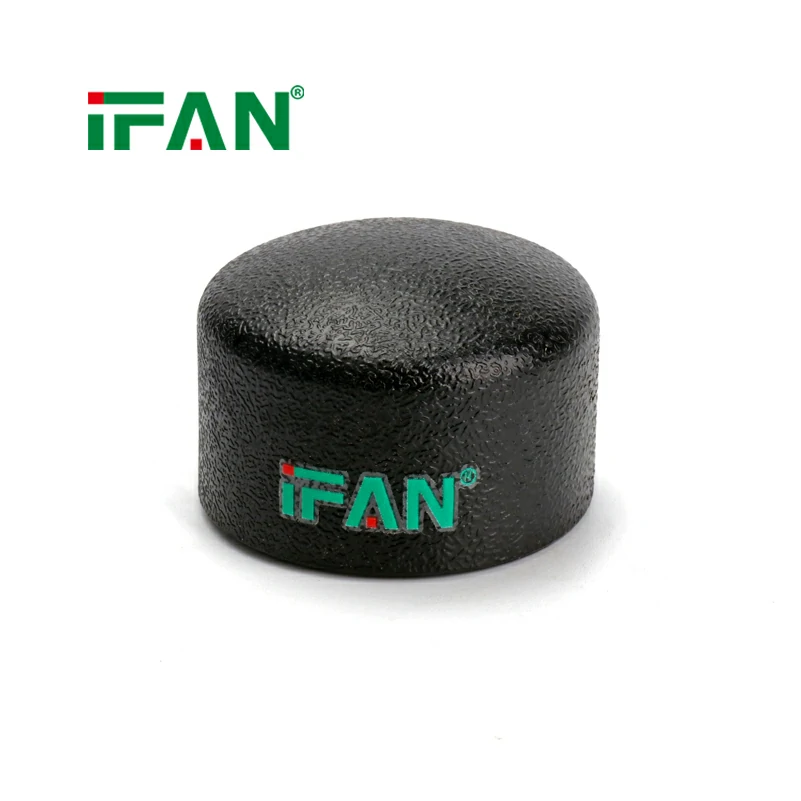
Corrosion-Resistant HDPE Socket Welding Fittings
Brand: IFAN
Materials:PE
Size:20-110mm
Sample: Free Sample
Service: OEM&ODM
- Fast Delievery
- Quality Assurance
- 24/7 Customer Service
Product Introduction
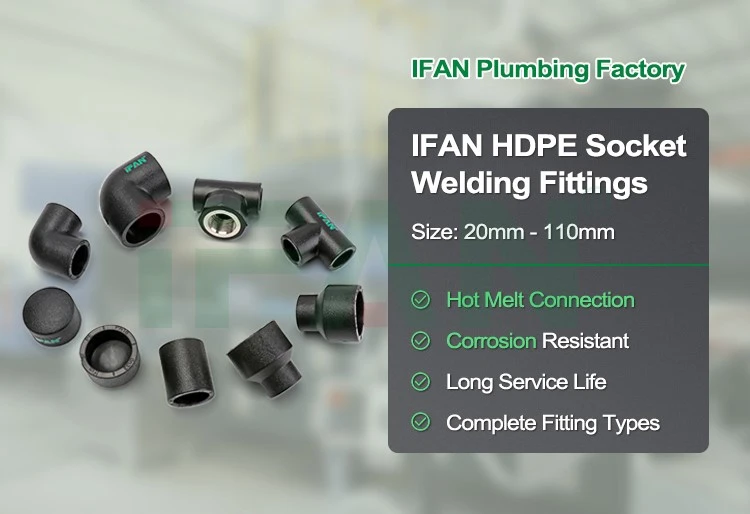
| Product Name | HDPE Socket Welding Fittings |
| Size | 20-110mm |
| Color | Black Color Or Customized |
| Connection | Welding |
| MOQ | 100PCS |
| Sample | Sample Free |
| Contact |
Understanding Chemical Corrosion in HDPE Piping Systems
Chemical corrosion occurs when materials react with substances in their surrounding environment, potentially changing their structure, surface condition, or mechanical properties. In industrial piping systems, these substances may include acids, alkalis, salts, cleaning agents, and various chemical solutions. Selecting appropriate pipe fittings requires an understanding of how these media interact with the material under actual operating conditions.
High-density polyethylene (HDPE) is a thermoplastic polymer whose chemical behavior differs significantly from that of conventional metallic materials. It does not rely on a protective metal oxide layer to resist corrosion. Instead, its resistance is associated with its polymer structure and the relatively low chemical reactivity of its carbon-based molecular chains under many common service conditions.
HDPE socket welding fittings are designed to connect compatible HDPE pipes through thermal fusion. Their ability to resist chemical attack depends on the properties of the polyethylene, the substances being transported, and the conditions surrounding the connection. Evaluating these factors helps determine whether a particular fitting is appropriate for a specific chemical application.
How Polyethylene Responds to Chemical Exposure
The molecular structure of HDPE contributes to its resistance to many aqueous chemicals. Its polymer chains consist primarily of carbon and hydrogen atoms, with strong covalent bonds forming the backbone of the material. Many acids, alkalis, and salt solutions do not readily break these bonds under ordinary operating conditions.
Unlike metals, HDPE does not undergo electrochemical corrosion in the conventional sense. It is therefore not susceptible to rust formation or galvanic corrosion in the way that certain metallic piping components can be. This distinction is important in systems where chemical solutions, moisture, or dissolved salts would otherwise promote metal deterioration.
However, chemical resistance should not be interpreted as complete immunity. Some substances can penetrate the polymer, cause swelling, extract additives, or alter its physical properties. Strong oxidizing chemicals, certain organic solvents, and elevated temperatures may increase the likelihood of chemical attack. The suitability of an HDPE fitting must therefore be determined by considering the exact chemical composition and exposure conditions rather than relying on the material name alone.
Resistance to Acids, Alkalis, and Salt Solutions
HDPE socket welding fittings are commonly evaluated for applications involving many dilute acids, alkaline solutions, and inorganic salts. Depending on concentration and temperature, materials such as hydrochloric acid solutions, sodium hydroxide solutions, and various salt-containing liquids may be compatible with HDPE.
This resistance is particularly relevant in chemical processing, water treatment, and industrial liquid transfer. In these environments, fittings may encounter substances that can react with metals or damage materials that are unsuitable for the transported medium. Polyethylene provides an alternative material whose response to many of these chemicals is less dependent on electrochemical reactions.
Nevertheless, chemical compatibility varies with the specific substance and its concentration. A dilute solution may be acceptable under conditions where a concentrated solution is not. Temperature also influences chemical reaction rates and the rate at which substances can diffuse into a polymer. Before selecting a fitting, consult a recognized chemical compatibility chart and confirm the manufacturer's recommendations for the intended application.
Evaluating Oxidizing Agents and Organic Chemicals
Not all chemicals interact with HDPE in the same way. Oxidizing agents require particular attention because they can attack polymer chains or initiate chemical changes under certain conditions. Exposure to concentrated oxidizing acids, aggressive oxidizing solutions, or other strongly reactive media may cause changes in the material that cannot be predicted from general acid-resistance information.
Organic chemicals also require careful evaluation. Some solvents and hydrocarbon-based liquids can diffuse into polyethylene, resulting in swelling, softening, or changes in dimensions. The degree of interaction depends on the chemical structure, exposure duration, temperature, and stress present in the component.
For this reason, a fitting intended for an aqueous acid solution should not automatically be considered suitable for an organic solvent or a chemically mixed liquid. Where the transported medium contains several ingredients, compatibility should be assessed against the complete formulation whenever possible. For uncertain applications, obtain specific guidance from the fitting manufacturer or a qualified materials specialist before installation.
The Role of Temperature and Chemical Concentration
Temperature is a key factor in determining the chemical resistance of HDPE socket welding fittings. As temperature increases, molecular movement generally becomes more active, which may accelerate chemical reactions and increase the rate at which certain substances diffuse into the polymer. A chemical that is compatible at room temperature may therefore require additional evaluation at higher operating temperatures.
Socket Weld Quality and Chemical Exposure
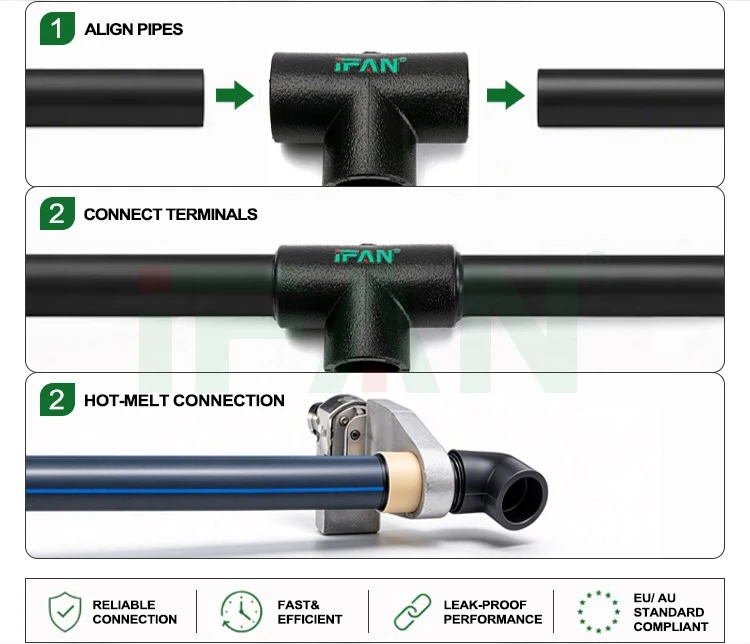
Chemical resistance depends not only on the base material but also on the condition of the finished connection. In socket welding, the pipe and fitting surfaces are heated and joined according to a defined fusion procedure. When the process is performed correctly, the polyethylene at the interface fuses to form a continuous joint between compatible components.
Improper welding can introduce irregular fusion areas, excessive material displacement, or other defects. Such imperfections may create locations where transported chemicals accumulate or where mechanical stresses become concentrated. If the medium is aggressive, these conditions can complicate the assessment of the connection's overall suitability.
The use of compatible components, correct welding equipment, and manufacturer-specified fusion parameters is therefore important. Installation personnel should follow the prescribed procedures and inspect completed joints in accordance with applicable requirements. Chemical compatibility data for the base polymer should not be treated as proof that an incorrectly assembled fitting will perform as intended.




Hot Tags: corrosion-resistant hdpe socket welding fittings, China corrosion-resistant hdpe socket welding fittings manufacturers, suppliers, factory, Compression HDPE Pipe Fittings, HDPE Compression Fittings, HDPE Pipe and Fitting, HDPE Pipe Socket, HDPE Water Pipe Fittings, PE Pipe Fitting