

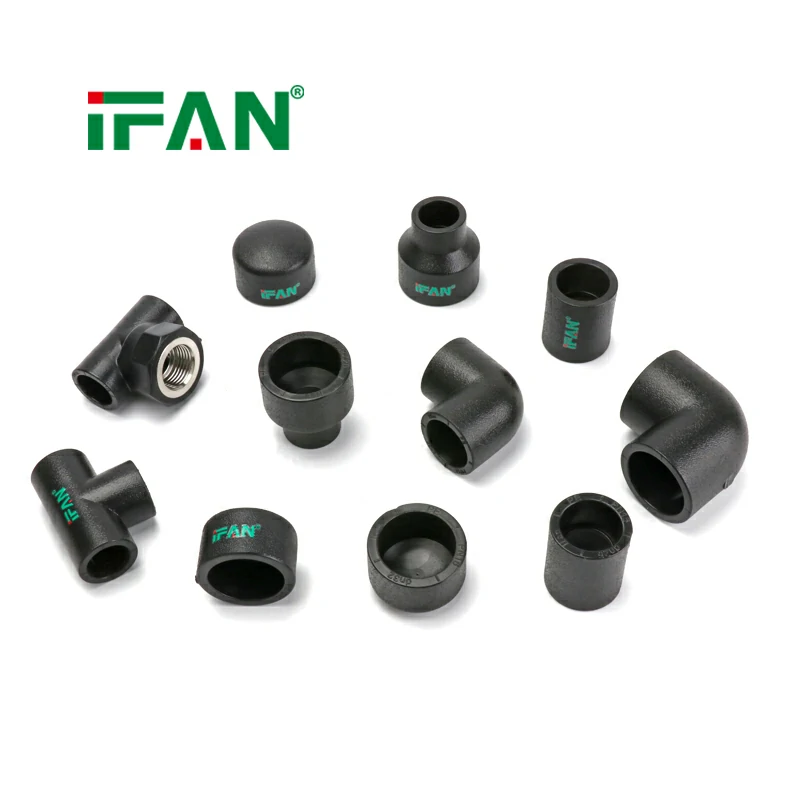

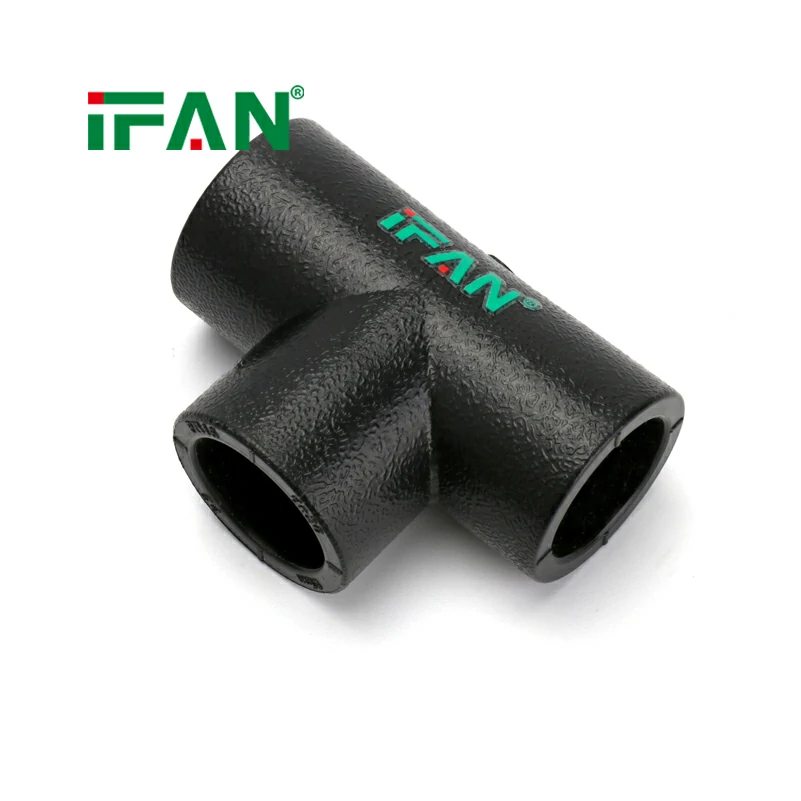
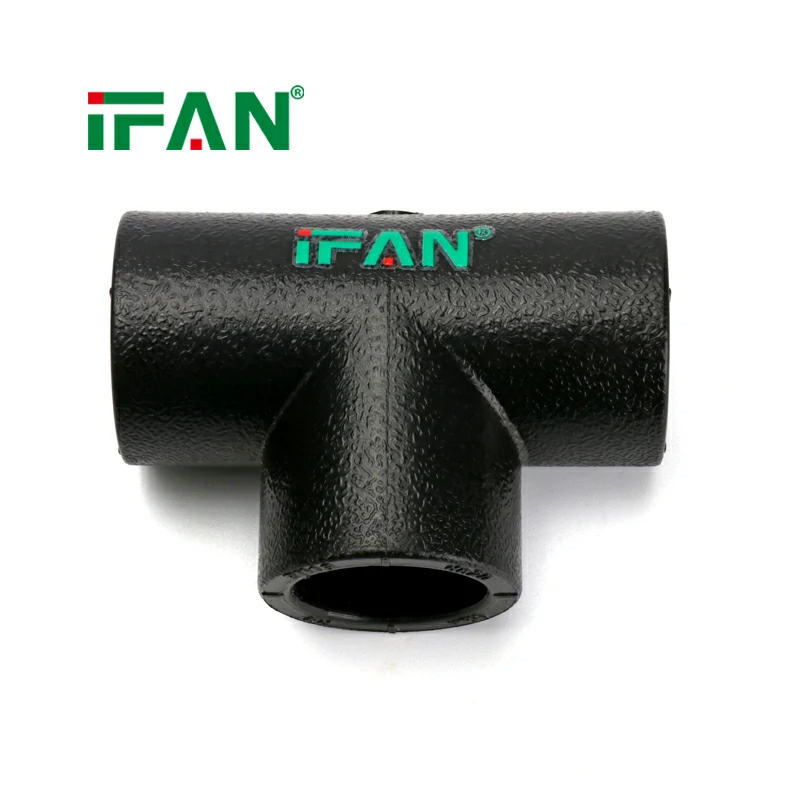
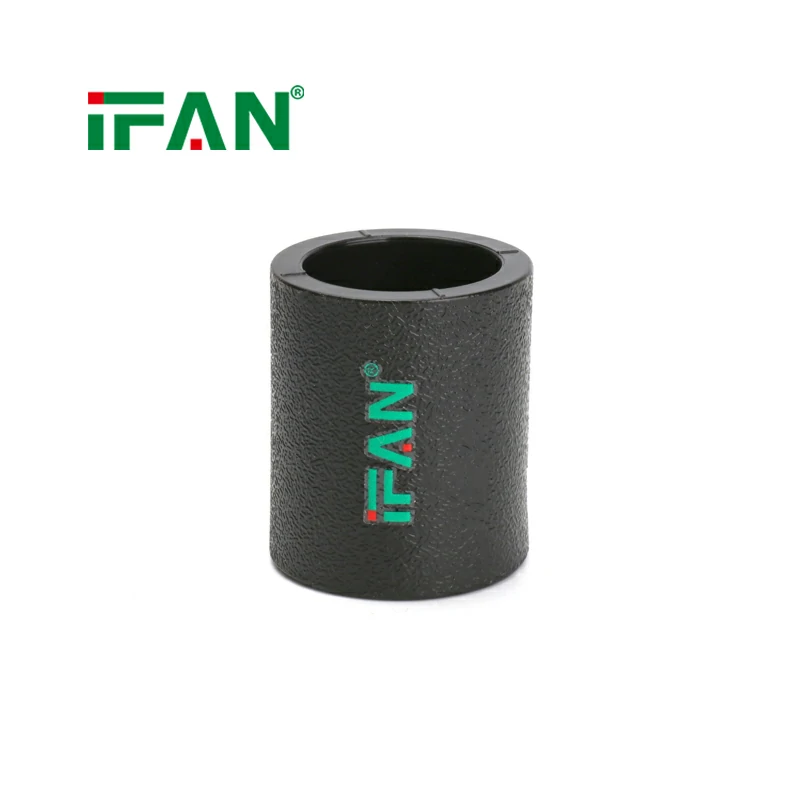
Leak Proof HDPE Socket Welding Fittings
Brand: IFAN
Materials:PE
Size:20-110mm
Sample: Free Sample
Service: OEM&ODM
- Fast Delievery
- Quality Assurance
- 24/7 Customer Service
Product Introduction
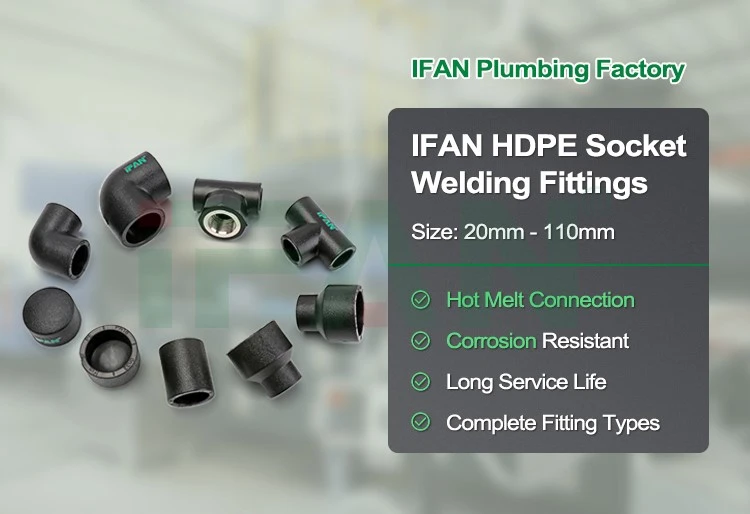
| Product Name | HDPE Socket Welding Fittings |
| Size | 20-110mm |
| Color | Black Color Or Customized |
| Connection | Welding |
| MOQ | 100PCS |
| Sample | Sample Free |
| Contact |
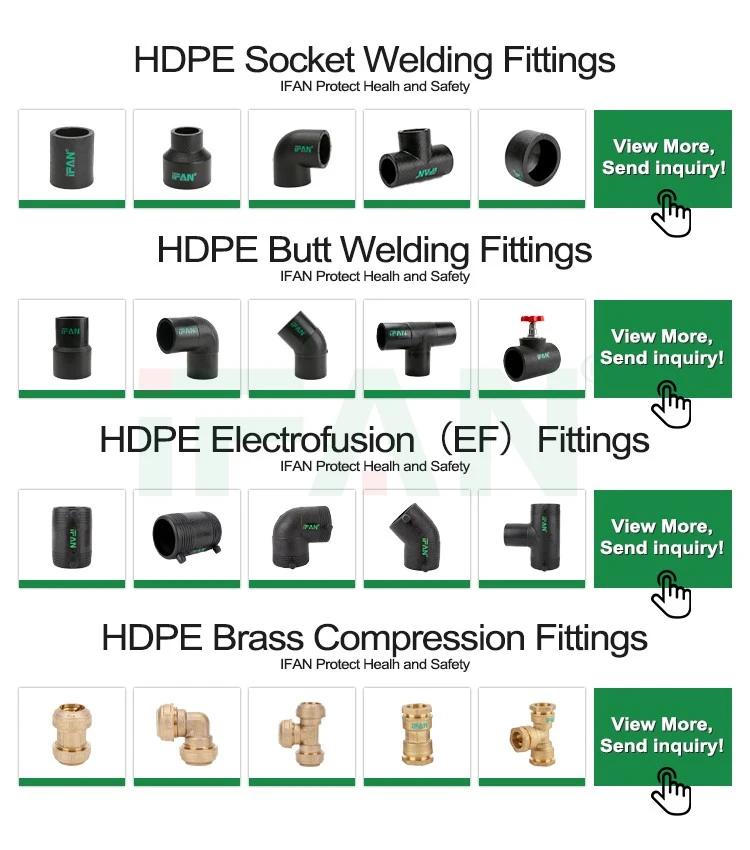
Understanding the Role of Socket Welding Fittings
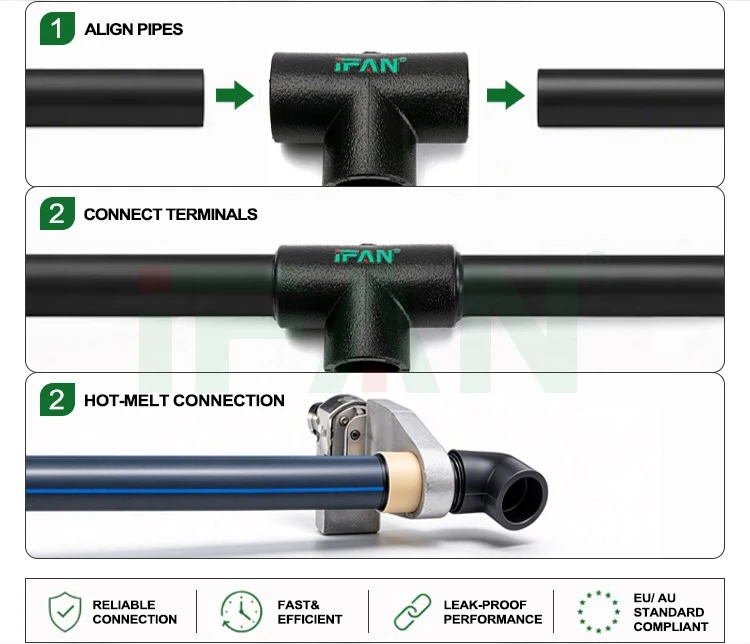
High-density polyethylene (HDPE) socket welding fittings are used to connect compatible plastic pipes in systems that require controlled, leak-resistant joints. The connection is formed by heating the outer surface of the pipe end and the inner surface of the fitting socket, then joining the softened materials under specified conditions. As the joint cools, the heated surfaces fuse into a continuous connection.
Achieving a leakproof result requires more than selecting the correct fitting. Pipe dimensions, surface condition, heating temperature, insertion depth, alignment, and cooling time must all be controlled. Each factor influences how evenly the materials fuse and whether the finished joint contains gaps, weak areas, or internal stresses. Understanding these requirements allows installers to approach socket welding as a precise joining process rather than a simple assembly task.
Selecting Compatible Pipes and Fittings
The first step toward preventing leakage is confirming that the pipe and fitting are suitable for socket fusion. Their material grades, outside diameters, socket dimensions, and applicable welding specifications must be compatible. Even when two components appear similar, differences in dimensions or material composition can prevent proper fusion.
Before installation, inspect both components for cracks, scratches, deformation, contamination, and irregular surfaces. Pay particular attention to the pipe end and the inside of the fitting socket, where the fusion interface will form. Damaged or contaminated components should not be used without an appropriate assessment.
Dimensional compatibility also determines how the pipe enters the socket. Excessive looseness can interfere with consistent contact between the heated surfaces, while an unsuitable fit may make correct insertion difficult. Using components that meet the same applicable standards and following the manufacturer's instructions establish the necessary conditions for a properly formed joint.
Preparing the Pipe Surface Correctly
Surface preparation directly affects the quality of the fusion interface. Dirt, moisture, oil, dust, and other contaminants can interfere with the contact between softened polyethylene surfaces. Before welding, clean the pipe end and fitting socket according to the manufacturer's specified procedure, using approved cleaning materials where required.
Cut the pipe squarely so that its end enters the socket evenly. An angled cut can create uneven insertion and inconsistent fusion around the circumference. Remove burrs or loose particles without unnecessarily altering the pipe's outside diameter. Mark the required insertion depth on the pipe to provide a clear reference during assembly.
Tools and work surfaces should also be clean. Avoid touching prepared fusion areas with bare hands or placing components on contaminated surfaces. If preparation is interrupted and the joining surfaces become dirty, clean them again as specified. Consistent preparation helps prevent localized gaps that could become leakage paths after the system enters service.
Controlling Heating Temperature and Time
Correct heating is central to socket welding. The heating tool must operate within the temperature range specified for the pipe and fitting system. If the surfaces receive insufficient heat, the polyethylene may not soften enough to form an effective molecular bond. Excessive heating, however, can damage the material, distort the components, or create irregular fusion zones.
Use a suitable socket fusion tool with correctly sized heating attachments. Check that the tool reaches its specified operating temperature before starting the operation. The pipe and fitting should be positioned on the appropriate heating surfaces for the prescribed period, with timing determined by the applicable procedure and component dimensions.
Heating times should never be estimated solely by appearance or by copying instructions for a different pipe size. Environmental conditions, equipment specifications, and manufacturer requirements may influence the procedure. Accurate temperature control and consistent timing help establish uniform softening across the intended joining surfaces.
Allowing Sufficient Cooling Time
Cooling is an essential stage in establishing a leakproof socket weld. Although the external surfaces may appear firm shortly after assembly, the joint requires the specified cooling period before it can withstand handling or applied loads. Moving the pipe too early can disturb the fusion interface or introduce stress that is not immediately visible.
Follow the manufacturer's cooling schedule for the relevant pipe dimensions and welding conditions. Avoid bending, rotating, pressurizing, or otherwise loading the connection during this period unless the approved procedure explicitly permits it. Maintain the required alignment and support until the joint has cooled sufficiently.
Cooling time should not be shortened simply to accelerate installation. A connection that has not completed the prescribed cooling process may contain weaknesses that become apparent only during pressure testing or operation. Allowing the joint to cool under controlled conditions helps preserve the fusion structure formed during heating and insertion.
Inspecting and Testing the Finished Connection
Inspection provides an opportunity to identify visible irregularities before the pipeline is placed into service. Examine the joint for uneven material displacement, misalignment, unexpected gaps, contamination marks, or other signs of improper assembly. Compare the finished connection with the acceptance criteria established by the relevant standard or manufacturer's procedure.
Visual inspection alone cannot confirm that every fusion interface is free from internal defects. Where required, conduct pressure or leak testing using an approved procedure appropriate for the system's design, operating conditions, and applicable regulations. Test pressure, duration, and acceptance limits should come from the specified engineering requirements rather than an arbitrary value.
If a joint fails inspection or testing, investigate the cause and replace or remake the connection according to the approved repair procedure. Do not attempt to conceal a defective fusion area through external sealing or unapproved corrective methods. Recording welding parameters, inspection results, and test outcomes also helps identify recurring problems and maintain consistent installation quality.




Hot Tags: leak proof hdpe socket welding fittings, China leak proof hdpe socket welding fittings manufacturers, suppliers, factory, Compression HDPE Pipe Fittings, HDPE Elbow 90, HDPE Pipe Fitting, HDPE Water Pipe Fittings, PE Pipe, PE Pipe Fitting
No Information


