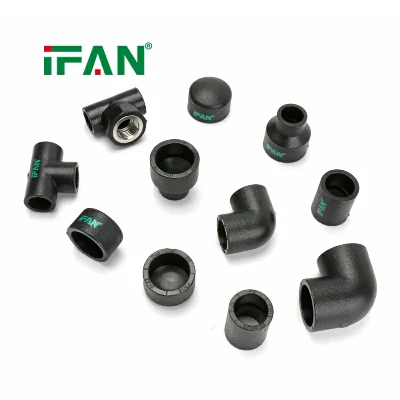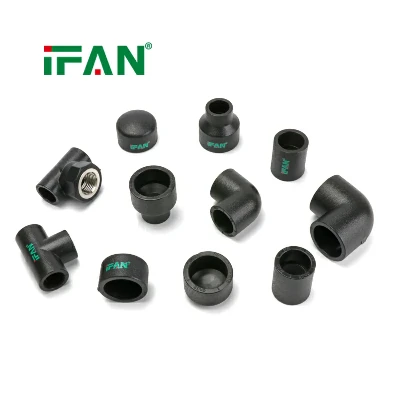

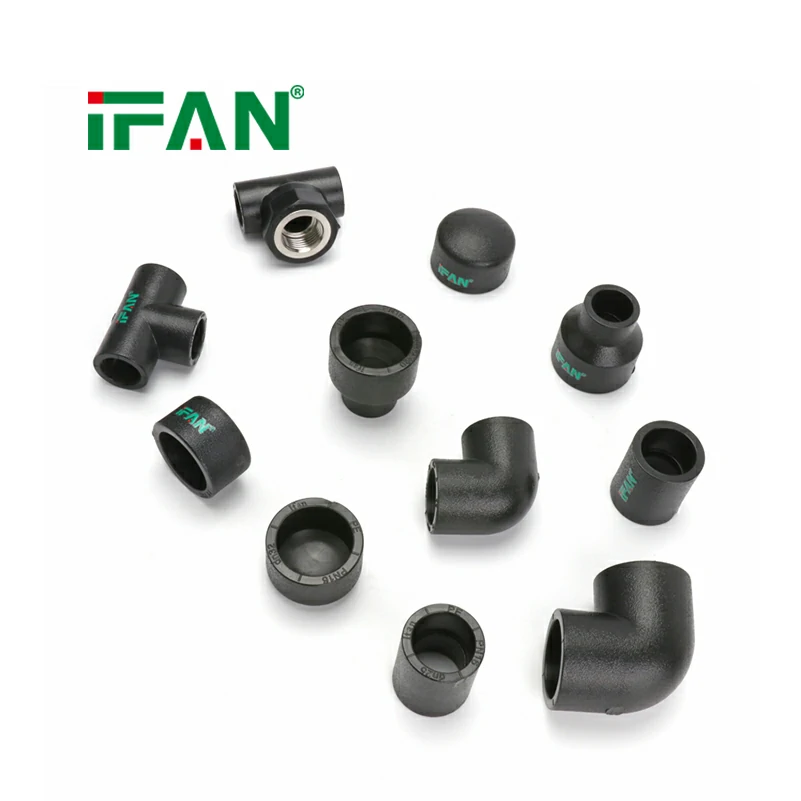

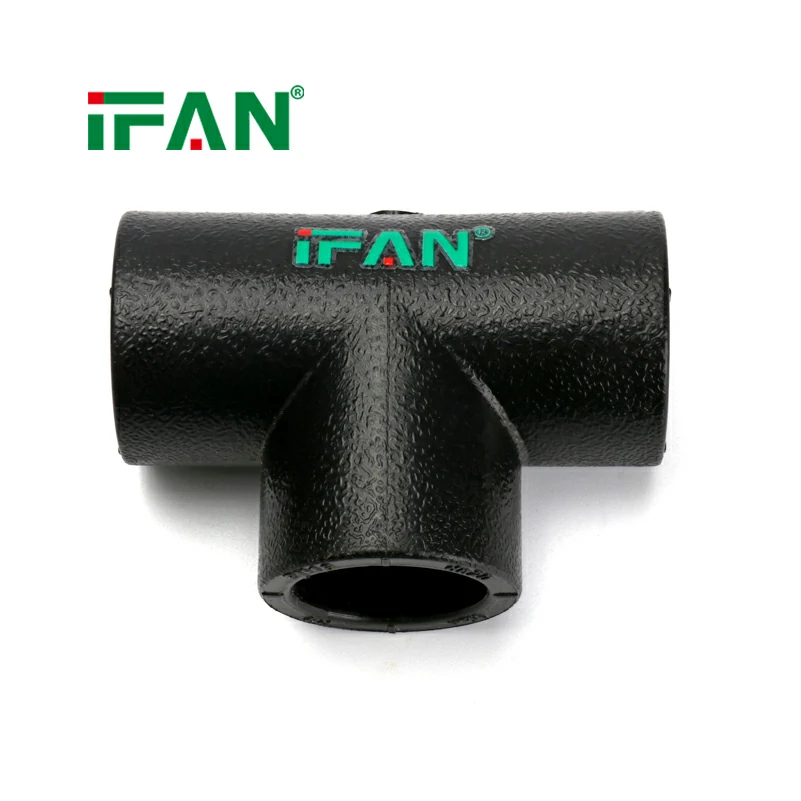
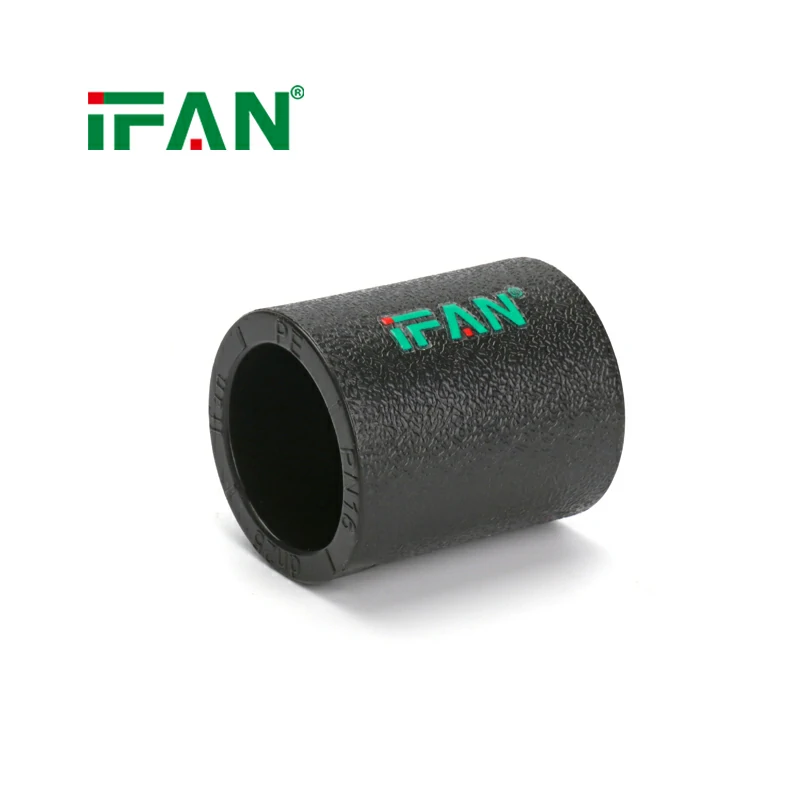
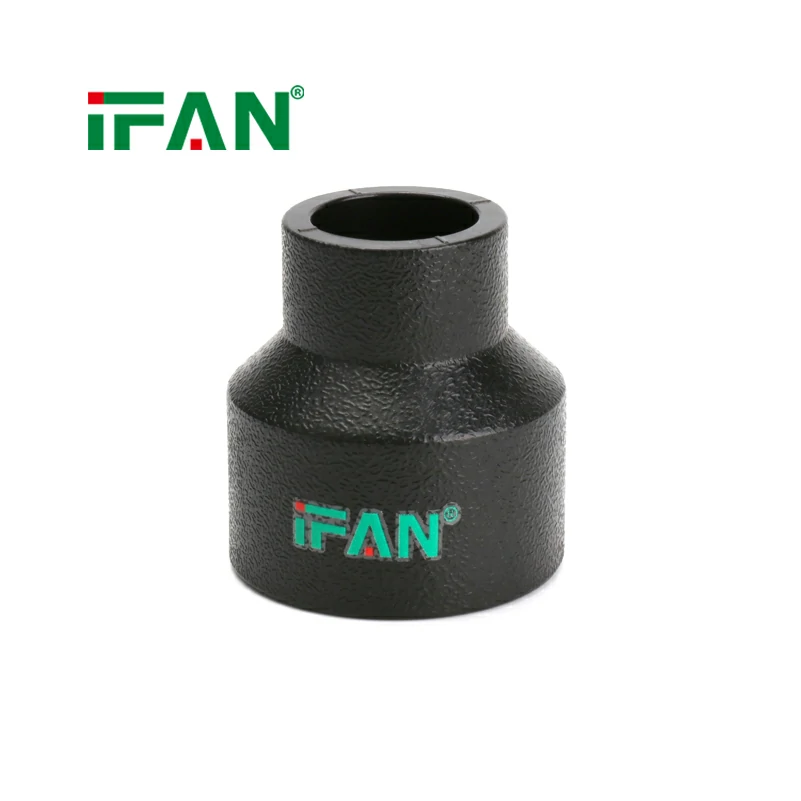
HDPE Socket Welding Fittings Simplify Pipe Installation
Brand: IFAN
Materials:PE
Size:20-110mm
Sample: Free Sample
Service: OEM&ODM
- Fast Delievery
- Quality Assurance
- 24/7 Customer Service
Product Introduction
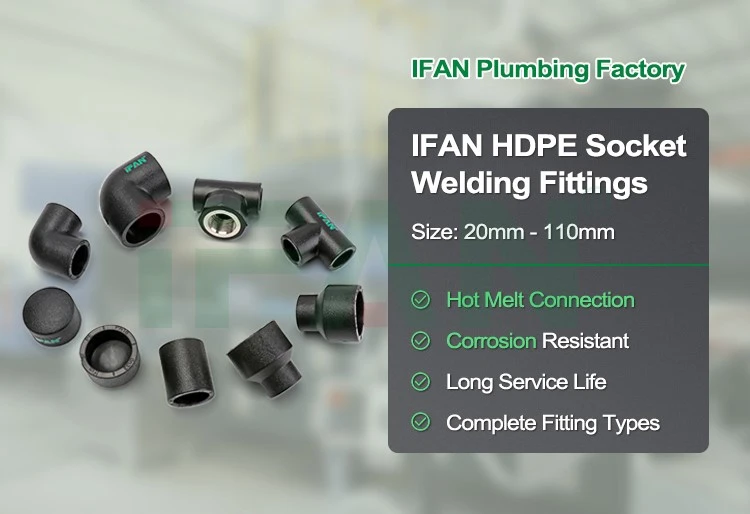
| Product Name | HDPE Socket Welding Fittings |
| Size | 20-110mm |
| Color | Black Color Or Customized |
| Connection | Welding |
| MOQ | 100PCS |
| Sample | Sample Free |
| Contact |
A Practical Approach to Pipe Connection
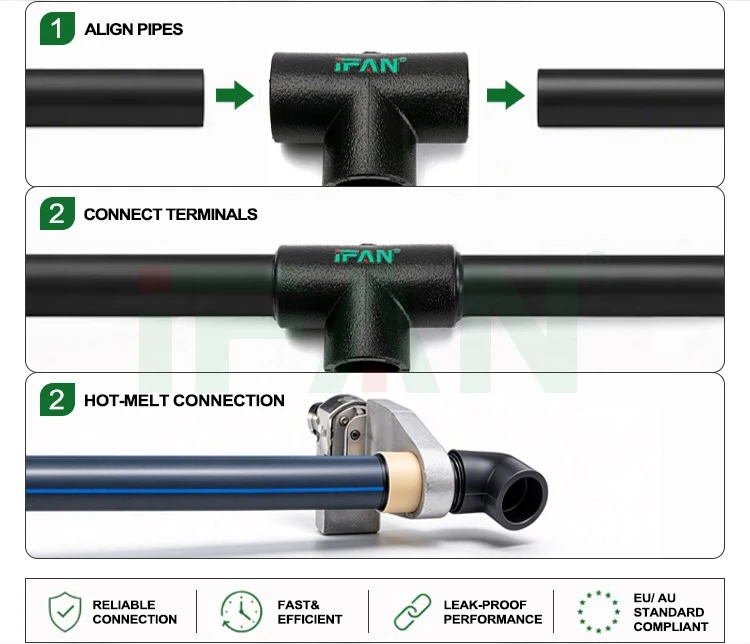
Installing a polyethylene piping system requires careful coordination between pipe measurements, fitting selection, joint preparation, and assembly. HDPE socket welding fittings provide a straightforward connection method that allows compatible pipe sections to be joined through controlled heating and fusion. Instead of assembling multiple threaded parts, installers work directly with the pipe end and the fitting socket.
Choosing Fittings According to the Piping Layout
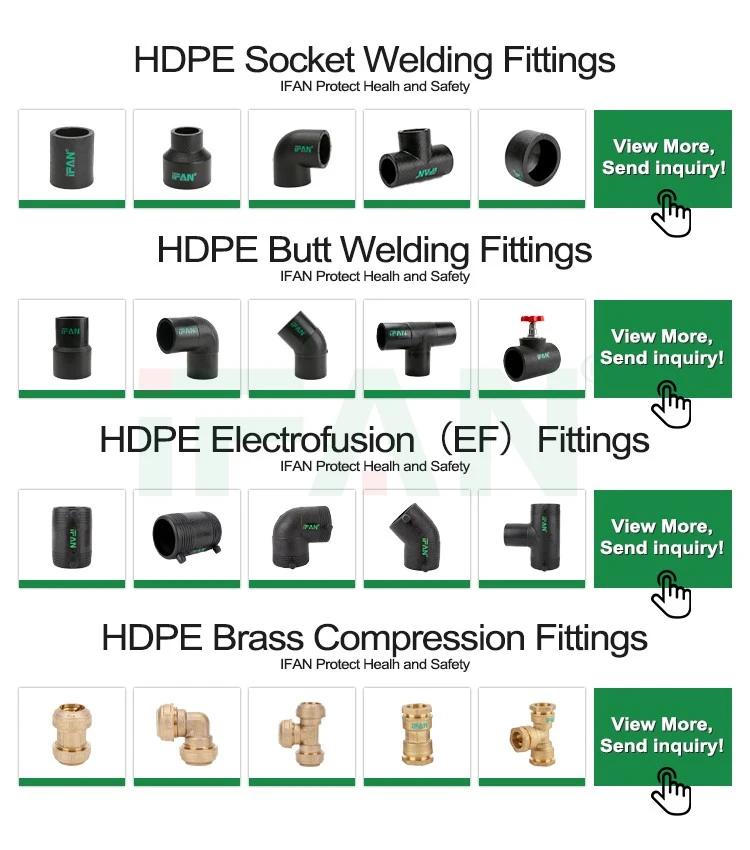
The first step in simplifying installation is selecting fittings that match the planned piping arrangement. HDPE socket welding fittings are available in several configurations, including elbows, tees, couplings, and reducers. Each type serves a specific purpose within the system, so selection should be based on the engineering drawings and connection requirements.
Elbows are used where the pipeline changes direction, while tees create branch connections. Couplings connect compatible pipe sections, and reducers accommodate transitions between specified pipe sizes. Identifying these components before work starts helps installers determine the number and type of fittings required for each section.
Dimensional compatibility must also be confirmed. The pipe outside diameter, fitting socket dimensions, material specifications, and fusion procedure should correspond to the selected piping system. Components that appear similar may not necessarily be suitable for the same connection.
A component schedule prepared before installation can list each fitting by type, size, and location. Workers can then arrange the parts in the order they will be used, reducing unnecessary searching and helping prevent confusion when several fitting configurations are involved.
Measuring and Cutting Pipes Accurately
Accurate pipe measurement is an important part of an organized installation process. Before cutting, installers should refer to the piping layout and account for the fitting arrangement, required insertion depth, and available installation space. Measurements should be checked before material is removed, particularly when several sections must fit together within a fixed area.
Use a suitable pipe cutter to produce a square end. An uneven cut can make insertion difficult and interfere with the intended assembly position. After cutting, remove loose particles and burrs as required by the manufacturer's instructions, then inspect the pipe end for visible defects.
Organizing the Socket Fusion Workstation
A well-arranged workstation helps installers complete each connection without unnecessary interruptions. Before welding begins, gather the socket fusion machine, correctly sized heating attachments, pipe cutting tools, measuring equipment, approved cleaning materials, and required protective equipment.
Place the fusion machine on a stable support and check that its heating surfaces are clean and suitable for the selected pipe dimensions. The equipment should reach the specified operating temperature before the joining process starts. Installers must follow the manufacturer's instructions for temperature control, heating time, and equipment operation.
Components should be arranged so that the pipe and fitting can move from preparation to heating and assembly without obstacles. This is especially important because the transfer from the heating tool to the joining position must follow the prescribed procedure.
When multiple pipe sizes are involved, label the fittings and corresponding heating attachments clearly. Such organization helps prevent size selection errors and avoids repeated equipment changes caused by uncertainty. A clean, accessible work area also makes it easier to maintain a consistent sequence across successive connections.
Completing Each Joint in a Consistent Sequence
Socket fusion becomes easier to coordinate when every connection follows the same basic workflow. First, inspect the components and prepare the joining surfaces according to the applicable instructions. Next, place the pipe and fitting onto the matching heating attachments and apply the specified heating time.
After heating, remove both components carefully and join them promptly. Insert the pipe straight into the socket until it reaches the marked depth. Avoid twisting or unnecessary adjustment during assembly unless the approved procedure explicitly allows it.
Once the components are joined, hold the connection in the required position and allow it to cool for the specified period. Do not move the joint into the next installation stage before the required cooling time has elapsed.
This sequence provides a clear framework for workers to follow. A simple job checklist can record whether surface preparation, heating, insertion, alignment, and cooling have been completed. For larger installations, assigning specific responsibilities to preparation, welding, and inspection personnel can help coordinate work while ensuring that each task remains within the worker's training and authorization.
Managing Corners, Branches, and Restricted Spaces
Pipe routes rarely consist entirely of straight sections. Equipment connections, wall penetrations, and changes in elevation may require elbows, tees, or other fittings. Checking the intended orientation before welding helps prevent assembly errors that could require rework.
Installers should compare the physical arrangement with the project drawings before making the connection. This is particularly important for branch fittings, where the direction of the outlet must match the planned route. Allowing sufficient room for the fusion tool also helps ensure that components can be heated and joined correctly.
In restricted spaces, it may be practical to prepare and join accessible pipe sections before moving them into their final positions, provided the installation sequence permits this approach. The assembled sections must remain manageable, and sufficient access must be available for the remaining joints.
Planning the order of assembly is therefore as important as selecting the fittings themselves. By considering access, tool clearance, and fitting orientation in advance, installers can avoid unnecessary repositioning and maintain a more orderly workflow.
Inspecting the Completed Installation
Inspection should be included throughout the installation process. After each joint has cooled, check its position, visible condition, and alignment against the applicable installation requirements. Confirm that the connected pipe follows the intended route and that no obvious assembly irregularities are present.
Once the piping section is complete, perform the required system checks and pressure or leak testing in accordance with the project specifications and relevant standards. Testing parameters must be appropriate for the system and should not be selected arbitrarily.
Documenting the completed work provides a clear record of installation activities. Records may include component identification, welding parameters where required, inspection findings, and test results. If a connection does not meet the acceptance criteria, corrective work should follow an approved procedure rather than an improvised repair.




Hot Tags: hdpe socket welding fittings simplify pipe installation, China hdpe socket welding fittings simplify pipe installation manufacturers, suppliers, factory, Compression HDPE Pipe Fittings, HDPE Compression Fittings, HDPE Elbow 90, HDPE Pipe Fitting, HDPE Pipe Socket, PE Pipe Fitting