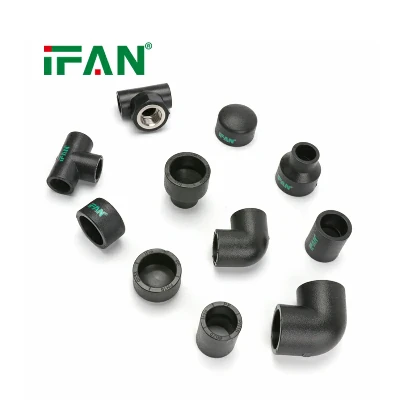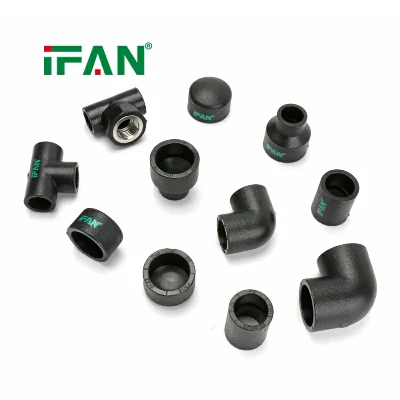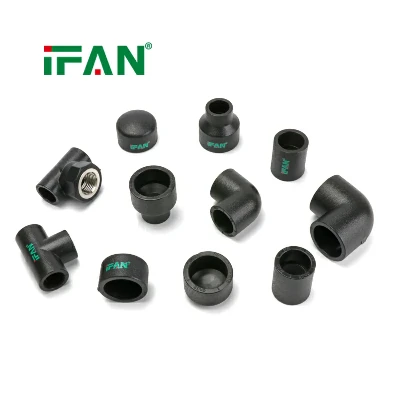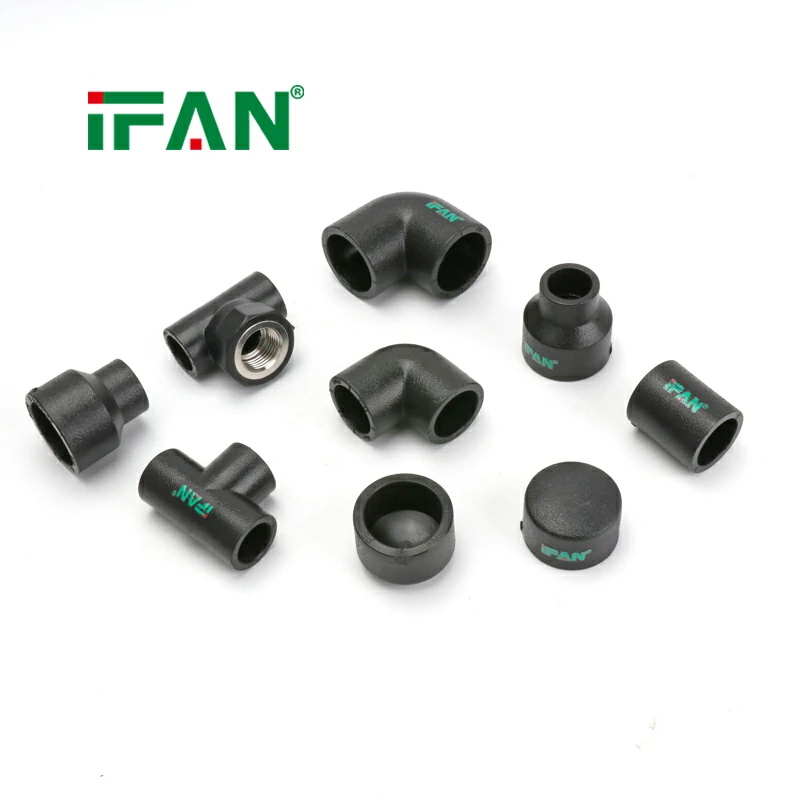

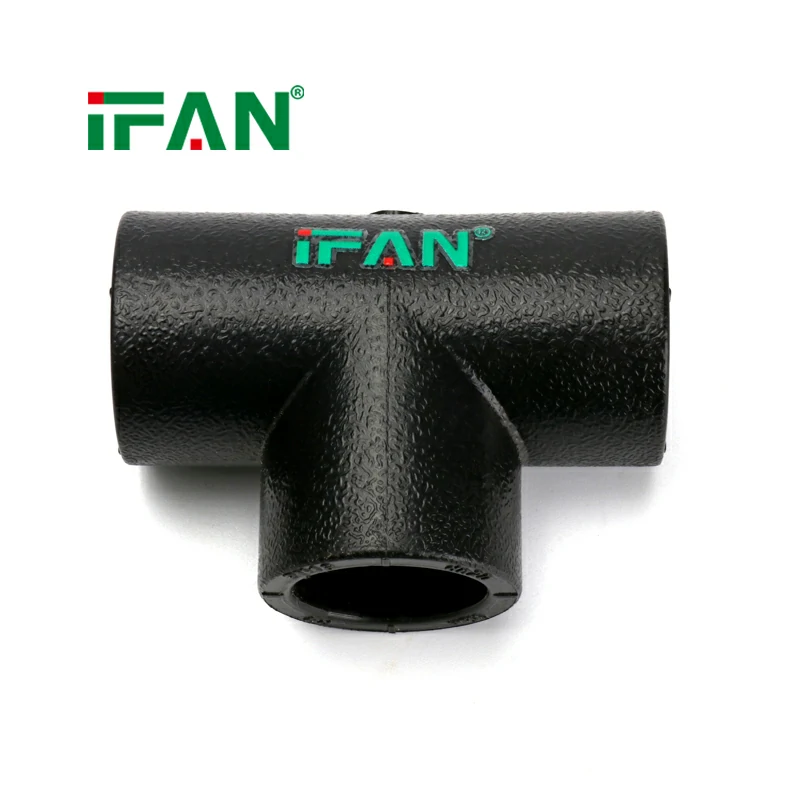
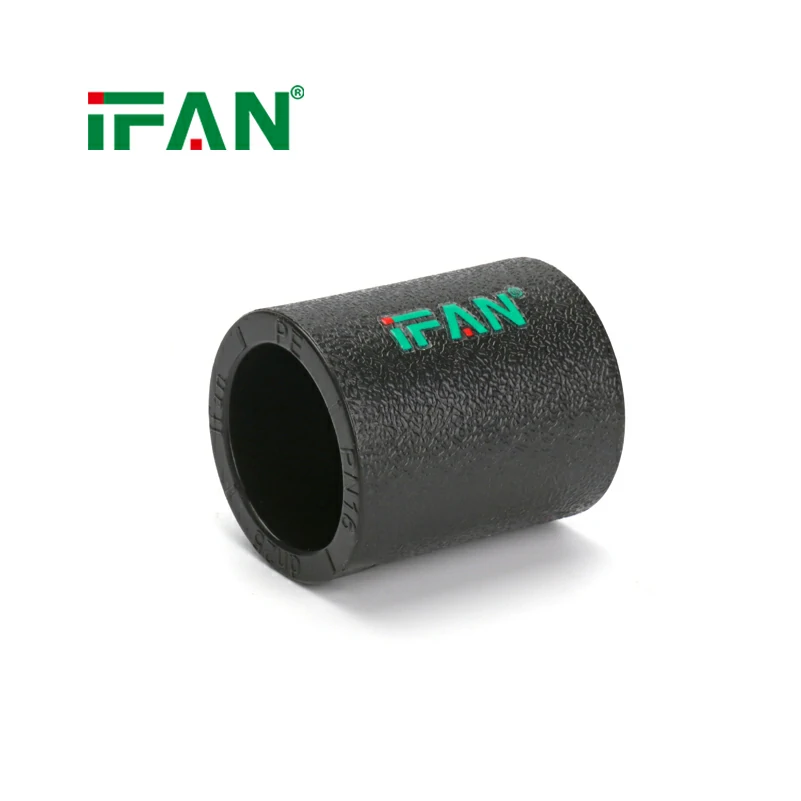
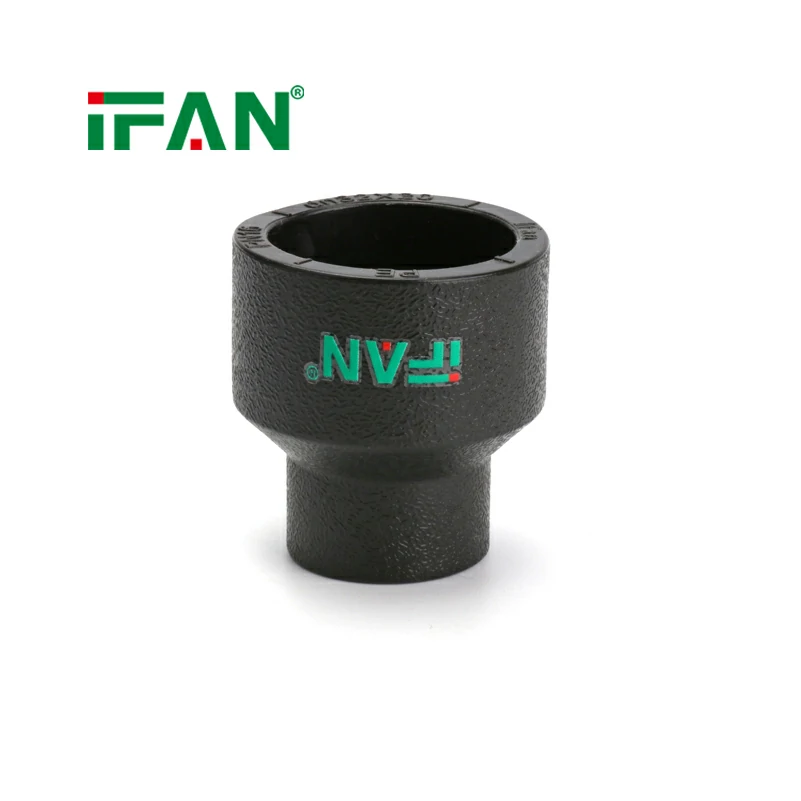
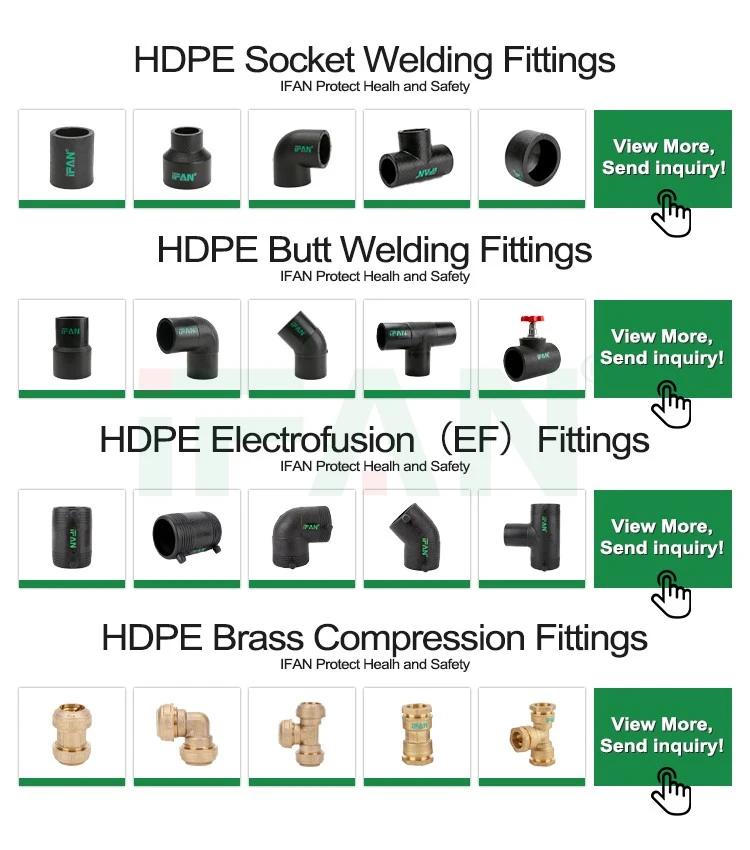
Long Lifespan HDPE Socket Welding Fittings
Brand: IFAN
Materials:PE
Size:20-110mm
Sample: Free Sample
Service: OEM&ODM
- Fast Delievery
- Quality Assurance
- 24/7 Customer Service
Product Introduction
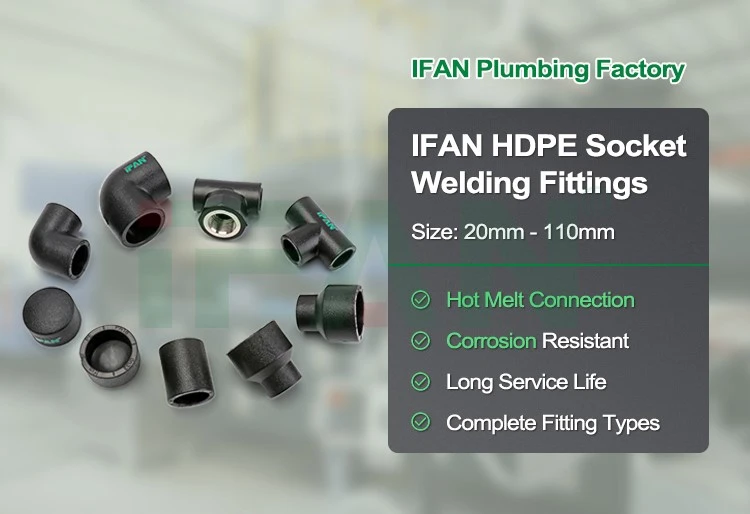
| Product Name | HDPE Socket Welding Fittings |
| Size | 20-110mm |
| Color | Black Color Or Customized |
| Connection | Welding |
| MOQ | 100PCS |
| Sample | Sample Free |
| Contact |
Understanding the Factors Behind Long Service Life
The service life of HDPE socket welding fittings depends on how the material performs under operating conditions and how carefully the piping system is designed, installed, and maintained. High-density polyethylene (HDPE) is widely used in plastic piping because its physical and chemical characteristics allow it to serve in many water supply, industrial fluid transfer, and process piping applications. However, the expected operating life of a fitting cannot be determined by material type alone.
Temperature fluctuations, internal pressure, transported media, installation quality, and environmental exposure all influence the condition of the finished connection. A fitting operating within its specified limits may experience a different aging process from one exposed to continuous overheating, excessive pressure, or incompatible chemicals.
Understanding these influences helps engineers select appropriate components and establish suitable operating procedures. Long service life begins with matching the fitting to the intended application, then maintaining the conditions for which the piping system was designed.
Material Properties and Long-Term Performance
HDPE consists primarily of long polymer chains formed from ethylene units. Its molecular structure contributes to its behavior under repeated loading and environmental exposure. Unlike metallic materials, polyethylene does not develop rust through conventional electrochemical corrosion, making it suitable for many applications involving water and compatible chemical solutions.
Nevertheless, polyethylene is a viscoelastic material. This means its response to an applied load changes with time and temperature. When a fitting remains under internal pressure, the material experiences sustained circumferential stress. If the stress exceeds the appropriate design limits, deformation or long-term failure may occur.
For this reason, material selection should account for the pipe system's pressure rating, operating temperature, and required design life. The specified polyethylene grade and relevant material standards should be verified before installation. Engineers should also consider whether the application involves pressure cycling, unusual loading, or exposure conditions that could affect the material over time.
The Influence of Operating Pressure and Temperature
Internal pressure is one of the principal factors affecting the service life of an HDPE piping system. As pressure acts on the pipe wall and fittings, it creates stresses within the material. Continuous exposure to excessive stress can gradually affect the polymer structure and increase the likelihood of failure.
Temperature changes this relationship. At higher temperatures, polyethylene generally experiences increased creep and reduced pressure-carrying capacity. A fitting that is appropriate for a particular pressure at a reference temperature may require a lower allowable operating pressure at elevated temperatures. The applicable manufacturer's pressure-temperature guidance must therefore be followed.
Temperature cycling also deserves attention. Repeated heating and cooling can cause dimensional changes, while differences in temperature between connected sections may introduce additional stresses. Proper system design should account for the expected operating range rather than considering only normal conditions.
Maintaining pressure and temperature within the specified limits helps control these long-term stresses. Where operating conditions fluctuate significantly, the system should be evaluated against the most demanding foreseeable conditions.
Socket Fusion Quality and Joint Integrity
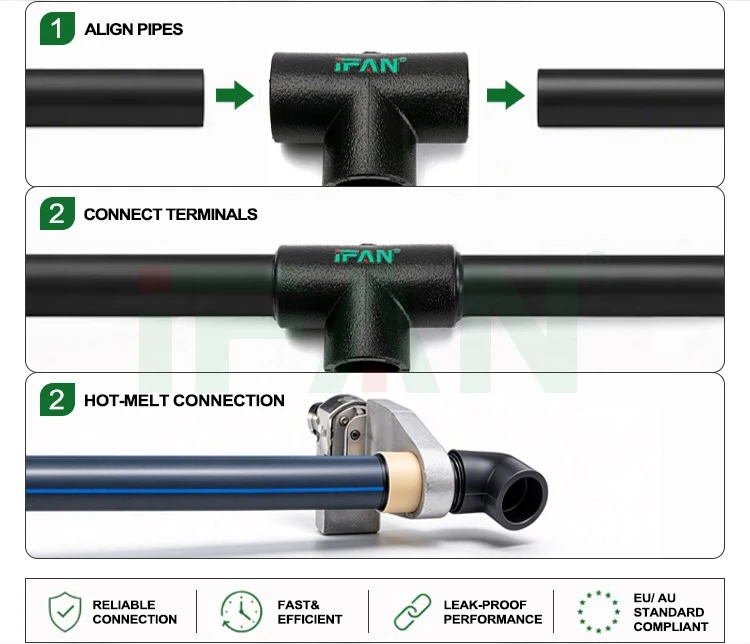
The quality of the socket fusion joint has a direct influence on the service life of the connection. During installation, the outer surface of the pipe and the inner surface of the fitting socket are heated under controlled conditions. The softened surfaces are then joined and allowed to cool, forming a fused interface.
If the heating process is inconsistent, the joint may contain areas where fusion is incomplete. Contamination, incorrect insertion depth, excessive movement, or insufficient cooling can also affect the finished connection. Some defects may not be immediately visible, yet they can become significant when the joint is exposed to pressure over an extended period.
Installers should follow the specified fusion procedure, including equipment temperature, heating time, insertion depth, and cooling requirements. Components must be compatible, and the heating attachments should match the dimensions of the pipe and fitting.
Inspection and appropriate testing provide additional checks on installation quality. A properly executed fusion joint establishes the intended connection geometry and helps reduce the risk of premature leakage or joint failure during service.
Chemical Compatibility and Environmental Exposure
The chemical environment surrounding an HDPE fitting can influence its long-term condition. Many aqueous acids, alkalis, and salt solutions are compatible with suitable polyethylene grades under specified conditions. However, certain oxidizing agents, organic solvents, and concentrated chemical mixtures may cause swelling, material changes, or accelerated degradation.
Chemical compatibility should be evaluated using the actual transported medium, including its concentration and operating temperature. Where the liquid contains several chemical ingredients, the complete mixture should be assessed rather than assuming that compatibility with each individual component guarantees compatibility with the combination.
External exposure is equally relevant. Ultraviolet radiation can gradually affect polyethylene that is not adequately protected or formulated for prolonged sunlight exposure. The extent of the effect depends on the material formulation, exposure intensity, and duration. Outdoor installations should therefore follow the manufacturer's recommendations for UV exposure and protection.
Soil conditions, contact with other materials, and installation surroundings may also need consideration. Identifying potential exposure risks during the design stage helps establish appropriate material specifications and protective measures.
Installation Conditions and Mechanical Stress
Even a correctly selected fitting can experience premature problems if the surrounding pipework places excessive stress on the connection. Misalignment, unsupported pipe sections, ground movement, and concentrated loads may introduce forces that were not included in the original design.
During installation, pipes should be positioned according to the approved layout, and necessary supports should be installed where specified. Connections should not be forced into alignment by applying excessive pressure to the fitting. Where movement is expected, the system design should provide appropriate arrangements to accommodate it.
Buried piping systems require particular attention to bedding, backfilling, and compaction procedures. Uneven support or poorly controlled ground movement can create localized loading. Above-ground systems may require different support spacing and allowance for thermal expansion.
Careful installation reduces unintended mechanical stresses and helps preserve the conditions assumed during system design. These measures should be considered part of long-term service planning rather than isolated construction details.
Inspection and Maintenance Throughout Service
Maintaining the intended service life requires periodic assessment appropriate to the application. Inspection intervals should reflect operating pressure, temperature, chemical exposure, installation environment, and the consequences of a potential failure.
Routine checks may include examining accessible fittings for leakage, abnormal deformation, discoloration, or signs of external damage. Operating records can also help identify unusual pressure changes, repeated temperature excursions, or other conditions that may affect the piping system.
For critical installations, inspection and testing should follow an established maintenance plan and applicable industry requirements. If a fitting shows signs of deterioration, the cause should be investigated before deciding whether replacement or other corrective action is necessary.



Hot Tags: long lifespan hdpe socket welding fittings, China long lifespan hdpe socket welding fittings manufacturers, suppliers, factory, HDPE Compression Fittings, HDPE Elbow 90, HDPE Pipe and Fitting, HDPE Pipe Fitting, HDPE Pipe Socket, PE Pipe