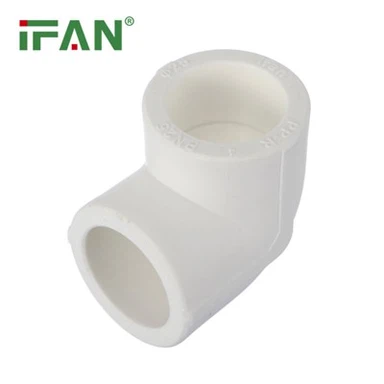

Brass compression Fittings Simplify Tube Assembly
Sep 21, 2026

|
Product Name |
Brass compression Fittings |
|
Color |
Yellow Color |
|
Size |
15-35mm |
|
Brand |
IFAN or Customized |
|
OEM |
Support |
|
Sample |
Free |
|
Experience |
30+Years |
|
Contact Us |
Welcome to contact IFAN, we are online 24 hours a day to answer your questions!
A Practical Approach to Tube Assembly
Tube assembly can become complicated when a project involves many connection points, limited installation space, or different sections of tubing. Traditional joining methods may require specialized equipment, heating processes, or additional preparation. Brass compression fittings provide a mechanical alternative for connecting compatible tubes in suitable applications.
The basic assembly process uses a fitting body, compression ring, and nut. The tube passes into the fitting body, while the compression ring sits between the tube and nut. Tightening the nut creates compression around the tube and establishes the connection.
This arrangement makes the assembly process relatively straightforward. It does not require soldering or welding equipment for the connection itself. Installers can therefore work with common hand tools when the manufacturer's instructions permit such methods.
The actual assembly procedure varies by product design and tube material. Correct preparation remains essential for achieving the intended result.
Fewer Specialized Joining Processes
Some tube joining methods require heat, electrical equipment, or specialized joining tools. These requirements can make installation more complicated, especially in locations where working space is restricted.
Compression fittings use mechanical assembly instead. The installer prepares the tube, places the required components in position, inserts the tube into the fitting, and tightens the nut according to the specified procedure.
This process can reduce the number of specialized operations required during installation. It can also be useful when the surrounding area contains materials that should not be exposed to heat.
However, mechanical assembly still requires attention to detail. The absence of a heating process does not mean that installation can be performed without preparation or measurement.
Simple Tube Preparation
Proper tube preparation is one of the most important steps in compression fitting assembly. The tube should have a suitable end that allows it to enter the fitting correctly.
Installers should cut the tube according to the manufacturer's recommendations. The cut should avoid excessive deformation, crushing, or damage to the tube wall. Any visible debris should be removed before assembly.
Different tube materials may require different preparation methods. Metal tubing and plastic tubing do not always respond to compression forces in the same way. Some plastic tube applications may require an internal support insert.
Preparing the tube carefully creates better conditions for the compression ring and fitting body to function as intended. It also makes the assembly process more consistent across multiple connection points.
Straightforward Component Arrangement
A brass compression fitting normally contains several components that perform different functions. The fitting body provides the main connection structure. The compression ring engages with the tube, while the nut applies the necessary force during assembly.
Understanding the order of these components helps prevent common installation mistakes. The nut and compression ring must be positioned correctly before the tube enters the fitting.
The tube should then reach the required insertion position. Once everything is aligned, the nut can be tightened according to the manufacturer's specified method.
This component-based arrangement gives installers a clear sequence to follow. It also makes the assembly process easier to inspect because each part has a defined position within the connection.
Useful for Confined Installation Areas
Industrial equipment, cabinets, plumbing assemblies, and machinery can contain areas where access is limited. Installing a permanent connection in such spaces may require additional planning.
Compression fittings can be useful in selected locations because their assembly relies on mechanical tightening rather than thermal joining. Installers can position the tube and fitting before securing the connection with appropriate tools.
The fitting size and surrounding clearance still need consideration. A compression nut requires enough access for installation and future inspection. A fitting should not be placed where the nut cannot be properly reached.
Good layout planning therefore remains important. Simplified assembly does not replace the need to consider tool access, tube routing, and component orientation.
Supporting Different Tube Configurations
Piping projects often contain straight sections, branches, directional changes, and equipment connections. Compression fittings are available in different configurations to accommodate these layouts.
Straight fittings can join compatible tube sections, while elbow configurations can change the direction of a tube. Tee fittings can provide branch connections where the product is designed for that purpose.
Different fitting sizes can also correspond to different tube dimensions. This allows installers to select components according to the requirements of each section.
When a project involves several configurations, consistent fitting selection can make assembly more organized. Every component should still be checked for dimensional and material compatibility before installation.
Correct Tightening Is Essential
Although compression fittings are mechanically simple, tightening requires care. The nut should be tightened according to the manufacturer's instructions rather than by applying maximum force.
Excessive tightening can deform certain tubes or damage fitting components. Insufficient tightening may prevent the compression ring from achieving the intended contact.
Some manufacturers provide instructions based on turns after hand tightening, while others specify different procedures. Installers should follow the method provided for the particular product.
Using the correct procedure makes assembly more predictable. It also reduces the risk of treating different fitting designs as though they all require identical installation methods.
Inspection After Assembly
Once the tube assembly is complete, the connection should be inspected before the system enters normal operation. The fitting should sit correctly, and the tube should remain properly aligned.
Testing should follow the requirements of the piping system and applicable installation procedures. If a connection shows leakage or unusual movement, the cause should be investigated before further adjustment.
Inspection is especially useful when multiple fittings are installed in sequence. A consistent checking process can help identify assembly errors before they affect the wider system.
The inspection method depends on the application. Pressure, temperature, fluid type, and applicable regulations should all be considered when determining the appropriate procedure.
Conclusion
Brass compression fittings simplify tube assembly by using a mechanical connection process that does not require soldering or welding. Their basic components provide a clear assembly sequence for compatible tubing and suitable applications.
Simple tube preparation, correct component placement, proper tightening, and suitable inspection all contribute to successful assembly. Different fitting configurations and sizes can also support varied tube layouts.
The main advantage of a straightforward assembly process is greater practicality during installation. When product specifications and manufacturer instructions are followed, brass compression fittings can provide an efficient method for assembling compatible tube systems.