
Designing Plumbing Layouts with PPR Fittings for Efficiency
Jun 28, 2025
Understanding PPR system advantages in layout planning
PPR systems use heat fusion to create permanent, leak-proof joints, which changes the approach to plumbing design. Because fittings and pipes become a single homogeneous unit after fusion, the risk of leakage at joints is greatly reduced. This allows for greater flexibility in layout, including long pipe runs and concealed installations. PPR also resists corrosion and scale, minimizing long-term degradation. These advantages make it easier to optimize water flow and maintain pressure consistency. When designing with PPR, engineers can prioritize both hydraulic performance and reliability without compromising ease of installation.
Planning for minimal pressure drop
A key objective in plumbing layout design is minimizing pressure drop throughout the system. In PPR layouts, efficient routing can significantly reduce friction losses. Placing water outlets close to risers and minimizing directional changes helps maintain strong water flow. PPR's smooth internal surface contributes to lower pressure losses compared to metal or rough plastic systems. To optimize layout, designers should avoid unnecessary bends and use long-radius elbows where possible. Proper pipe sizing and selection of PN-rated fittings based on pressure demands also ensure consistent delivery to end fixtures.
Zoning and branching strategies
Dividing the system into logical zones improves manageability and performance. In multi-story buildings or large facilities, zoning by floor or function allows for better pressure control and easier isolation during maintenance. With PPR, using equal tees, reducing tees, and ball valves helps simplify branching without compromising flow efficiency. Branch lines should be kept as short as possible to reduce friction and water stagnation. Incorporating valves in each zone provides control and facilitates system shutdown when needed. This modular approach improves both efficiency and user convenience.

Accounting for thermal expansion
All piping materials expand and contract with temperature changes. PPR is no exception, although its elasticity makes it less prone to cracking than rigid materials. Still, expansion must be considered in long straight runs. Designers should include expansion loops, offsets, or sliding pipe supports to accommodate linear movement. Anchoring points must be strategically placed to control pipe direction. Ignoring thermal movement can cause stress at joints or deformation of the pipe route. Proper compensation methods maintain system integrity and extend the lifespan of both pipes and fittings.
Designing hot and cold water systems separately
For better performance and temperature control, hot and cold water lines should be routed separately and clearly marked. This prevents thermal exchange and maintains consistent outlet temperatures. PPR fittings are available in color-coded versions (commonly green or blue for cold, red for hot) to avoid installation errors. Insulating hot water lines is also recommended to retain heat and prevent energy loss. In commercial buildings, separate routing also makes it easier to detect and isolate problems. Keeping a sufficient gap between hot and cold lines avoids unintended heat transfer between circuits.
Elevation and slope considerations
In horizontal runs, incorporating a slight slope ensures proper drainage and prevents air locking. This is particularly important in hot water supply lines or systems with intermittent flow. Gravity-fed and pressurized systems benefit from layouts that consider natural elevation changes. Avoiding low points in the system reduces the risk of sediment buildup or water pooling. Vertical risers should be installed in accessible areas and supported properly to handle the weight of the piping. These design considerations contribute to more reliable and energy-efficient water distribution.
Reducing material and labor costs
One of the benefits of PPR systems is the ability to reduce both material and installation costs through efficient layout. By minimizing the number of fittings and pipe lengths needed, the overall cost of the system decreases. Straight-line routing, use of manifold systems, and pre-fabricated pipe segments can all help streamline construction. Heat fusion tools are portable and allow for onsite assembly without adhesives or solvents, reducing labor complexity. Efficient layout not only saves money but also speeds up installation and reduces the likelihood of errors.
Accessibility for maintenance
Designing for efficiency includes planning for future maintenance. PPR systems are long-lasting, but accessibility is still important. Isolation valves, inspection points, and cleanout fittings should be placed at key locations. In concealed systems, designers should avoid burying fusion joints inside structural elements unless properly documented and supported. Accessibility reduces the need for extensive demolition during repairs and improves system serviceability. Efficient layouts balance aesthetics with practicality, ensuring that maintenance teams can access necessary points without disrupting building operations.
Matching fitting selection to layout needs
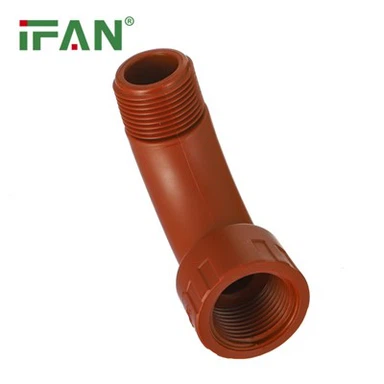
The choice of fittings has a direct impact on system layout. Elbows, tees, couplers, unions, reducers, and ball valves must be selected based on pressure class, pipe diameter, and configuration needs. For example, using reducing tees eliminates the need for additional couplers in branch lines. Fusion welding of fittings provides a secure joint, but designers should ensure proper alignment to avoid strain. Using factory-fabricated fittings in complex configurations can also improve quality control and simplify installation. Each fitting should serve a clear function and be selected to enhance flow, support, or control.

Integrating plumbing with other building systems
Efficient plumbing layout must work in harmony with other mechanical, electrical, and structural systems. PPR piping is lightweight and flexible, making it easier to route through walls, floors, and ceilings without extensive modifications. During the design phase, coordination with HVAC and electrical teams helps avoid conflicts and overlapping services. Shared shafts or riser spaces should be sized appropriately. Providing access hatches or removable panels for key plumbing sections ensures that future upgrades or maintenance can be done with minimal disruption to the rest of the building.
Conclusion
Designing efficient plumbing layouts using PPR fittings requires thoughtful planning, material knowledge, and attention to practical factors like flow optimization, thermal expansion, and service access. The inherent benefits of PPR-chemical resistance, fusion-welded joints, and durability-make it a strong candidate for both simple and complex piping systems. When used effectively, PPR fittings contribute to reduced material costs, lower pressure losses, and longer system life. By combining smart layout design with the right fittings and installation practices, plumbing engineers and contractors can create water distribution networks that are reliable, efficient, and built to last.
Click here to watch more videos