
Minimize Maintenance Costs Through HDPE Fittings
Aug 25, 2026

|
Product Name |
HDPE Pipe Fitting |
|
Color |
Blue Color |
|
Size |
20-110mm |
|
Brand |
IFAN or Customized |
|
OEM |
Support |
|
Sample |
Free |
|
Experience |
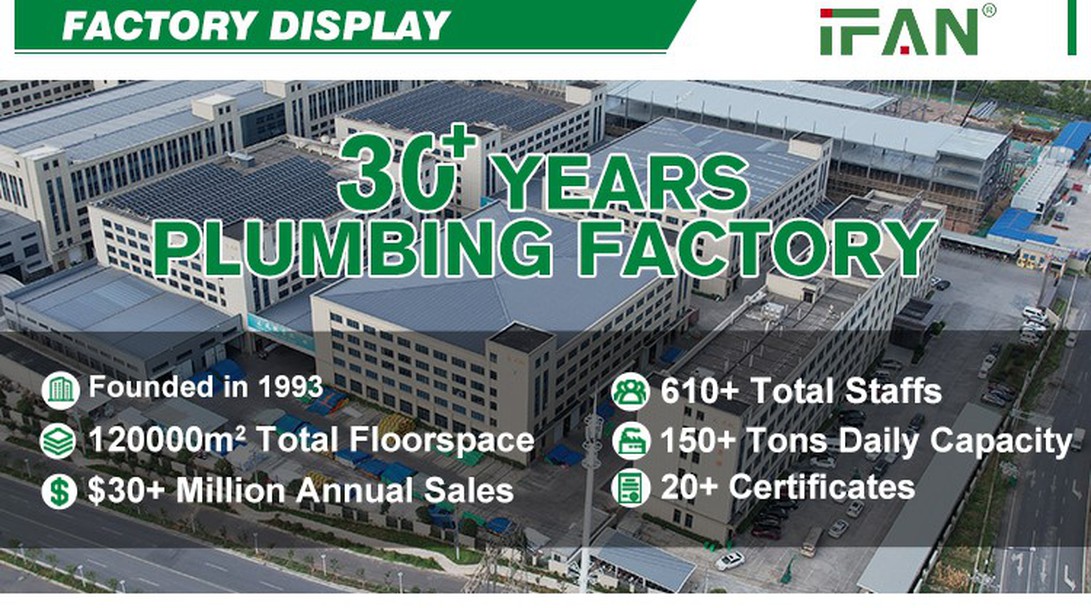
30+Years |
|
Contact Us |
Welcome to contact IFAN, we are online 24 hours a day to answer your questions!
Maintenance expenses can become a major part of a piping system's total operating cost. Repeated leaks, corrosion, damaged connections, and difficult repairs can require labor and equipment while interrupting normal operations. For large water, irrigation, drainage, and industrial networks, even small maintenance issues can become expensive when they occur frequently.
HDPE fittings can help reduce some of these costs when they are correctly selected and installed. Their resistance to corrosion, flexible nature, low weight, and fusion joining capability can reduce several common maintenance concerns. However, lower maintenance costs depend on the entire piping system, including design, installation, operating conditions, and inspection practices.
Reduce Corrosion-Related Repairs
Corrosion can gradually damage metal fittings, particularly when systems remain exposed to moisture or aggressive substances. Replacing corroded components can require considerable labor in difficult locations.
HDPE fittings do not rust because polyethylene contains no iron. This can eliminate traditional rust-related deterioration in suitable applications.
The benefit is particularly relevant for buried and constantly wet pipelines. By reducing corrosion as a potential failure mechanism, HDPE can help lower certain long-term repair requirements.
Limit Frequent Leakage Problems
Leaks can increase maintenance costs in several ways. Technicians must identify the source, isolate the affected section, replace damaged components, and restore the system.
HDPE systems can use fusion joining to create integrated connections between compatible components. A properly made joint can provide strong continuity and reduce reliance on conventional mechanical sealing interfaces.
Good installation remains essential. Contaminated surfaces, poor alignment, incorrect heating, or insufficient cooling can compromise a fusion joint and create future problems.
Reduce Replacement Frequency
Replacing fittings repeatedly can consume both material budgets and labor resources. Components that remain stable under their intended operating conditions can reduce the need for frequent replacement.
HDPE offers useful resistance to moisture and many chemicals. Its impact resistance can also help it tolerate certain handling and service conditions.
Actual service life depends on pressure, temperature, fluid chemistry, external loads, installation quality, and other factors. Selecting the correct grade and fitting configuration is therefore essential.
Simplify Handling During Repairs
Maintenance teams often need to move replacement components through restricted spaces. Heavy fittings can increase labor requirements and make repair work more difficult.
HDPE fittings are generally lightweight compared with many metal alternatives. This can make transportation and positioning easier during maintenance activities.
Lighter components can be particularly useful for remote pipelines, agricultural systems, and underground infrastructure where heavy lifting equipment may not be readily available.
Reduce Underground Maintenance Challenges
Underground repairs can be expensive because workers may need to excavate the surrounding area before reaching a damaged fitting.
HDPE can help reduce some corrosion-related underground maintenance concerns because it does not rust. Its flexibility can also allow suitable systems to accommodate certain ground movements.
This does not eliminate excavation requirements when physical damage occurs. Proper trench preparation, backfilling, and protection remain important for preventing avoidable underground failures.
Support Long-Term Water Networks
Water infrastructure can contain thousands of connection points. Frequent fitting failures can create ongoing repair costs and service interruptions.
HDPE fittings can provide durable connections for suitable water systems. Their corrosion resistance can be valuable where water chemistry or wet conditions create concerns for conventional metals.
For potable water applications, fittings should meet the relevant certification requirements. Proper material selection helps protect both system performance and water quality.
Improve Irrigation Maintenance
Irrigation networks often cover large areas and contain buried pipelines. Finding and repairing leaks can take significant time, especially during busy agricultural seasons.
HDPE fittings can provide reliable connection options for suitable irrigation systems. Their flexibility and resistance to moisture can support long-term use in many outdoor environments.
A well-planned network can also include accessible valves and logical isolation zones. These features can help maintenance teams identify and repair individual sections without shutting down the entire system.
Reduce Chemical Damage
Some industrial and wastewater systems transport fluids that can attack unsuitable materials. Chemical deterioration can shorten component life and increase replacement costs.
HDPE resists many common chemicals, which makes it useful for selected applications involving acids, bases, salts, and other substances.
Chemical compatibility must always be verified. Concentration, temperature, exposure time, and chemical composition can change the material's performance.
Simplify Installation and Future Repairs
A maintenance-friendly piping system starts with an installation that uses consistent components and accessible connection points.
HDPE fittings are available in many configurations, including elbows, tees, reducers, couplings, and transition fittings. This allows designers to create organized layouts with predictable connection points.
Accessible fittings can make future repairs easier. Maintenance teams should have enough working space to inspect and replace components without unnecessary dismantling.
Lower Equipment and Labor Demands
Maintenance projects often require excavation equipment, lifting machinery, transportation, and specialized tools. Reducing the frequency or complexity of repairs can therefore produce savings beyond replacement parts.
The relatively low weight of HDPE fittings can reduce some handling demands. Fusion joining can also create durable connections when suitable equipment and trained operators are available.
Savings should be evaluated over the entire system life. Initial material costs are only one part of the total cost of ownership.
Plan Preventive Maintenance
Durable fittings do not remove the need for inspection. Preventive maintenance can identify abnormal pressure, flow changes, or visible damage before a small problem becomes a major failure.
Operators should monitor system performance according to the application. Pressure readings, flow rates, valve operation, and accessible connection points can provide useful information.
A planned maintenance schedule can also help organizations manage replacement materials and labor more efficiently.