
Enhance Underground Piping Using HDPE Fittings
Aug 25, 2026

|
Product Name |
HDPE Pipe Fitting |
|
Color |
Blue Color |
|
Size |
20-110mm |
|
Brand |
IFAN or Customized |
|
OEM |
Support |
|
Sample |
Free |
|
Experience |
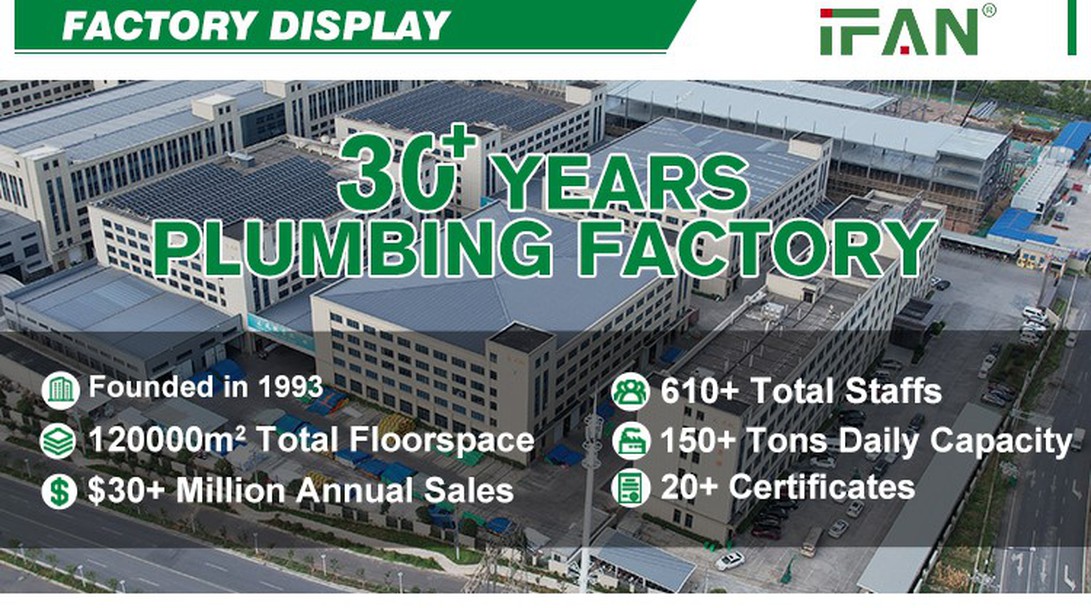
30+Years |
|
Contact Us |
Welcome to contact IFAN, we are online 24 hours a day to answer your questions!
Underground piping must operate in an environment that is difficult to inspect and repair. Once a pipeline is buried, excavation may be required to reach a damaged connection. For this reason, material selection and installation quality play important roles in underground infrastructure.
HDPE fittings can provide practical solutions for buried water, drainage, irrigation, utility, and selected industrial pipelines. Their flexibility, corrosion resistance, impact tolerance, and fusion compatibility make them suitable for many underground applications. However, successful performance depends on proper design, trench preparation, joining, and protection.
Adapt to Ground Movement
Soil is not completely stationary. Settlement, seasonal changes, nearby construction, and natural movement can place stress on underground pipelines.
HDPE has useful flexibility compared with many rigid pipe materials. A properly designed HDPE system can accommodate certain ground movements without concentrating all the stress at individual connections.
This flexibility can be particularly valuable where soil conditions are difficult. Engineers should still evaluate expected ground movement and design the pipeline accordingly.
Resist Underground Corrosion
Buried metal fittings can encounter moisture and chemicals in surrounding soil. Over time, these conditions may contribute to corrosion and increase maintenance requirements.
HDPE fittings do not rust because polyethylene contains no iron. This characteristic makes them attractive for underground applications where moisture exposure remains continuous.
Soil chemistry should still be considered when selecting materials. Although HDPE resists many common substances, unusual environments may require additional compatibility evaluation.
Create Secure Buried Connections
An underground joint must remain dependable because access can become difficult after backfilling. A connection problem may require excavation, traffic control, equipment, and additional labor.
HDPE systems can use heat fusion to connect compatible pipes and fittings. A properly prepared fusion joint creates an integrated connection rather than relying solely on separate mechanical sealing elements.
Joint preparation is essential. Installers should control surface cleanliness, alignment, heating, joining pressure, and cooling according to the specified procedure.
Handle External Soil Loads
Underground pipelines must withstand more than internal water pressure. Soil weight, traffic, construction equipment, and changing ground conditions can also create external loads.
HDPE fittings can perform reliably when the surrounding pipeline receives appropriate structural support. Trench width, bedding, cover depth, and backfill materials all influence how loads reach the pipe.
Designers should consider expected external loading before installation. A strong fitting cannot compensate for an improperly prepared trench.
Simplify Installation in Trenches
Working inside a trench can be physically demanding. Heavy components may increase handling difficulty and require additional lifting equipment.
HDPE fittings are relatively lightweight compared with many metal alternatives. This can make positioning and handling more convenient during underground construction.
Fusion equipment can also allow installers to prepare connections near the trench or in a suitable work area before positioning the pipeline. The best procedure depends on pipe diameter, site conditions, and project requirements.
Accommodate Irregular Routes
Underground pipelines rarely travel in perfectly straight lines. They may need to avoid foundations, existing utilities, roads, trees, drainage structures, and other obstacles.
HDPE fittings provide elbows, tees, reducers, and other configurations for creating practical pipeline routes. This flexibility can reduce the need for complicated modifications during construction.
Designers should minimize unnecessary bends whenever possible. A simple route can reduce material requirements, installation work, and hydraulic resistance.
Support Water and Utility Networks
Underground HDPE fittings can serve a wide range of infrastructure. Water mains, irrigation systems, drainage pipelines, and utility networks may all benefit from suitable polyethylene components.
Different applications have different performance requirements. Drinking water systems may require specific certifications, while industrial pipelines may require additional chemical compatibility analysis.
Selecting fittings according to their intended service helps avoid performance problems. Pipe size, pressure rating, fluid type, and joining method should be reviewed before construction.
Protect Against Construction Damage
Underground components can be damaged during installation if workers handle them improperly. Sharp stones, excavation equipment, excessive bending, and unsuitable lifting methods can create problems.
HDPE fittings should be inspected before installation. Damaged components should not be installed simply because they appear usable.
The trench should provide a suitable environment for the completed pipeline. Appropriate bedding and backfill can help protect the system from concentrated external loads and sharp objects.
Manage Thermal Movement
HDPE expands and contracts more than many rigid materials when temperatures change. Underground conditions can reduce some temperature fluctuations, but thermal movement still needs consideration.
Pipeline designers should account for temperature during installation and operation. Proper layout and installation can allow movement without creating excessive stress at connection points.
This is another reason to design the pipeline as a complete system. Fittings, pipe sections, restraints, and surrounding soil all influence how thermal movement is managed.
Improve Long-Term Serviceability
Maintenance becomes more difficult after a pipeline is buried. A reliable underground system should therefore minimize avoidable failure risks from the beginning.
HDPE fittings can help reduce corrosion-related maintenance and provide durable connections when properly installed. Their resistance to moisture is especially useful for buried infrastructure.
Operators should still monitor accessible sections, pressure, flow, and system performance. Early detection of unusual conditions can help prevent larger underground problems.
Inspect Before Backfilling
Once a pipeline is covered, correcting installation defects becomes much more difficult. Inspection should therefore occur before the trench is closed.
Installers should examine fittings, fusion joints, alignment, and visible surfaces. Pressure testing or other verification procedures may also be required depending on the project.
Documentation can improve future maintenance. Recording joint locations and installation details can help technicians locate components if repairs become necessary later.
Select Suitable HDPE Fittings
Not every HDPE fitting is suitable for every underground application. Product selection should consider pipe diameter, SDR, pressure, temperature, fluid compatibility, soil conditions, and expected external loads.
The joining method should also match the fitting and pipe. Fusion requires compatible materials and suitable equipment, while mechanical transition fittings require appropriate seals and installation procedures.
Manufacturer specifications provide essential information for making the final choice. Large infrastructure projects may also require compliance with specific engineering standards.
Build Stronger Underground Pipelines
HDPE fittings can enhance underground piping by combining corrosion resistance, flexibility, manageable weight, and reliable joining options. These characteristics make them useful for many buried water, irrigation, drainage, and utility systems.
Their performance still depends on the environment surrounding the pipeline. Proper trench preparation, careful handling, correct fusion, suitable backfill, and appropriate testing all contribute to long-term reliability.
A successful underground system begins before the first fitting enters the trench. When designers and installers consider both material properties and site conditions, HDPE fittings can help create durable infrastructure that remains dependable beneath the surface.