
Tight Spaces Accommodate Compact PEX Slide Fittings
Oct 29, 2026

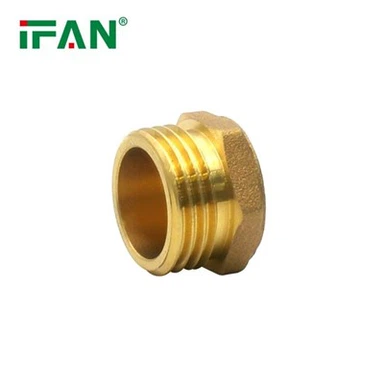
| Product Name | PEX Slide Fittings |
| Size | 16-32mm |
| Color | Brass Color Or Customized |
| Connection | Sliding |
| MOQ | 200PCS |
| Sample | Sample Free |
| Contact | Click HERE to contact us now! |
Welcome to contact IFAN, we are online 24 hours a day to answer your questions!
Introduction: Solving Plumbing Challenges in Restricted Areas
Installing plumbing in a spacious utility room is usually straightforward, but the situation changes when pipes must pass through narrow wall cavities, crowded cabinets, or small mechanical enclosures. In these locations, every connection needs to be positioned carefully to avoid interference with surrounding structures and equipment. Compact PEX slide fittings can help address these challenges by providing practical connection options for compatible PEX tubing in installations where available space is limited.
Their usefulness depends on more than their physical dimensions. Installers must consider the room needed for the assembly tool, the direction of the pipe, and the accessibility required for inspection and future repairs. With thoughtful planning, compact fittings can help create an organized plumbing layout without sacrificing connection quality. Understanding how to work with these components allows plumbing professionals to make better use of restricted spaces while maintaining the performance and safety of the complete system.
1. Making Better Use of Narrow Installation Areas
Small plumbing spaces often contain several competing requirements. Supply lines must reach their destinations while avoiding electrical equipment, structural members, ventilation components, and existing pipes. Oversized or poorly positioned connections can make an already difficult layout harder to complete.
Compact fittings may help reduce the space occupied by individual connection points, depending on the product design. When paired with flexible PEX tubing, they can support practical routing through suitable openings and confined service areas.
However, a fitting's external dimensions do not tell the whole story. Installers must also account for its internal flow passage, connection requirements, and the clearance needed to operate the installation tool. Selecting a compact product should never mean compromising the required pipe size or choosing a component that is not approved for the application.
2. Working Inside Cabinets and Utility Enclosures
Kitchen cabinets, bathroom vanities, and laundry enclosures frequently provide limited room for plumbing connections. Pipes may need to fit around drawers, storage areas, appliances, or existing shutoff valves.
Compact PEX slide fittings can be useful at suitable connection points where space is restricted. Their mechanical joining design allows compatible tubing to connect to the specified fitting without relying on a large threaded assembly at every joint.
Before installation, plumbers should measure the available area and plan the position of each connection. Adequate clearance must remain for assembly, valve operation, and any future maintenance. Tubing should not be forced against cabinet edges or compressed behind equipment. A slightly different pipe route may provide a better long-term result than placing a fitting in the smallest possible space.
3. Routing Pipes Through Wall Cavities
Wall cavities present another challenge because they contain framing members, insulation, and sometimes other building services. Plumbing routes must fit within the available space while respecting structural and fire-safety requirements.
PEX tubing can follow gradual bends where permitted, helping installers navigate suitable paths through a building. Compact slide fittings may be used at approved junctions or transition points when the layout requires them.
The installer must still observe minimum bend radii and protect tubing wherever it passes through framing or near sharp edges. Holes and notches in structural members must comply with applicable building codes. Connections should also be positioned thoughtfully, since a fitting that becomes inaccessible after the wall is closed may complicate future repairs.
Planning the entire route before installation helps avoid unnecessary joints and reduces the risk of discovering clearance problems halfway through the job.
4. Maintaining Installation Quality in Confined Spaces
Restricted access can make accurate assembly more difficult. A plumber may have limited room to position the tubing, align the fitting, or operate the required tool. Rushing the process can increase the chance of an incorrectly assembled connection.
Before beginning work, installers should confirm that the chosen fitting system is suitable for the available space and that its tool can operate as required. Tubing ends should be prepared correctly, and all components must match the manufacturer's specifications.
If there is insufficient clearance to complete the connection properly, the route should be adjusted or the installation sequence reconsidered. A compact fitting cannot compensate for inadequate tool access or poor workmanship.
After assembly, connections should be inspected and the system tested according to applicable requirements before concealed areas are closed.
5. Planning for Future Access and Maintenance
A compact installation should remain practical after construction is complete. Connections placed too close together may be difficult to inspect, while fittings hidden behind permanent obstructions can increase the effort needed for repairs.
Whenever possible, plumbers should preserve access to serviceable components and keep pipe routes clearly organized. Recording the location of concealed supply lines can also help future maintenance workers identify the system layout without unnecessary investigation.
Compact fittings are most effective when they support a sensible overall design rather than simply reducing the visible size of the plumbing assembly. Allowing sufficient space for inspection and repair can prevent a small installation challenge from becoming a long-term maintenance problem.