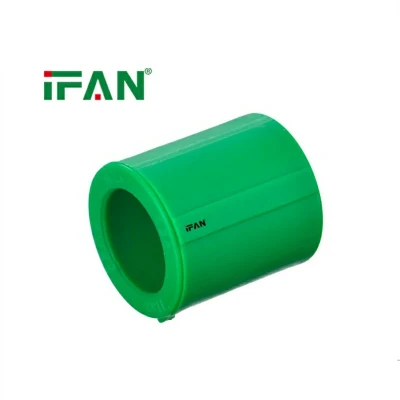

Pex Press Fittings Support Heating Systems
Nov 24, 2026

| Product Name | Pex Press Fittings |
| Color | White,Red,Blue,Yellow or Customized |
| Size | 16-32mm |
| Brand | IFAN or Customized |
| OEM |
Support |
| Sample | Free |
| Experience | 30+Years |
| Contact Us | Click HERE to contact us now! |
Welcome to contact IFAN, we are online 24 hours a day to answer your questions!
Introduction
A well-designed heating system depends on more than the performance of its boiler, heat pump, or circulation pump. The piping network must distribute heated water efficiently while handling repeated temperature changes throughout the heating season. Every connection plays a role in maintaining the stability of the system, particularly in installations that contain multiple heating circuits and distribution points. PEX press fittings provide a practical connection solution for compatible PEX piping systems, making them suitable for various residential and commercial heating applications. Their mechanical joining design allows installers to establish secure connections without traditional soldering procedures. Combined with the flexibility of PEX pipes, these fittings offer useful advantages when designing underfloor heating, radiator distribution, and other hydronic installations. Understanding their characteristics helps contractors select appropriate components and build heating networks that meet specific performance requirements.
The Role of PEX Press Fittings in Hydronic Heating
Hydronic heating systems use heated water to transfer thermal energy throughout a building. Depending on the design, water circulates through radiators, underfloor heating loops, fan coil units, or other heat-emitting equipment.
PEX press fittings connect different sections of compatible piping and help create the distribution arrangements required by these systems. Common configurations include straight connectors, elbows, tees, and transition fittings. Each component serves a specific purpose, from extending a supply line to creating branches for individual heating zones.
A properly designed connection system helps maintain the physical integrity of the heating network during normal operation. However, fitting selection must always account for the intended heating application. Products approved for domestic water distribution are not automatically suitable for every hydronic heating system, particularly where operating temperatures, pressure conditions, or water additives differ.
Handling Repeated Heating and Cooling Cycles
One of the main challenges in heating installations is repeated temperature variation. When the heating system starts, water temperature rises and the piping materials expand. As the system cools, those materials contract again.
These changes occur regularly throughout the heating season and can place additional demands on pipe connections. PEX piping offers flexibility that helps accommodate thermal movement when the network is designed and supported correctly.
Compatible press fittings provide connection points within this flexible piping arrangement. Their performance depends on the quality of the fitting materials, the connection design, and compliance with the manufacturer's temperature and pressure limits.
Installers should also consider pipe expansion, support spacing, and movement allowances during system planning. Avoiding excessive tension around fittings helps prevent unnecessary mechanical stress over repeated heating cycles.
Advantages in Underfloor Heating Installations
Underfloor heating has become a popular choice in residential buildings, offices, hotels, and other properties because it distributes warmth across large floor areas. Instead of concentrating heat around individual radiators, the system uses pipe loops installed beneath the finished floor.
PEX press fittings can support the distribution infrastructure associated with these installations. They may be used at manifolds, supply connections, and other approved connection points within the system design.
The flexibility of PEX piping allows installers to arrange heating loops according to room dimensions and heating requirements. However, long underfloor circuits should be planned carefully to maintain appropriate flow rates and temperature distribution.
Whenever possible, continuous pipe lengths should be used within concealed floor loops to reduce unnecessary buried joints. Accessible manifold connections and suitable transition points make future inspection and maintenance easier.
Supporting Multiple Heating Zones
Modern buildings often require different heating settings in separate rooms or areas. A bedroom, living room, office, and bathroom may each have different thermal requirements depending on occupancy, insulation, and usage patterns.
PEX press fittings can be incorporated into distribution networks that serve multiple heating zones. Tees and compatible branch connections help direct heated water toward different circuits, while manifold arrangements allow individual loops to be controlled.
This design flexibility is valuable in larger properties where heating demand varies throughout the day. For example, a commercial building may require independent temperature control for meeting rooms, workspaces, and public areas.
Nevertheless, the fittings themselves do not regulate temperature or balance water flow. Proper system performance also requires suitable manifolds, control valves, pumps, thermostats, and hydraulic design. Each heating circuit must receive an appropriate flow rate to deliver the intended thermal output.
Material Compatibility and Heating Performance
Material selection is particularly important in hydronic heating systems because components remain exposed to heated water for extended periods. PEX press fittings are available in different material constructions, including brass and engineered polymer designs.
The appropriate option depends on the operating temperature, pressure, water chemistry, and compatibility with the selected pipe system. Contractors should verify that fittings are specifically approved for heating applications.
Another important consideration is oxygen permeability. Some heating systems require oxygen-barrier PEX piping to limit oxygen entering the circulating water. Excessive oxygen ingress can contribute to corrosion in susceptible metallic components, including certain boilers, pumps, and radiators.
Using a suitable oxygen-barrier pipe does not eliminate the need to select compatible fittings and system components. The complete installation should be designed according to the heating equipment manufacturer's recommendations.
Installation Accuracy and System Reliability
A heating system may operate for many years, so installation quality is essential. Incorrectly assembled connections can become potential failure points, particularly when the network experiences repeated pressure and temperature changes.
Before assembly, installers should inspect pipe surfaces and confirm that all components belong to a compatible connection system. Pipe ends must be prepared correctly, and the fitting should be positioned according to the required insertion depth.
The pressing tool and jaws must match the manufacturer's specifications. Equipment condition should be checked regularly to ensure that connections are completed correctly.
After installation, the heating network should undergo the prescribed pressure testing and commissioning procedures. Flushing, air removal, and appropriate system balancing are also important steps before normal operation begins.
Maintenance Considerations for Long-Term Operation
Although properly installed PEX press connections generally require limited routine attention, heating systems still need periodic inspection. Changes in system pressure, reduced heating output, unusual pump operation, or visible moisture around accessible connections may indicate a problem that requires investigation.
Building owners should also ensure that expansion vessels, circulation pumps, filters, and control equipment remain in suitable working condition. These components influence overall system performance and can affect the operating conditions experienced by pipe connections.
Keeping records of fitting models, pipe specifications, pressure tests, and system layouts can make future repairs more efficient. This information is particularly valuable in large buildings with several independent heating circuits.