


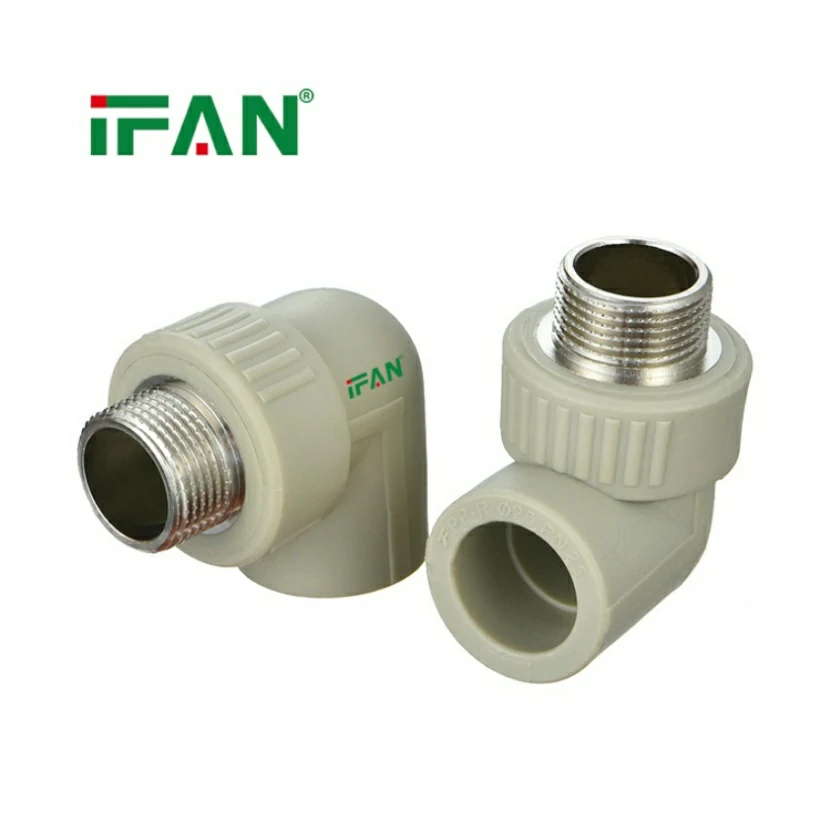
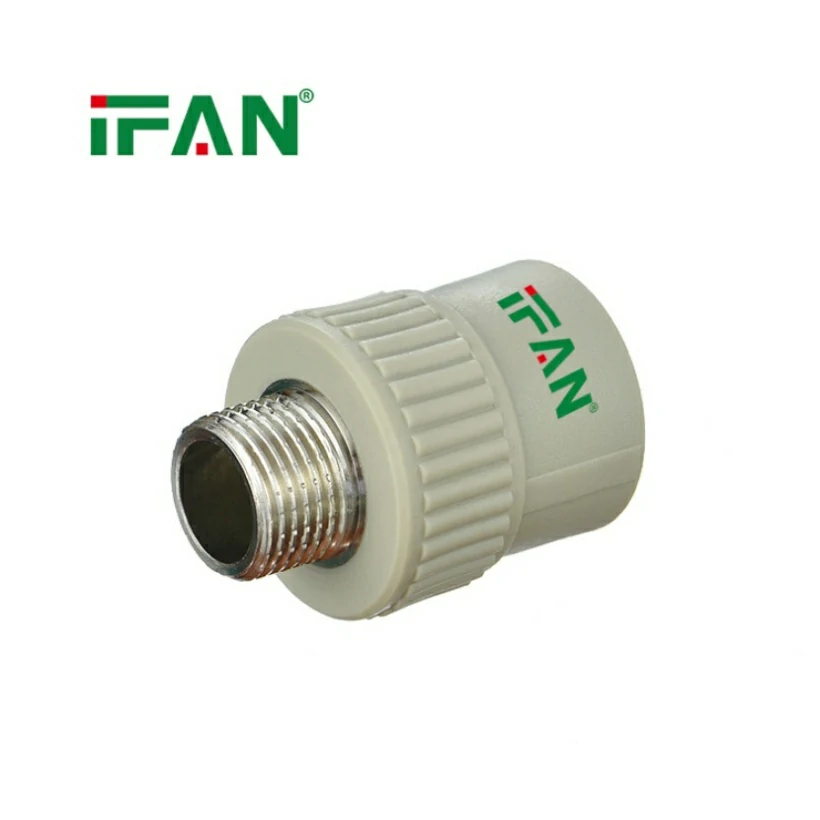

Grey PPR Fittings Simplify Pipe Installation
Type:PPR Fittings
Brand: IFAN
Connecting method:Hot Melt
Applications:Water Supply
Color:Gray
- Fast Delievery
- Quality Assurance
- 24/7 Customer Service
Product Introduction

| Product Name | PPR Fitting |
| Size | 20-110mm |
| Color | Gray Color Or Customized |
| Connection | Hot Melt |
| MOQ | 100PCS |
| Sample | Sample Free |
| Contact | Click HERE to contact us now! |
Welcome to contact IFAN, we are online 24 hours a day to answer your questions!
A Straightforward Approach to Pipe Assembly
Grey PPR fittings provide a practical way to connect polypropylene piping sections during plumbing installation. Instead of treating every change in direction, branch, or pipe-size transition as a separate fabrication task, installers can select a fitting designed for the required connection. Common options include elbows, tees, couplings, reducers, and threaded adapters.
This standardized approach makes the installation process easier to organize. The installer can plan the pipeline according to the building layout and then identify the appropriate fitting for each connection point. Because the fittings are manufactured to match specific PPR pipe dimensions, the assembly process follows a clear sequence rather than requiring extensive modification of individual pipe sections.
The simplicity comes mainly from having purpose-designed connection components available for common plumbing configurations.
Fittings Match Different Pipe Layouts
Plumbing systems rarely follow a completely straight route. Pipes may need to turn around structural elements, divide into several branches, or change size before reaching a particular outlet. Grey PPR fittings provide dedicated shapes for these situations.
An elbow can redirect a pipe through a selected angle, while a tee creates a branch from the main line. A coupling joins two pipe sections in a straight run, and a reducer provides a transition between different pipe diameters. Cross fittings and other specialized configurations may also be available for particular layouts.
Using these components means the installer does not need to create every change manually. Instead, the piping route can be assembled from compatible sections, with each fitting performing a defined function within the overall installation.
Heat Fusion Reduces Assembly Steps
One of the main installation characteristics of PPR systems is socket heat fusion. The pipe end and fitting socket are heated using a suitable fusion tool. Once the surfaces reach the required condition, the pipe is inserted into the fitting to the specified depth and held in position while the joint cools.
For compatible PPR components, this process does not normally require conventional solvent cement. The installer therefore works through a relatively consistent sequence: prepare, heat, join, align, and allow the connection to cool.
The exact heating temperature and time should always follow the manufacturer's instructions because fitting dimensions and equipment specifications can differ. Correct control of each step keeps the installation procedure predictable and helps avoid unnecessary rework.
Simple Preparation Before Joining
Good preparation makes PPR installation more orderly. Before heating, the installer should cut the pipe squarely and check that the end is clean and properly formed. The fitting should also be inspected to make sure its socket is free from dirt or foreign material.
A clean and correctly prepared pipe end can be inserted into the fitting more consistently. Marking the required insertion depth on the pipe can also help the installer recognize when the pipe has reached the intended position.
These preparation steps are relatively straightforward, but they establish a useful routine when multiple connections must be completed. Rather than improvising at every joint, workers can repeat the same basic procedure throughout the installation.
Easier Direction Changes and Branching
Changes in direction are common around rooms, walls, ceilings, equipment areas, and service spaces. With grey PPR elbows, these changes can be incorporated into the pipeline without bending the pipe itself beyond its permitted limits.
Similarly, tees allow a branch line to be introduced at a planned location. This is useful when one supply line needs to serve several fixtures or when a distribution network separates into different zones.
The fitting determines the geometry of the connection, allowing the installer to focus on positioning and alignment. This makes the layout easier to visualize before the actual fusion work begins. Measurements can be taken from the building structure, and fittings can then be selected according to the planned route.
Connecting Different Pipe Sizes
Pipe networks often contain sections with different diameters. Grey PPR reducers provide a defined transition between compatible sizes, avoiding the need to construct an improvised connection.
Before installation, the required pipe diameters should be confirmed from the system design. The reducer can then be positioned at the specified transition point. Because the fitting already incorporates the two required socket dimensions, the installer can work with the corresponding pipe sections using the same general fusion procedure.
This creates a more organized installation sequence. The change in pipe size becomes a planned fitting location rather than an on-site modification that has to be created from separate materials.
Threaded Connections for Equipment
Not every plumbing connection is made entirely from PPR. Valves, faucets, pumps, gauges, and other equipment may use threaded connections. Grey PPR threaded adapters provide a transition between the fused PPR pipe and compatible threaded components.
The PPR side is connected through heat fusion, while the threaded side is assembled according to the applicable equipment specification. Installers should confirm thread type and size before assembly and avoid excessive tightening that could place unnecessary stress on the fitting.
This type of adapter simplifies equipment connections because the transition is provided as a purpose-designed component. There is no need to create an improvised interface between the polymer pipe and a threaded device.
Organizing the Installation Sequence
A well-organized installation can be divided into manageable stages. First, the pipe route and fitting locations are established. Next, pipe sections are measured and cut according to the layout. The fittings are then positioned at elbows, branches, transitions, and equipment connection points.
After preparation, each fusion joint can be completed individually while maintaining the planned alignment. Allowing joints to cool according to the manufacturer's requirements completes the connection before the next section is assembled.
Grey PPR fittings therefore simplify pipe installation by turning common plumbing configurations into repeatable connection tasks. Their standardized shapes and compatible fusion method help installers construct complex water routes with a clear and systematic process.
A More Structured Installation Method
The practical value of grey PPR fittings in installation lies in their defined functions. Instead of modifying pipe sections for every turn or branch, installers can select fittings specifically intended for those locations. Heat fusion then provides a consistent joining procedure for compatible PPR components.
From straight couplings to elbows, tees, reducers, and threaded adapters, each fitting addresses a particular installation requirement. When combined with accurate measurement, clean preparation, correct heating, and careful alignment, these components make the overall pipe assembly easier to plan and execute.


Hot Tags: grey ppr fittings simplify pipe installation, China grey ppr fittings simplify pipe installation manufacturers, suppliers, factory, Gray PPR Connector, IFAN PPR Pipes And Fittings, Plastic Pipe Fitting, Ppr Elbow, PPR Pipe and Fitting, Water Pipe Fitting


