

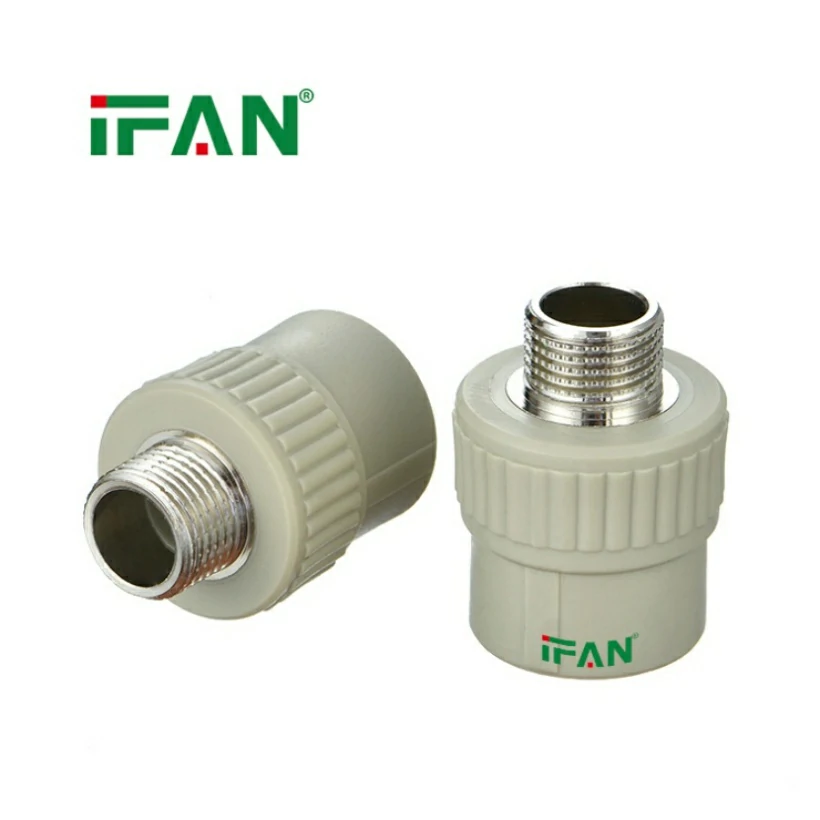


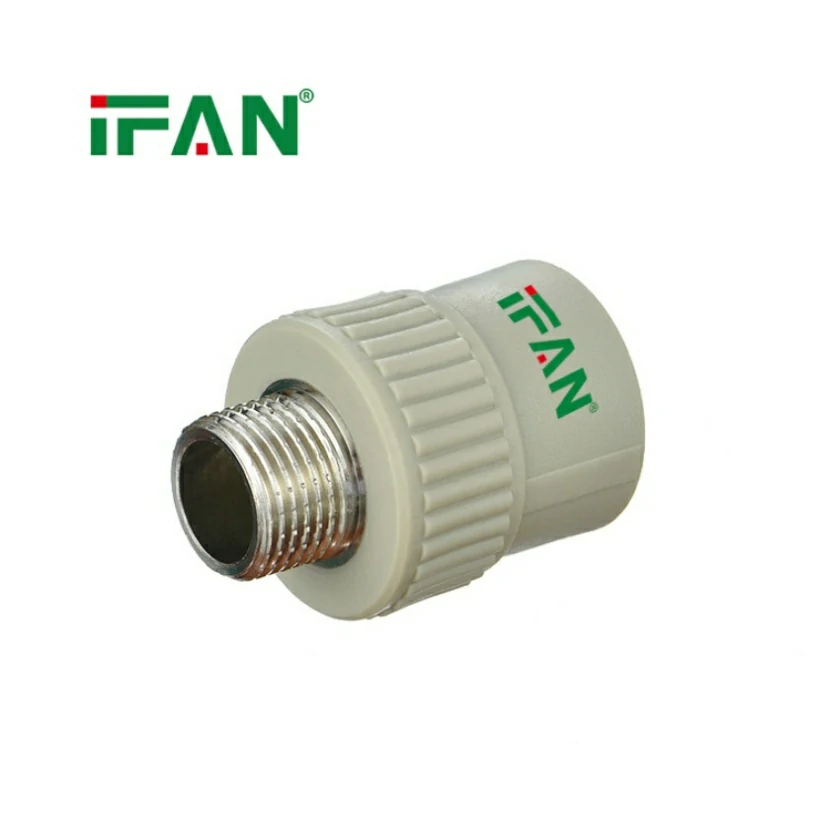

Grey PPR Fittings Support Long-Term Plumbing
Type:PPR Fittings
Brand: IFAN
Connecting method:Hot Melt
Applications:Water Supply
Color:Gray
- Fast Delievery
- Quality Assurance
- 24/7 Customer Service
Product Introduction

| Product Name | PPR Fitting |
| Size | 20-110mm |
| Color | Gray Color Or Customized |
| Connection | Hot Melt |
| MOQ | 100PCS |
| Sample | Sample Free |
| Contact | Click HERE to contact us now! |
Welcome to contact IFAN, we are online 24 hours a day to answer your questions!
A Practical Role in Plumbing Systems
Grey PPR fittings are an important part of modern plumbing networks because they create the connection points needed to route water through a building. Made from polypropylene random copolymer, these fittings are commonly used with PPR pipes in residential, commercial, and institutional installations. Their role extends beyond simply joining two pieces of pipe. Elbows change the direction of a pipeline, tees create branches, reducers connect different pipe sizes, and couplings continue a straight section.
For a plumbing system intended to remain in service for many years, each fitting needs to work as part of a coordinated network. The design, pipe dimensions, joint preparation, and installation method all influence how the system performs over time. Grey PPR fittings provide a consistent connection method that can be incorporated into different water distribution layouts.
Stable Connections Over Extended Service
Long-term plumbing depends heavily on the condition of its joints. A fitting that is correctly matched with its pipe can form a continuous connection through heat fusion. During installation, the mating surfaces are heated and then pressed together under controlled conditions. As the material cools, the pipe and fitting become joined at the contact area.
This process creates a connection without requiring a separate adhesive layer between compatible PPR components. The quality of the final joint depends on several details, including heating temperature, heating duration, insertion depth, alignment, and cooling time. When these steps are performed according to the manufacturer's instructions, the connection can remain an integral part of the piping system throughout its intended service period.
Resistance to Common Plumbing Conditions
Water piping is continually exposed to moisture, making material selection an important consideration for long-term use. Grey PPR fittings do not undergo conventional rust formation because their primary material is polypropylene rather than iron or steel. The water-contact surface therefore avoids the typical oxidation process associated with ferrous plumbing components.
This characteristic is relevant to the internal condition of a piping network. The fitting itself does not generate ordinary rust particles as an iron-based component can. At the same time, PPR should still be selected according to the temperature, pressure, and chemical conditions of the intended application. Compatibility with the actual water or fluid environment remains an essential part of responsible system design.
Handling Temperature Changes
Plumbing systems can experience changes in water temperature during normal operation. Hot-water distribution, for example, exposes pipework and fittings to temperatures that differ from those found in cold-water systems. Grey PPR fittings are manufactured for specified temperature and pressure ranges, so their selection should correspond with the service requirements of the installation.
The way the pipework is arranged also matters. Designers and installers need to account for thermal movement in longer pipe runs, particularly where hot water is regularly circulated. Proper supports, spacing, routing, and allowances for movement help prevent unnecessary stress from being transferred to individual fittings.
A fitting should not be viewed separately from the surrounding pipework. Long-term plumbing performance comes from treating the entire network as one system, with each connection installed according to the conditions it will encounter.
Correct Selection of Fitting Types
Different plumbing layouts require different fitting configurations. Using the correct type at each location helps maintain an orderly and functional water distribution system. An elbow may be selected where the pipe must turn, while a tee is appropriate where a secondary branch is required. A reducer allows a smaller pipe to connect with a larger line, provided the dimensions and pressure requirements are compatible.
Threaded adapters may be used where PPR piping needs to connect with valves, faucets, pumps, or other components. These transition points require particular attention because they combine PPR with another connection method. Selecting the correct thread standard and avoiding excessive tightening can help prevent mechanical problems at the interface.
Installation Quality and Service Life
The expected service period of a plumbing network is closely connected with the quality of its original installation. Before fusion, pipe and fitting surfaces should be clean and free from substances that could interfere with the joining process. The heating tool should be suitable for the fitting dimensions, and the components should be aligned correctly before joining.
After fusion, the connection needs sufficient time to cool without being twisted or subjected to unnecessary force. Rushing this stage can disturb the joint before it has fully stabilized. Installers should also follow the manufacturer's specified procedures rather than relying on approximate heating times or insertion depths.
These seemingly small details can have a significant influence on how the plumbing network performs years after installation.
Inspection and Pressure Testing
Inspection provides another important stage in preparing PPR plumbing for long-term operation. Once installation is complete, joints should be visually checked for irregularities, incorrect alignment, or signs of improper fusion. Pressure testing can then be carried out according to the applicable project requirements and manufacturer's instructions.
Testing before the pipework is concealed gives installers an opportunity to identify connection problems while the affected areas remain accessible. This is particularly important in walls, ceilings, floors, and service shafts where later repairs may require additional construction work.
A systematic inspection process establishes greater confidence in the condition of the installed network and helps confirm that individual fittings are functioning as intended.
Supporting Long-Term Plumbing Performance
Grey PPR fittings support long-term plumbing by providing defined connection points, corrosion-resistant water-contact surfaces, and a heat-fusion method suited to compatible PPR piping. Their contribution is most effective when material selection, system design, installation, and testing are considered together.
Long-term plumbing is not determined by the fitting alone. Pipe sizing, operating temperature, pressure, thermal movement, joint preparation, and connection layout all have to work within the specified conditions. When these factors are properly controlled, grey PPR fittings can remain an integral part of water distribution systems designed for extended service.


Hot Tags: grey ppr fittings support long-term plumbing, China grey ppr fittings support long-term plumbing manufacturers, suppliers, factory, All Types Of Ppr Pipe Fittings, Gray PPR Connector, IFAN PPR Pipes And Fittings, Ppr Elbow, PPR Pipe and Fitting, Ppr Pipes And Fittings


