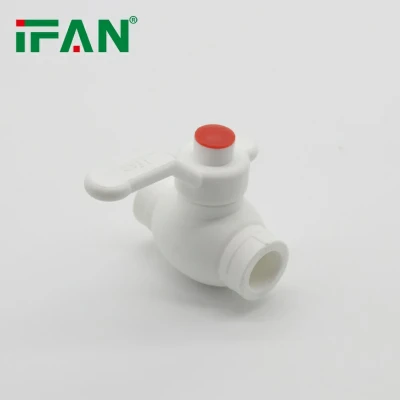

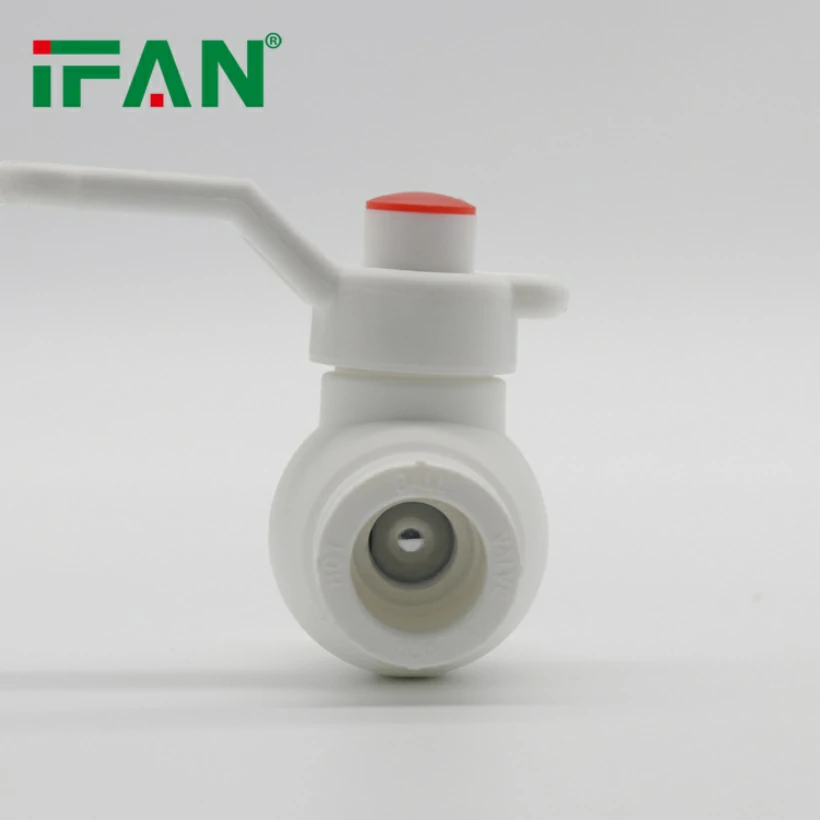

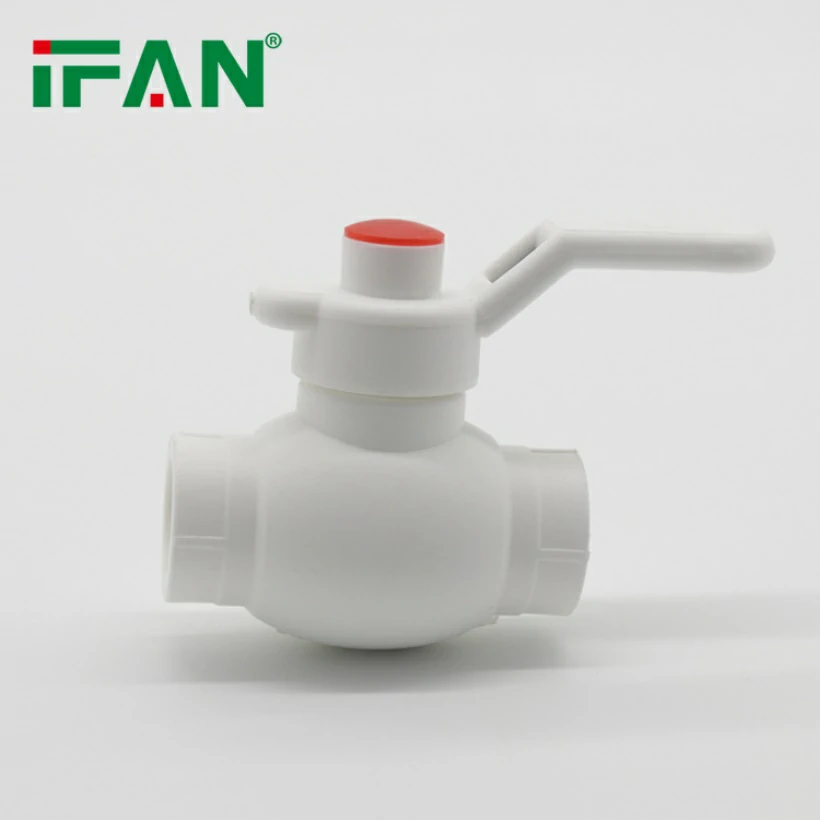
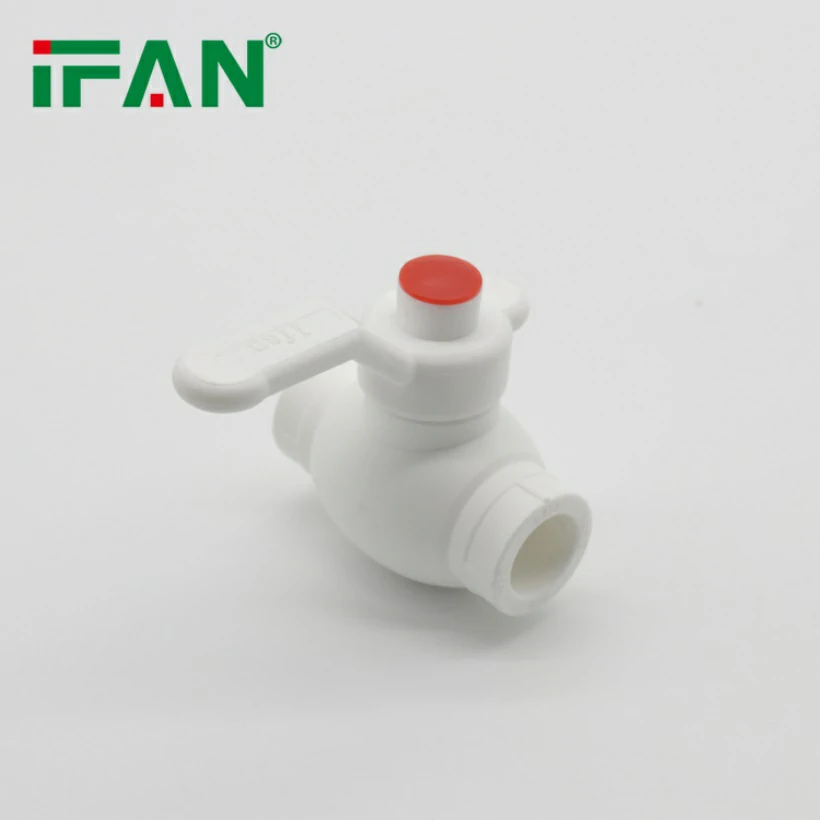
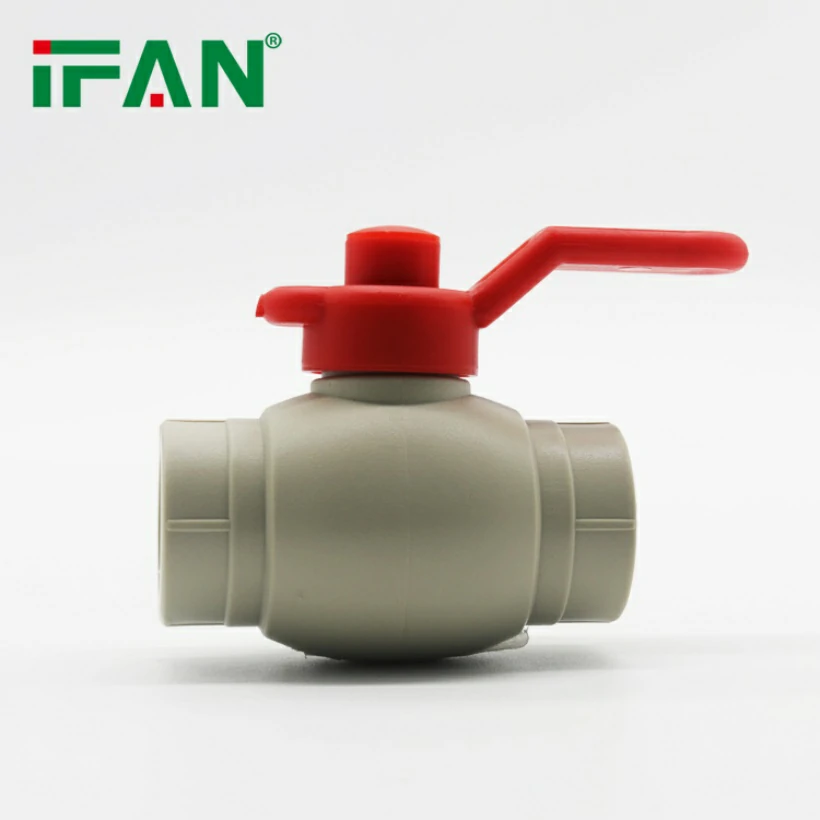
High Temperature PPR Ball Valve
Type:PPR Ball Valve
Brand:IFAN
Connecting method:Hot Melt
Applications:Water Systems
Color:Green,White,Blue
- Fast Delievery
- Quality Assurance
- 24/7 Customer Service
Product Introduction

| Product Name | PPR Ball Valve |
| Size | 20-63mm Or Customized |
| Color |
Green,White,Blue Or Customized |
| Package | IFAN standard packaging |
| Connection | welding |
| Sample | Sample Free |
| Contact |
Welcome to contact IFAN, we are online 24 hours a day to answer your questions!
Understanding PPR Ball Valves in High-Temperature Systems
Temperature resistance is an important consideration when selecting valves for hot water distribution and other heated fluid applications. As the temperature of a transported medium increases, the physical properties of piping materials may change, influencing their ability to withstand internal pressure and maintain stable operating conditions. A PPR ball valve is manufactured from polypropylene random copolymer, a thermoplastic material commonly used in hot and cold water installations.
Its suitability for high-temperature applications depends on several factors, including material composition, wall thickness, operating pressure, exposure time, and the temperature of the transported fluid. Unlike metal valves, PPR components respond to heat through changes in polymer stiffness, thermal expansion, and mechanical behavior. These characteristics must be considered when the valve is incorporated into a heated pipeline.
Understanding how a PPR ball valve behaves under elevated temperatures helps engineers and installers determine the appropriate application range and establish suitable operating conditions.
Thermal Characteristics of PPR Material
Polypropylene random copolymer has a molecular structure that influences its response to temperature. The incorporation of ethylene units into the polypropylene chain modifies certain physical characteristics, including flexibility and impact behavior. This material is commonly selected for hot water piping because it can operate within specified temperature and pressure ranges.
As temperature increases, the polymer gradually becomes less rigid. This change is particularly important in pressurized systems because the valve body must resist the combined effects of internal fluid pressure and thermal loading. At elevated temperatures, the allowable working pressure of PPR components is generally lower than at room temperature.
The thermal characteristics of the material also influence dimensional stability. PPR expands when heated and contracts when cooled. Consequently, the valve and its connected pipes must be considered as part of a complete thermal system rather than as isolated components.
Selecting a valve with an appropriate temperature-pressure classification is essential for maintaining the intended operating conditions.
Applications in Domestic Hot Water Systems
Domestic hot water distribution is one of the common applications for PPR ball valves. These systems supply heated water to bathrooms, kitchens, washing facilities, and other household outlets. The valves are typically installed at main supply points, branch connections, and equipment isolation locations.
In these applications, the valve must accommodate repeated exposure to heated water and changes in operating temperature. Water may remain at an elevated temperature during normal circulation, while certain pipeline sections experience cooling when the system is not in use.
This variation creates repeated expansion and contraction within the piping network. The valve's material properties, connection structure, and installation position should therefore correspond to the temperature conditions specified in the system design.
It is also important to distinguish between normal operating temperature and temporary temperature peaks. The selected PPR ball valve should comply with the manufacturer's stated limits for continuous operation rather than relying on a short-term maximum temperature figure.
Performance in Heating and Hot Water Circulation Systems
PPR ball valves can also be incorporated into suitable heating and hot water circulation systems. In these installations, the valve may be used to isolate individual pipeline sections, control equipment connections, or separate different distribution branches.
Circulation systems often operate for extended periods, meaning that the valve can remain exposed to elevated temperatures for much of its service time. Continuous thermal exposure should therefore be considered during product selection.
The temperature of the circulating medium is not the only relevant factor. Pressure fluctuations, pump operation, changes in water demand, and the frequency of system shutdowns can influence the mechanical conditions experienced by the valve.
For installations involving particularly high water temperatures, the system designer should verify that the selected PPR material grade and valve construction are approved for the intended conditions. Where operating temperatures exceed the product's specified range, an alternative material may be necessary.
Thermal Expansion and Installation Considerations
Thermal expansion is an unavoidable characteristic of PPR piping systems. When heated water passes through a pipeline, the pipe material expands along its length. During cooling, it contracts as its temperature decreases.
If this movement is not properly accommodated, additional forces may be transferred to connected valves and fittings. Over time, excessive mechanical stress can affect the connection areas and influence the alignment of the valve.
Installation planning should therefore include suitable pipe supports, expansion arrangements, and appropriate connection spacing. The valve should not be forced into position to compensate for incorrectly aligned pipes.
Heat fusion procedures also require particular attention. Heating temperature, heating duration, and insertion depth must follow the manufacturer's instructions. Excessive heating can deform the internal structure, while insufficient heating may produce an unsuitable connection.
Correct installation helps ensure that the valve remains within its intended mechanical and thermal operating conditions.
Factors Affecting High-Temperature Operating Conditions
Several variables determine whether a PPR ball valve is suitable for a particular heated pipeline. These include the actual fluid temperature, internal pressure, temperature fluctuations, exposure duration, and chemical composition of the transported medium.
Water quality may also require consideration. Certain additives or chemical treatment agents used in heating systems can influence polymer compatibility, particularly when combined with elevated temperatures.
Another important factor is the frequency of thermal cycling. Systems that repeatedly switch between heating and cooling create changing dimensional conditions throughout the pipeline. Valve selection should account for these operating patterns instead of considering only the highest recorded temperature.


Hot Tags: high temperature ppr ball valve, China high temperature ppr ball valve manufacturers, suppliers, factory, Female Tee PPR, Male PPR Pipe Socket, PPR Adapter, PPR Elbow Reducer, PPR Female Elbow, Ppr Male Threaded Elbow