

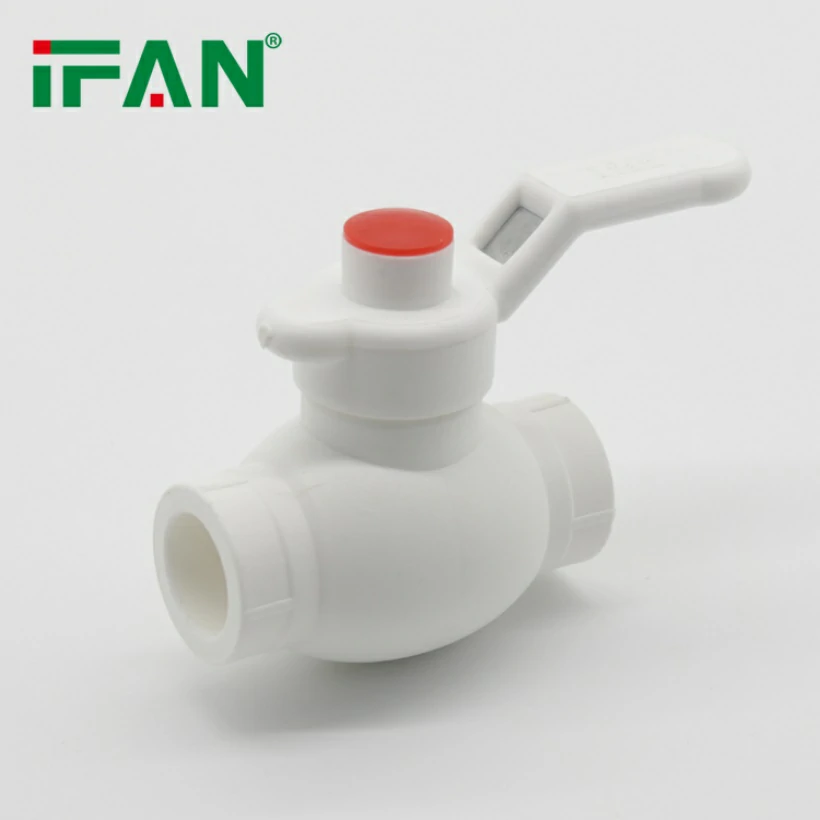
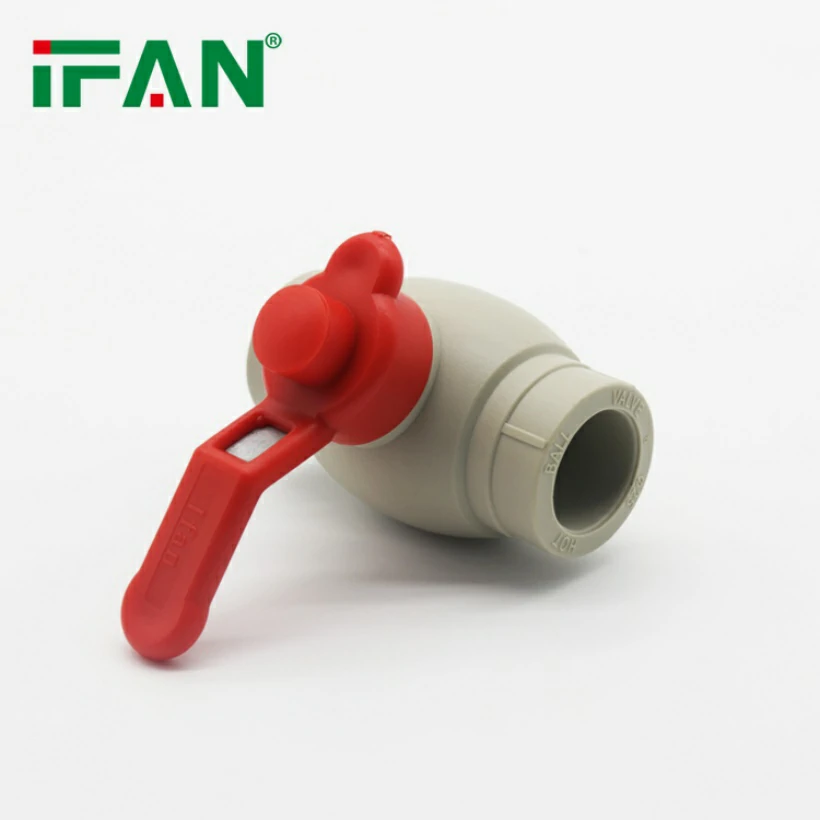
PPR Ball Valve Improves Water Distribution Efficiency
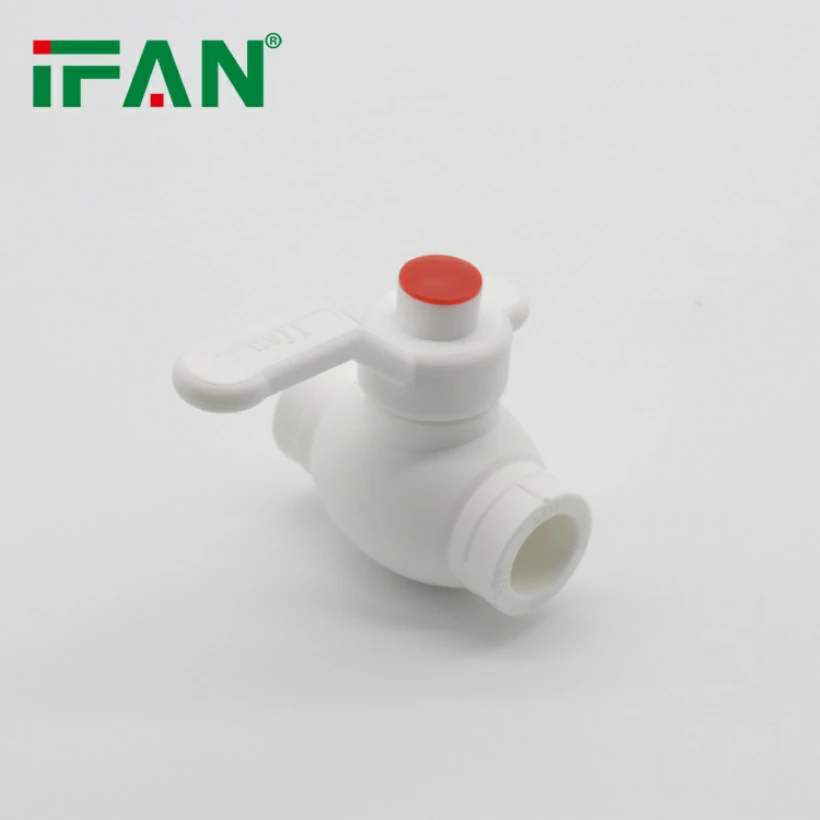
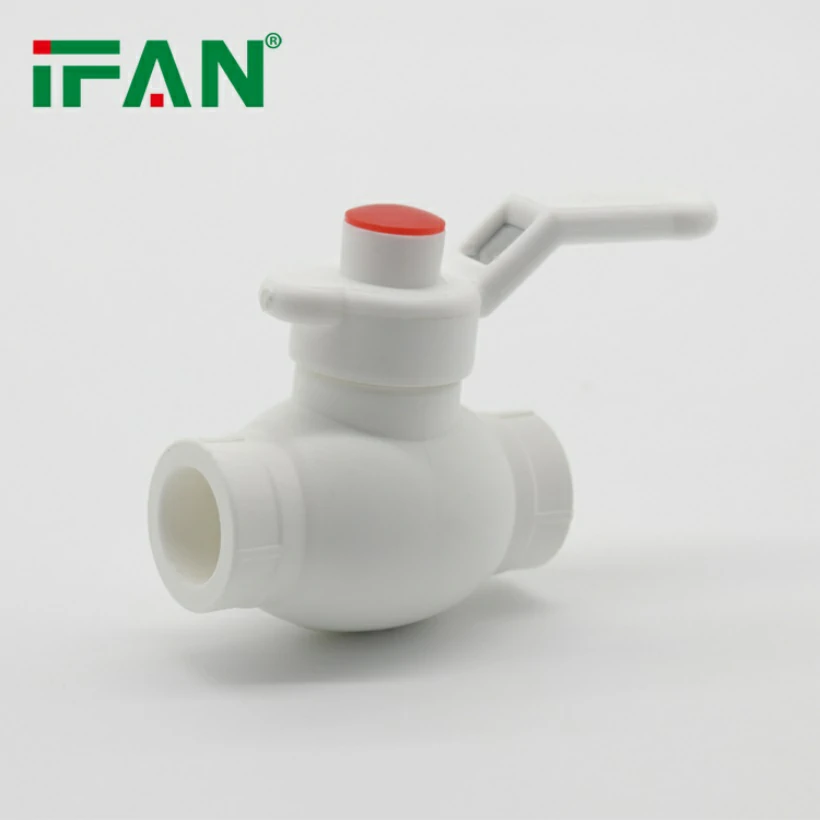
Type:PPR Ball Valve
Brand:IFAN
Connecting method:Hot Melt
Applications:Water Systems
Color:Green,White,Blue
- Fast Delievery
- Quality Assurance
- 24/7 Customer Service
Product Introduction

| Product Name | PPR Ball Valve |
| Size | 20-63mm Or Customized |
| Color |
Green,White,Blue Or Customized |
| Package | IFAN standard packaging |
| Connection | welding |
| Sample | Sample Free |
| Contact |
Welcome to contact IFAN, we are online 24 hours a day to answer your questions!
Understanding the Role of PPR Ball Valves in Water Distribution
An efficient water distribution system depends on the coordinated operation of pipes, valves, fittings, and control components. Each part has a specific function in directing water from the supply source to different consumption points. Among these components, the PPR ball valve plays an important role in controlling water movement and managing distribution across different pipeline sections.
Manufactured from polypropylene random copolymer, a PPR ball valve is commonly incorporated into residential, commercial, and industrial water supply networks. Its internal structure uses a rotating spherical component to control the passage of water. By adjusting the position of the ball, operators can allow water to pass through a pipeline or interrupt the supply when necessary.
Water distribution efficiency is not simply a matter of increasing flow speed. It also involves maintaining suitable flow conditions, reducing unnecessary resistance, controlling individual pipeline sections, and coordinating water delivery with actual system requirements. The design and application of PPR ball valves contribute to these processes by providing direct and manageable flow control.
Optimized Internal Flow Passage
The internal passage of a PPR ball valve has a direct influence on how water moves through the pipeline. In a full-port design, the opening through the spherical ball is approximately matched to the nominal internal diameter of the connected pipeline. When the valve is completely open, water can pass through a relatively continuous flow channel.
This arrangement helps avoid unnecessary restrictions inside the valve. Compared with some valve structures that introduce more complicated internal flow paths, a full-port ball valve can maintain a relatively low pressure drop under suitable operating conditions.
The actual flow performance depends on the valve's internal diameter, pipeline dimensions, flow velocity, and water pressure. If the valve is partially open, the available passage becomes smaller, increasing local resistance and potentially creating turbulence.
For this reason, selecting an appropriately sized valve and maintaining its fully open position during normal unrestricted water delivery are important considerations in pipeline design.
Precise Control of Water Supply
Different sections of a water distribution network rarely require identical operating conditions. Some pipelines supply bathrooms, kitchens, heating equipment, or industrial facilities, while others serve as main distribution lines. Each section may need to be isolated or adjusted according to its operating requirements.
A PPR ball valve provides a straightforward method of controlling these individual sections. Its quarter-turn operating mechanism allows the internal ball to move between open and closed positions through a simple handle movement.
When installed at suitable locations, the valve allows operators to control the water supply to specific branches without shutting down the entire distribution network. This arrangement makes it easier to organize water delivery according to the structure of the pipeline system.
It is important to distinguish between isolation and continuous flow regulation. Standard PPR ball valves are primarily designed for fully open or fully closed operation. Using them repeatedly in partially open positions may cause unnecessary flow resistance and affect the condition of internal components.
Reducing Unnecessary Pressure Loss
Pressure loss is an important factor when evaluating water distribution performance. As water travels through a pipeline, friction and local resistance reduce the available pressure. Bends, fittings, changes in pipe diameter, and valve structures all contribute to this process.
A properly selected PPR ball valve can help control local resistance through its relatively direct internal passage. When the valve is fully open, the spherical opening provides a clear route for water movement.
However, the valve alone cannot determine the pressure conditions of the entire system. Pipeline length, pipe roughness, flow velocity, elevation differences, and the number of fittings also influence the final pressure available at each outlet.
Therefore, the valve should be selected as part of an overall hydraulic design rather than evaluated independently. Matching the valve diameter to the pipeline and avoiding unnecessary reductions can help maintain appropriate pressure conditions throughout the distribution network.
Supporting Independent Pipeline Branches
Modern water distribution systems often contain several branch pipelines connected to a common main supply. These branches may serve different rooms, floors, equipment groups, or production areas. Managing each section independently requires suitable valve placement.
PPR ball valves can be installed at branch connections to establish separate control points. For example, a building water supply system may use individual valves for kitchen water, bathroom water, and equipment supply lines. Operators can isolate one section while keeping the remaining branches connected to the main distribution line.
This arrangement also makes the pipeline layout easier to understand. Each valve corresponds to a clearly defined supply section, allowing maintenance personnel to identify which part of the system is being controlled.
When planning valve locations, designers should consider accessibility, branch dimensions, expected water demand, and the direction of water movement. Proper positioning helps maintain an organized distribution structure and avoids unnecessary interruption to other pipeline sections.
Maintaining Consistent Flow Conditions
Stable water distribution requires more than simply opening and closing valves. The pipeline must also operate under suitable pressure and flow conditions as water demand changes.
When several outlets are used simultaneously, the total demand placed on the main supply line increases. If the system is not properly designed, pressure at individual outlets may fluctuate. Valve selection and placement should therefore correspond to the expected flow requirements of each pipeline section.
PPR ball valves provide direct isolation control, while the overall distribution system determines how water is allocated between branches. Appropriate pipe sizing, pressure management equipment, and correctly positioned control components must work together.
Operators should also avoid unnecessary rapid valve operation. Abrupt changes in water velocity can contribute to pressure surges, commonly known as water hammer. Opening and closing valves in a controlled manner helps reduce sudden changes in pipeline operating conditions.
Correct Installation and Hydraulic Coordination
The installation position and connection quality of a PPR ball valve can influence the hydraulic performance of the distribution system. The valve should be connected to pipes with compatible dimensions, and its internal passage should remain free from obstructions.
During heat fusion, excessive heating or incorrect insertion may cause softened PPR material to move into the internal flow channel. Such deformation can reduce the effective passage area and create additional resistance. Installers should therefore follow the specified heating temperature, duration, and insertion depth.
Pipeline alignment is equally important. Connected pipes should not place unnecessary mechanical stress on the valve body or connection points. Suitable supports should be provided to maintain the intended pipeline arrangement.
After installation, the system should undergo the required inspection and pressure testing. The valve should be operated to confirm that its internal passage opens and closes correctly without obstruction.


Hot Tags: ppr ball valve improves water distribution efficiency, China ppr ball valve improves water distribution efficiency manufacturers, suppliers, factory, Female Tee PPR, PPR Coupling, PPR Elbow With Thread, PPR Male Thread Coupling, Ppr Male Threaded Elbow, PPR Pipe Tee