


PPR Ball Valve Supports Long Lasting Performance
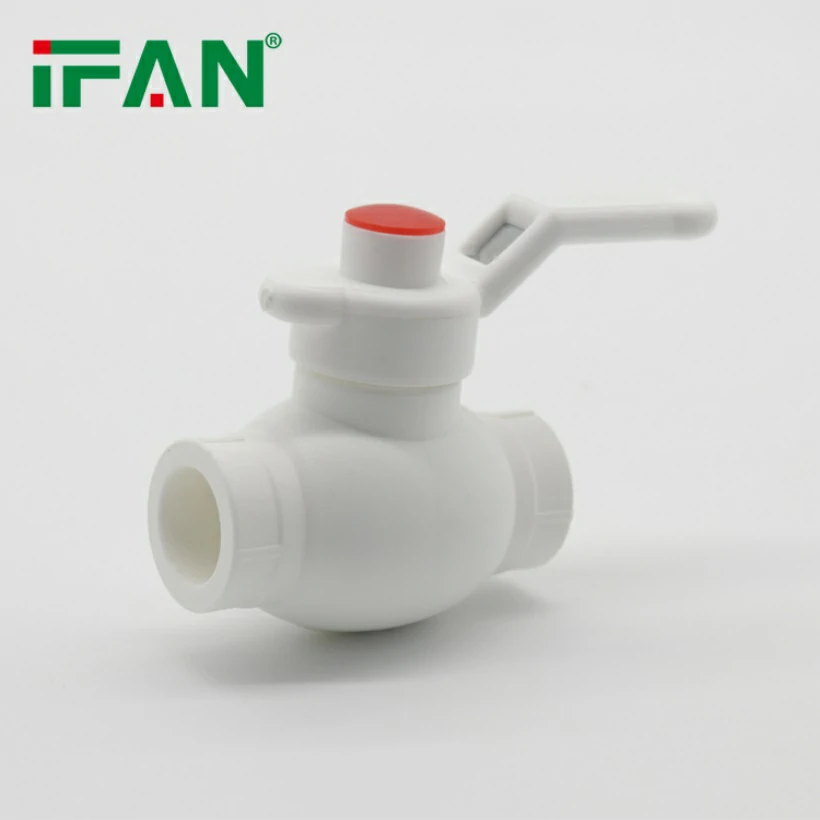
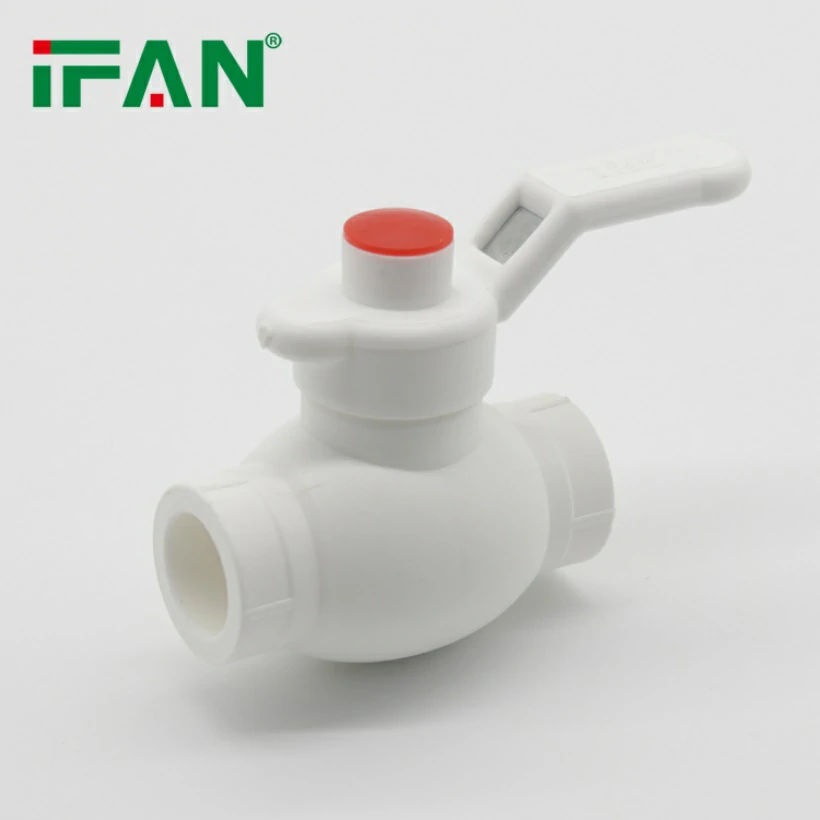
Type:PPR Ball Valve
Brand:IFAN
Connecting method:Hot Melt
Applications:Water Systems
Color:Green,White,Blue
- Fast Delievery
- Quality Assurance
- 24/7 Customer Service
Product Introduction

| Product Name | PPR Ball Valve |
| Size | 20-63mm Or Customized |
| Color |
Green,White,Blue Or Customized |
| Package | IFAN standard packaging |
| Connection | welding |
| Sample | Sample Free |
| Contact |
Welcome to contact IFAN, we are online 24 hours a day to answer your questions!
Understanding the Performance of PPR Ball Valves
In a piping system, a valve is expected to maintain consistent operating conditions throughout repeated opening and closing cycles. Its performance depends on several factors, including material properties, internal component design, sealing conditions, operating pressure, and installation accuracy. A PPR ball valve is designed to work within these requirements by combining a polypropylene random copolymer body with a relatively simple internal ball mechanism.
Long-term performance is not determined by the valve material alone. The interaction between the valve body, ball, stem, sealing seats, and connected pipeline influences how the component behaves during continuous operation. Changes in temperature, pressure fluctuations, water quality, and operating frequency may also affect its condition over time.
Understanding these factors provides a clearer picture of how a PPR ball valve maintains its intended operating characteristics and what conditions should be considered throughout its service period.
Material Properties and Structural Stability
Polypropylene random copolymer is widely used in hot and cold water piping systems because of its specific physical and chemical characteristics. Its molecular structure provides a combination of rigidity and flexibility suitable for manufacturing valve bodies and pipe fittings.
During normal operation, the material must maintain its original dimensions under the influence of internal pressure and temperature variations. If the material is exposed to conditions outside its specified operating range, changes in stiffness, thermal expansion, or mechanical properties may occur. These changes can influence the valve's connection areas and internal assembly.
Material selection is therefore closely related to operating requirements. The PPR grade, wall thickness, manufacturing consistency, and applicable pressure-temperature classification should all correspond to the intended application. A valve manufactured according to appropriate technical specifications is more likely to maintain consistent structural characteristics under its designated working conditions.
Sealing Performance Over Extended Operation
The sealing arrangement is an important part of a PPR ball valve's operating characteristics. Sealing seats are positioned around the ball to establish contact when the valve moves into the closed position. This contact limits fluid movement through the internal passage.
During repeated operation, the sealing surfaces experience friction and contact pressure. Their condition may gradually change depending on the number of operating cycles, fluid temperature, pressure conditions, and the presence of suspended particles.
The quality of the sealing arrangement depends on material compatibility, dimensional accuracy, and correct assembly. If the sealing seats are incorrectly positioned or exposed to unsuitable operating conditions, their contact with the ball may become inconsistent.
Maintaining appropriate water quality and avoiding excessive operating pressure are important considerations. When inspection identifies leakage or unusual operating resistance, the valve should be evaluated according to the manufacturer's maintenance and replacement recommendations.
Temperature and Pressure Management
Temperature and pressure are two major variables affecting the long-term operating condition of PPR ball valves. Although PPR is suitable for many hot and cold water applications, its mechanical characteristics change with temperature.
At elevated temperatures, the polymer becomes more susceptible to deformation under sustained mechanical loads. When high temperature is combined with internal pressure, the stress placed on the valve body and connection sections increases. Therefore, the permitted working pressure generally depends on the operating temperature and specified service conditions.
Pressure fluctuations also require attention. Sudden changes in fluid velocity, water hammer, and repeated pressure surges may introduce additional stress into the valve assembly. These conditions can influence the valve body, fusion connections, and internal sealing components.
Selecting a valve according to the actual system pressure and temperature is essential. Operating conditions should remain within the manufacturer's stated limits rather than relying solely on nominal pressure ratings.
Manufacturing Precision and Component Compatibility
Manufacturing quality has a direct relationship with the consistency of valve performance. The dimensions of the valve body, ball chamber, stem connection, and socket ends must meet the intended design specifications.
If the internal components have inconsistent dimensions, the ball may not rotate smoothly or maintain the expected contact with the sealing seats. Similarly, variations in the thickness of the valve body may influence how pressure is distributed across the structure.
Quality control during production typically involves dimensional inspection, visual examination, and functional testing. Depending on the applicable manufacturing standards, pressure testing may also be performed to evaluate the valve's ability to maintain the required sealing conditions.
Component compatibility should be considered as a complete assembly rather than as separate parts. The ball, stem, seals, and body must work together according to the original design to maintain predictable operating behavior.
Installation Conditions and Mechanical Stress
The installation environment can influence how a PPR ball valve performs over an extended period. Even when the valve itself meets the required manufacturing specifications, incorrect installation may introduce stress that was not considered in its original design.
For example, misaligned pipes can place uneven forces on the valve connections. Insufficient pipe support may also cause the valve to carry additional loads from the surrounding pipeline. These conditions can affect the fusion joints and gradually change the alignment of connected components.
During installation, the pipe and valve should be connected according to the specified fusion temperature, heating time, and insertion depth. Excessive heating or incorrect insertion may cause material displacement inside the socket, potentially affecting the internal passage.
After installation, the pipeline should be inspected and tested in accordance with the relevant technical requirements. Proper support, alignment, and operating clearance should be maintained throughout the system.
Routine Inspection and Operating Management
Regular inspection helps identify changes in valve condition before they develop into more serious operating problems. The inspection process may include checking the external body, connection areas, handle movement, and signs of leakage.
Operators should pay attention to changes in rotational resistance. A handle that becomes unusually difficult to operate may indicate contamination, internal friction, or a problem with the operating mechanism. Forcing the handle can introduce additional stress and should be avoided.
The surrounding pipeline should also be checked for vibration, abnormal pressure fluctuations, and visible deformation. Where necessary, the valve should be examined or replaced according to the manufacturer's maintenance recommendations.


Hot Tags: ppr ball valve supports long lasting performance, China ppr ball valve supports long lasting performance manufacturers, suppliers, factory, Brass Insert Ppr Pipe Fittings, Female Tee PPR, PPR Adapter, Ppr Elbow 90 Degree, Ppr Male Threaded Elbow, ppr union for pipe