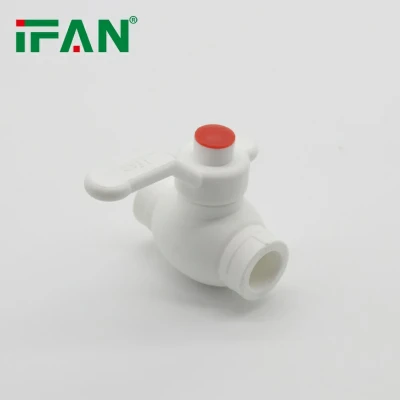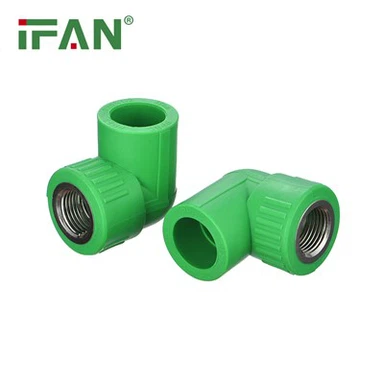

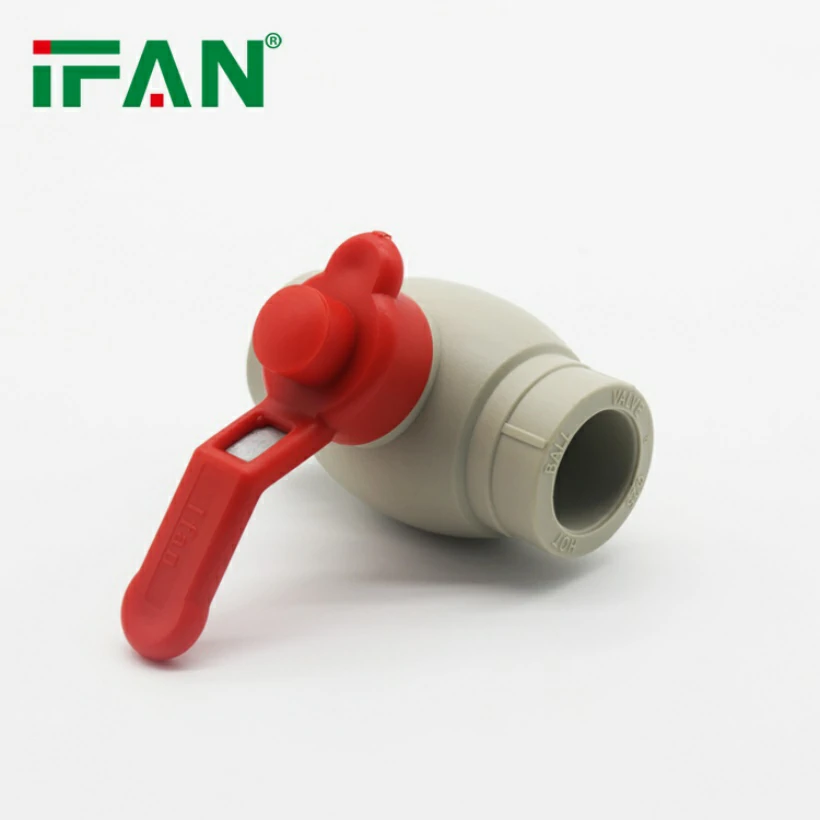

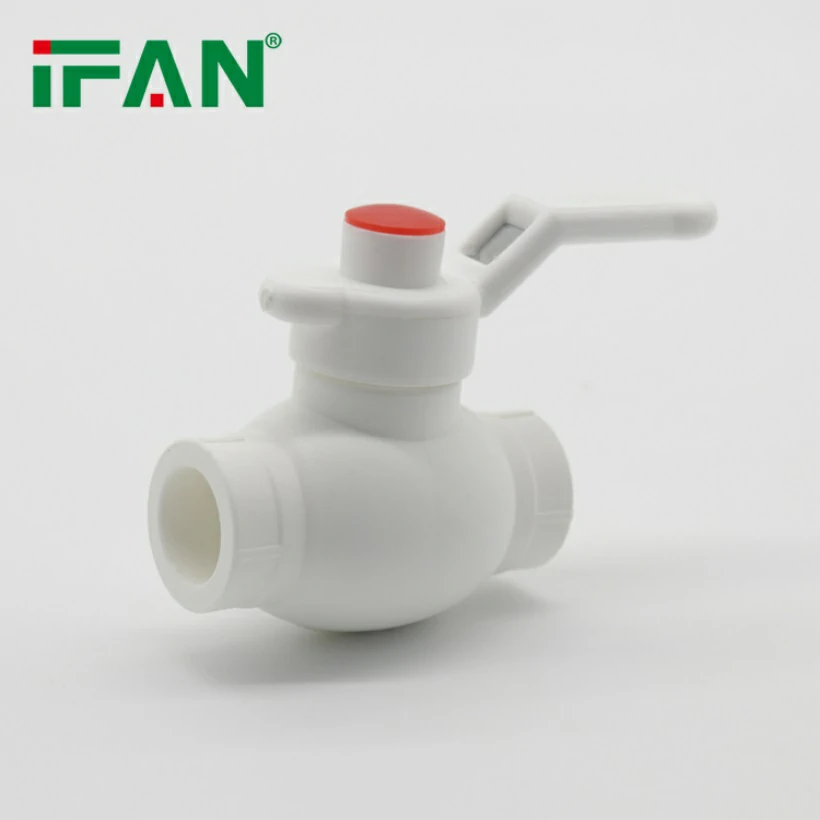
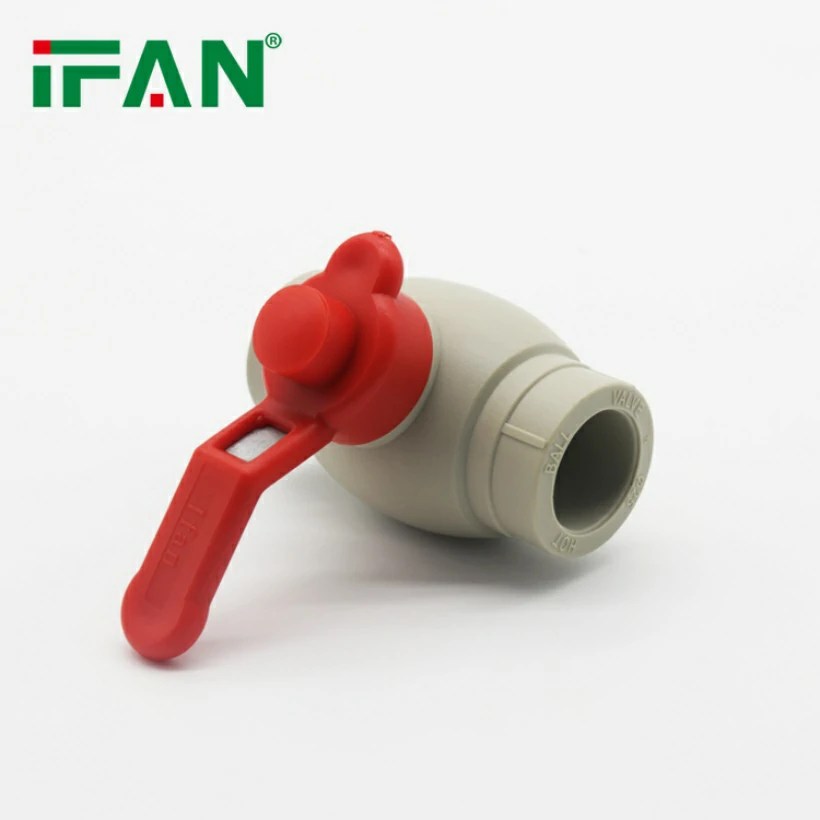

PPR Ball Valve Ensures Hygienic Water Transportation
Type:PPR Ball Valve
Brand:IFAN
Connecting method:Hot Melt
Applications:Water Systems
Color:Green,White,Blue
- Fast Delievery
- Quality Assurance
- 24/7 Customer Service
Product Introduction

| Product Name | PPR Ball Valve |
| Size | 20-63mm Or Customized |
| Color |
Green,White,Blue Or Customized |
| Package | IFAN standard packaging |
| Connection | welding |
| Sample | Sample Free |
| Contact |
Welcome to contact IFAN, we are online 24 hours a day to answer your questions!
Understanding Hygiene Requirements in Water Transportation
Water transportation systems require careful material selection and pipeline design to maintain appropriate water quality from the supply source to the final consumption point. Throughout this process, valves are in direct contact with the transported water and become an important part of the overall hygiene management system. Their material composition, internal surface condition, connection structure, and manufacturing quality can all influence the cleanliness of the water pathway.
A PPR ball valve is manufactured from polypropylene random copolymer, a thermoplastic material commonly used in drinking water distribution and domestic plumbing applications. Its nonmetallic structure does not produce conventional rust particles through contact with water, making it different from certain traditional metal valve materials.
However, hygienic water transportation involves more than selecting a suitable polymer. The valve must also have clean internal surfaces, appropriate material certification, properly manufactured connections, and correct installation. These factors work together to maintain sanitary conditions within the pipeline and reduce the possibility of contamination during water transportation.
PPR Material and Water Contact Safety
The material used in a water supply valve must be suitable for continuous contact with the intended water source. PPR has a predominantly hydrocarbon-based molecular structure and does not undergo conventional metallic oxidation when exposed to water and dissolved oxygen.
Unlike iron-based materials, PPR does not generate iron rust as a result of ordinary water exposure. This characteristic helps prevent one specific source of particulate contamination within the pipeline. Its chemical composition also provides resistance to many substances commonly encountered in standard water distribution environments.
Nevertheless, not every PPR product is automatically suitable for drinking water applications. The finished valve must comply with the relevant drinking water contact regulations and material requirements in the destination market. Manufacturers should provide appropriate testing documentation or certification confirming that the product is approved for its intended application.
Material selection should therefore consider the complete formulation, including pigments, processing additives, and other substances used during production, rather than evaluating only the base polymer.
Smooth Internal Surfaces and Water Cleanliness
The internal surface condition of a PPR ball valve is another important factor in hygienic water transportation. Water passes through the valve chamber and the central opening of the spherical ball. If these surfaces contain excessive residues, manufacturing debris, or foreign particles, unwanted substances may enter the water flow.
A properly manufactured valve should have clean internal passages with no visible contamination or unnecessary material accumulation. The ball passage should be free from burrs and processing residues that could interfere with water movement or collect suspended particles.
Surface condition also influences the accumulation of deposits. Although PPR does not generate metallic rust, minerals and particles already present in the water may still settle on internal surfaces under certain conditions.
For this reason, the cleanliness of the valve during production, packaging, storage, and installation should be controlled. Keeping the internal components protected before assembly helps prevent external contaminants from entering the water transportation system.
No Conventional Rust Contamination
Metal corrosion is a potential source of unwanted substances in certain water supply systems. When iron-containing components react with oxygen and moisture, oxidation products can form on their surfaces. Some of these products may separate from the material and enter the transported water.
A PPR ball valve does not experience this type of iron-based rust formation because its main structural material is nonmetallic. Contact with ordinary water does not create the electrochemical corrosion process associated with conventional steel or iron components.
This distinction is relevant when designing water distribution systems where the material condition of internal components must be considered. However, the absence of rust should not be interpreted as a guarantee that the water will remain free from all contaminants.
Water quality can still be influenced by upstream pipes, storage tanks, pumps, fittings, and installation materials. A hygienic system therefore requires appropriate material selection across the entire water transportation route.
Sealing Components and Prevention of External Contamination
The internal sealing structure of a PPR ball valve must maintain proper separation between the transported water and the external environment. The valve generally contains a spherical ball, sealing seats, and a stem assembly that controls the opening and closing movement.
The sealing arrangement prevents unintended water leakage when the valve is closed. Correctly assembled internal components also help maintain the intended boundary between the water passage and surrounding mechanical areas.
The materials used for sealing elements should be compatible with drinking water contact requirements. Their chemical composition must be evaluated alongside that of the main PPR body, as the complete valve assembly may contain several different materials.
During manufacturing, attention should be given to the cleanliness of the sealing seats and the assembly environment. Foreign particles trapped inside the valve chamber may affect both sealing conditions and the cleanliness of the transported water.
Hygienic Manufacturing and Quality Control
The production environment has a direct relationship with the sanitary condition of a PPR ball valve. Even when the selected raw material is appropriate for drinking water applications, contamination during processing can affect the finished product.
Manufacturers should maintain suitable production conditions and control the cleanliness of molds, processing equipment, and assembly areas. Raw materials should be stored in accordance with the relevant handling requirements to prevent contamination before production.
After molding, internal surfaces should be inspected for visible residues, foreign particles, and processing defects. Assembly operations should also prevent dust, oil, and other unwanted substances from entering the valve chamber.
Quality control may include dimensional inspection, visual examination, leakage testing, and verification of applicable drinking water contact requirements. These procedures help confirm that the finished valve meets the technical and sanitary specifications established for its intended use.
Installation Practices for Hygienic Water Systems
Proper installation is essential for maintaining the sanitary condition of a PPR ball valve after it leaves the factory. Before connecting the valve, installers should inspect the pipe ends and internal passages to ensure that they are clean and free from dust, cutting residues, and construction debris.
During heat fusion, the equipment should be clean, and the heating process should follow the manufacturer's specified temperature and timing requirements. Excessive heating may cause softened material to enter the internal passage, while unsuitable installation conditions can introduce foreign substances into the connection area.
After assembly, the pipeline should be cleaned or flushed according to the applicable project requirements. This process helps remove particles that may have entered during cutting, drilling, handling, or installation.
For drinking water systems, disinfection should also follow the relevant local regulations and project specifications before the pipeline is placed into service.
Preventing Contamination During Long-Term Use
Hygienic water transportation requires attention even after the pipeline becomes operational. Water quality may change because of sediment accumulation, microbial growth, chemical residues, or contamination originating from other system components.
The PPR ball valve should be inspected as part of the overall pipeline maintenance program. Operators should examine the valve body, connections, and surrounding installation for leakage, visible contamination, or signs of abnormal conditions.
Where a valve is removed for maintenance or replacement, its internal passages should be protected from contact with dirty surfaces and foreign materials. Suitable cleaning and handling procedures should be followed before the component is returned to service.
Water quality monitoring should be conducted according to the requirements of the relevant application, especially in systems supplying drinking water.


Hot Tags: ppr ball valve ensures hygienic water transportation, China ppr ball valve ensures hygienic water transportation manufacturers, suppliers, factory, Green Ppr Pipe Fitting, PPR Coupling, PPR Coupling Adaptor, PPR Male Thread Coupling, Ppr Socket, ppr union for pipe