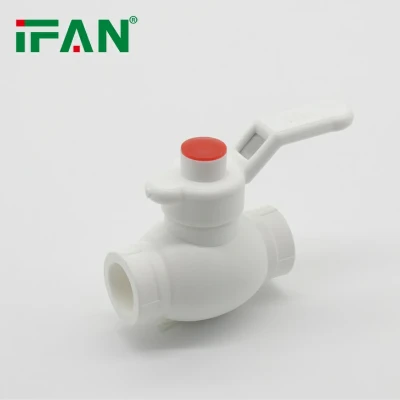

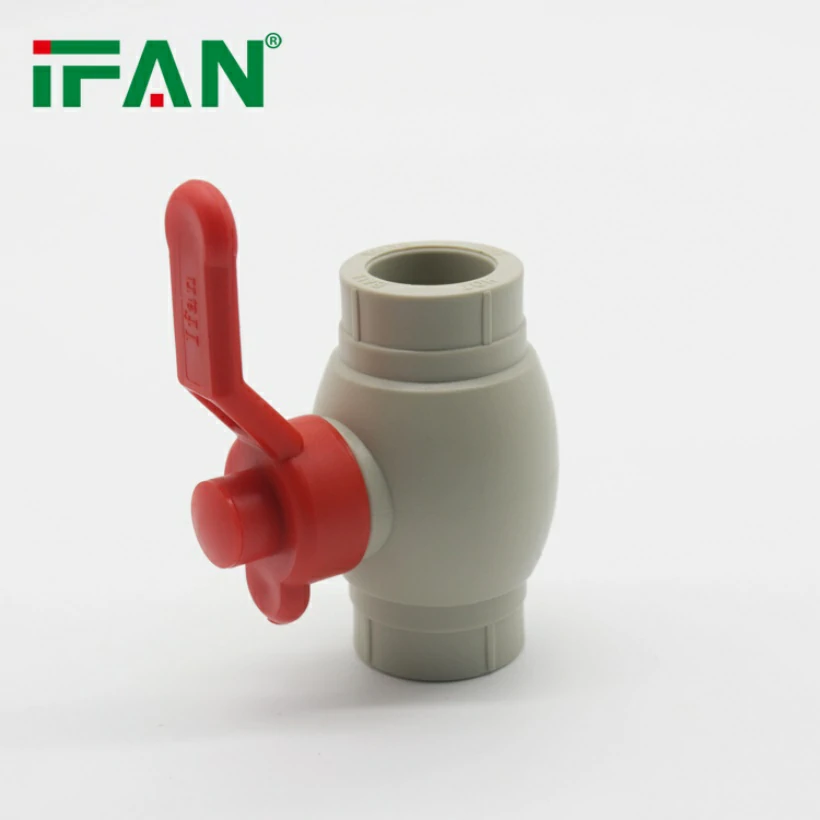


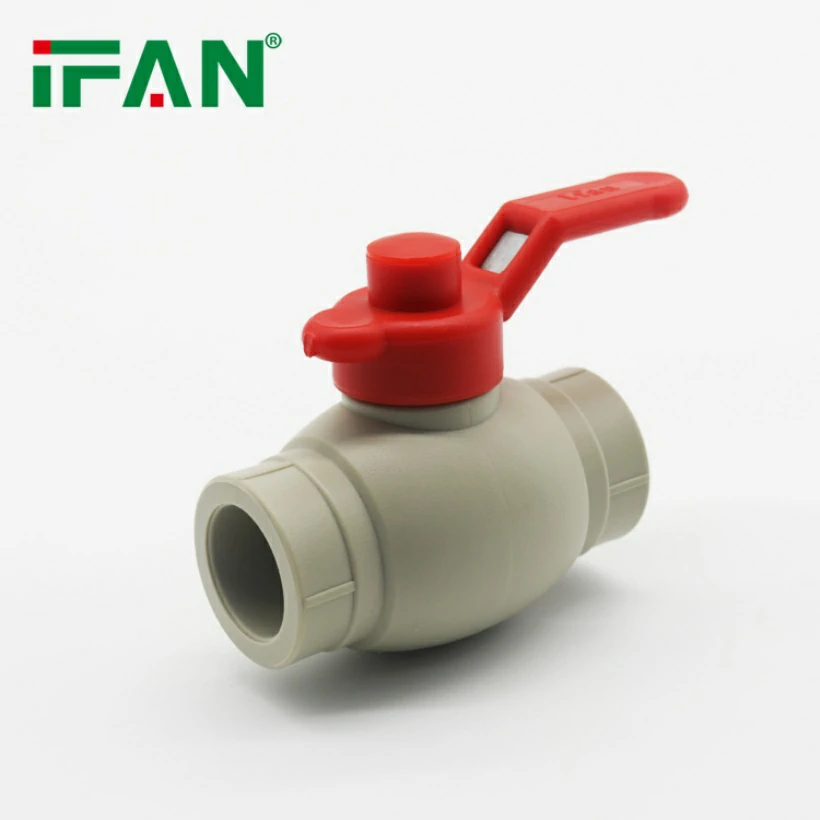
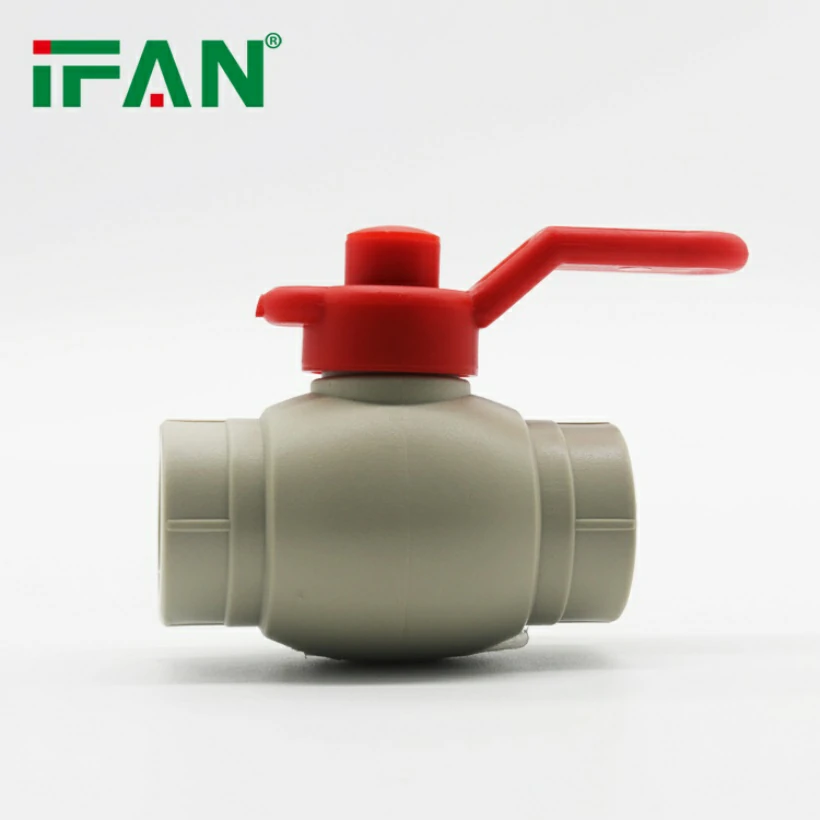
PPR Ball Valve Fits Residential Plumbing Systems
Type:PPR Ball Valve
Brand:IFAN
Connecting method:Hot Melt
Applications:Water Systems
Color:Green,White,Blue
- Fast Delievery
- Quality Assurance
- 24/7 Customer Service
Product Introduction

| Product Name | PPR Ball Valve |
| Size | 20-63mm Or Customized |
| Color |
Green,White,Blue Or Customized |
| Package | IFAN standard packaging |
| Connection | welding |
| Sample | Sample Free |
| Contact |
Welcome to contact IFAN, we are online 24 hours a day to answer your questions!
Understanding the Role of PPR Ball Valves in Residential Plumbing
Residential plumbing systems consist of multiple interconnected pipelines responsible for supplying water to kitchens, bathrooms, laundry areas, and household equipment. Each section has different water demand and operating requirements, making suitable valve placement an important part of plumbing design. A PPR ball valve is commonly used in these systems to control water supply, isolate individual pipeline sections, and manage connections between different plumbing areas.
Manufactured from polypropylene random copolymer, PPR ball valves are designed to connect with compatible PPR pipes through heat fusion. Their structure allows them to be incorporated into concealed pipelines, exposed plumbing installations, and household water distribution networks.
The suitability of a PPR ball valve for residential plumbing depends on several practical factors, including pipe dimensions, water pressure, operating temperature, installation location, and connection arrangement. Understanding how these factors relate to household plumbing helps determine the appropriate valve type and installation position.
Application in Household Water Supply Lines
The main water supply line is responsible for transporting water from the building's incoming connection to different household distribution points. A PPR ball valve can be installed along this line to control the overall water supply entering the residential plumbing network.
In a typical house or apartment, the incoming pipeline connects to a distribution arrangement that supplies several rooms. Installing a suitable isolation valve near the main water entry point allows the water supply to be shut off when plumbing work or system inspection is required.
The valve size should correspond to the diameter and design requirements of the main supply pipe. An incorrectly selected size may introduce unnecessary restrictions or create connection difficulties during installation.
The location should also remain accessible. Main isolation valves are generally positioned where residents or maintenance personnel can identify and operate them without removing surrounding building structures.
Suitable for Kitchen Plumbing Installations
Kitchen plumbing systems usually include separate water connections for sinks, dishwashers, water filters, and other appliances. Each connection may require independent water control to accommodate installation, inspection, or equipment replacement.
PPR ball valves can be incorporated into suitable kitchen supply pipelines to establish individual isolation points. For example, a valve installed on the branch supplying a dishwasher allows the appliance connection to be isolated without interrupting the water supply to the entire kitchen.
When planning these installations, the valve position should account for cabinet dimensions, appliance locations, and available maintenance space. A handle that cannot rotate freely because of surrounding cabinets or equipment may create difficulties during operation.
Designers should also consider the connection arrangement between the main PPR pipeline and appliance-specific fittings. Where different connection types are required, compatible transition fittings should be selected according to the equipment manufacturer's specifications.
Integration into Bathroom Water Distribution
Bathrooms contain several water outlets, including washbasins, showers, bathtubs, and toilet supply connections. Their pipelines are often arranged through multiple branches, making individual water isolation an important consideration.
PPR ball valves can be positioned at suitable distribution points to separate different bathroom supply sections. This arrangement allows maintenance personnel to isolate a particular branch when replacing a tap, repairing a shower connection, or inspecting a toilet water supply.
In residential buildings with multiple bathrooms, separate branch valves may also be included in the distribution layout. This allows one bathroom to be isolated while other household water outlets remain connected to the main supply.
The installation position should be determined during the plumbing design stage. Valves installed behind tiled walls or inside inaccessible structures may create maintenance difficulties. Where concealed installation is necessary, appropriate access arrangements should be considered.
Compatibility with Hot and Cold Water Pipelines
Residential plumbing systems commonly contain separate hot and cold water distribution lines. Cold water is generally supplied directly from the main distribution network, while hot water passes through a water heater or another heating device before reaching household outlets.
PPR ball valves can be used in compatible hot and cold water installations, provided their material specifications correspond to the operating conditions. Hot water applications require particular attention to temperature and pressure because PPR material characteristics change as temperature increases.
The selected valve must meet the manufacturer's specified pressure-temperature requirements. A valve suitable for a cold water line should not automatically be assumed suitable for every hot water application.
During installation, the hot and cold pipelines should be identified clearly. This helps prevent incorrect connections and makes subsequent maintenance easier. Appropriate pipe insulation and support arrangements should also be considered where required by the plumbing design.
Installation in Concealed and Exposed Plumbing Systems
Residential plumbing pipelines may be installed inside walls, beneath floors, above ceilings, or along visible service routes. PPR ball valves can be incorporated into these different arrangements, but the installation method should reflect the surrounding building structure.
In exposed plumbing systems, valves can generally be installed at visible connection points with sufficient operating clearance. Their positions should allow the handle to move freely and provide access for inspection.
Concealed installations require more careful planning. Before a valve is placed inside a wall cavity or service enclosure, installers should confirm that its location is consistent with the building drawings and maintenance requirements.
The fusion connections must follow the specified heating temperature, insertion depth, and cooling procedure. Connected pipes should also remain properly aligned to avoid unnecessary stress on the valve body.
Where future access is required, an inspection opening or accessible service enclosure should be incorporated into the installation design.
Selecting the Appropriate Valve Size and Type
Choosing the correct PPR ball valve involves more than matching the external pipe diameter. The valve's internal passage, nominal pressure rating, connection dimensions, and intended operating temperature must also be considered.
For residential applications, common valve sizes are selected according to the water demand of the main supply and individual branch pipelines. Larger main lines and smaller fixture connections may require different valve dimensions.
The valve configuration should also correspond to the available installation space. Some locations require a compact structure, while others may accommodate a standard handle arrangement.
Before purchasing, installers should review the manufacturer's technical documentation and confirm compatibility with the selected PPR pipe system. The applicable drinking water contact requirements should also be checked when the valve is intended for potable water distribution.
Maintenance and Accessibility in Residential Plumbing
Although PPR ball valves generally require limited routine attention, their position within a residential plumbing system should allow convenient inspection and operation.
Residents or maintenance personnel should be able to identify the main isolation valve and understand which pipeline section it controls. Clear labeling can be useful in larger houses where several valves are installed in different service areas.
Periodic checks may include examining the external body for visible damage, inspecting fusion connections for leakage, and confirming that the handle can move through its intended operating range.
Valves should not be forced when unusual resistance occurs. Any abnormal movement or leakage should be investigated according to the manufacturer's maintenance recommendations.


Hot Tags: ppr ball valve fits residential plumbing systems, China ppr ball valve fits residential plumbing systems manufacturers, suppliers, factory, PPR Elbow With Thread, PPR Female Elbow, PPR Male Thread Coupling, Ppr Male Threaded Elbow, PPR Pipe Tee, PPR Tee