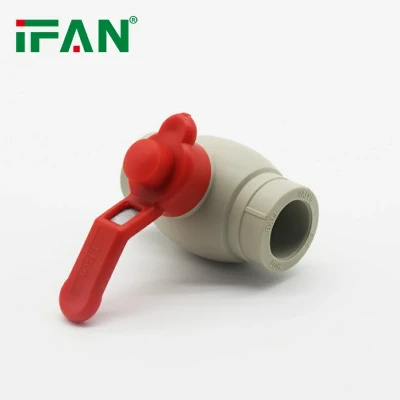

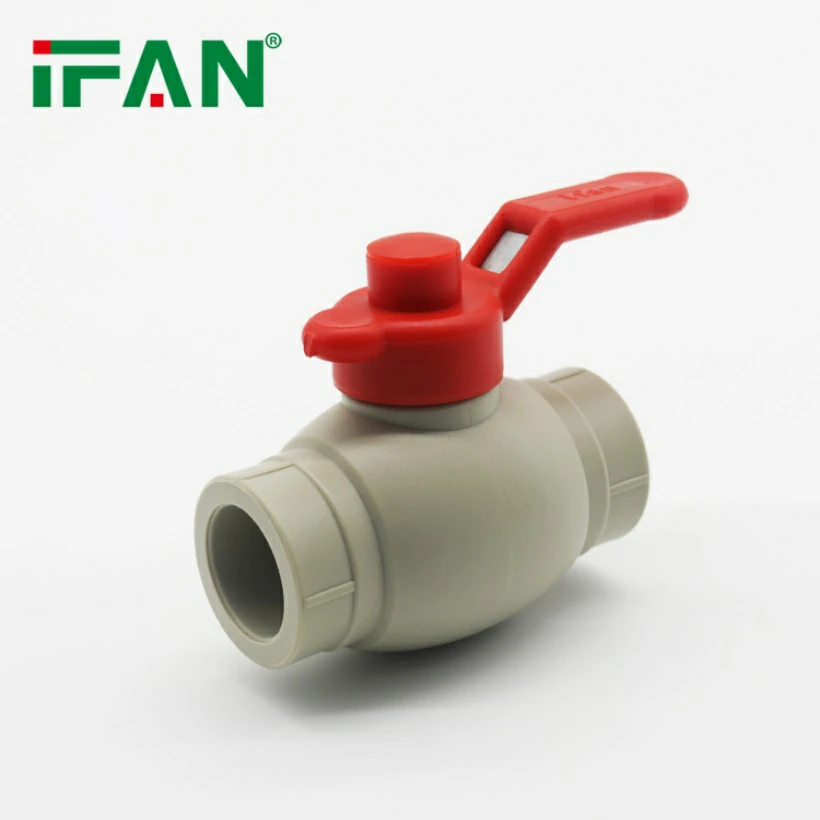

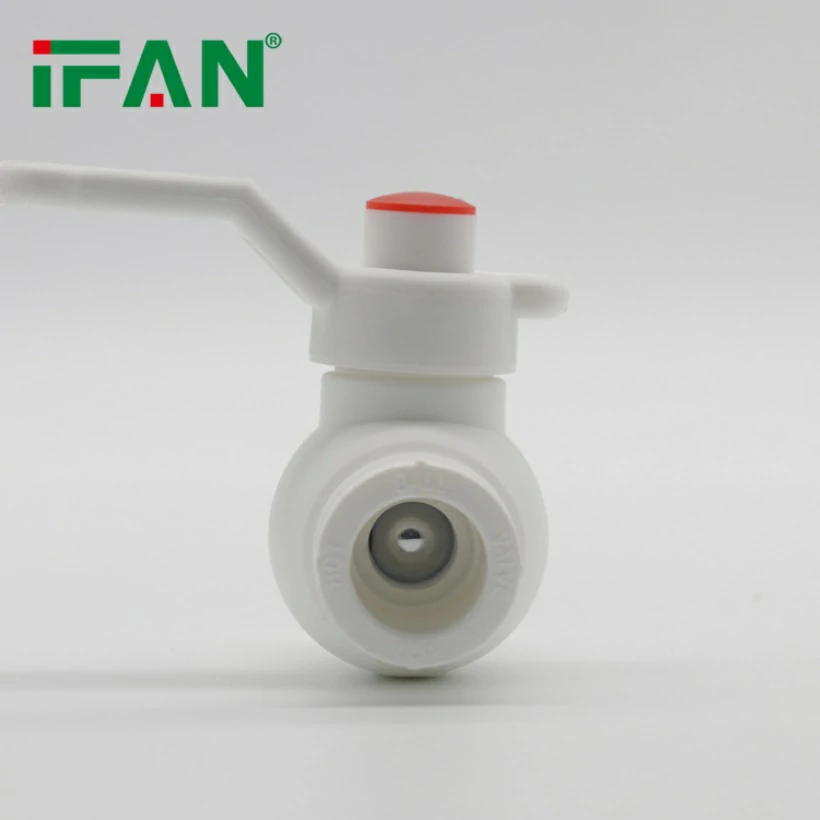
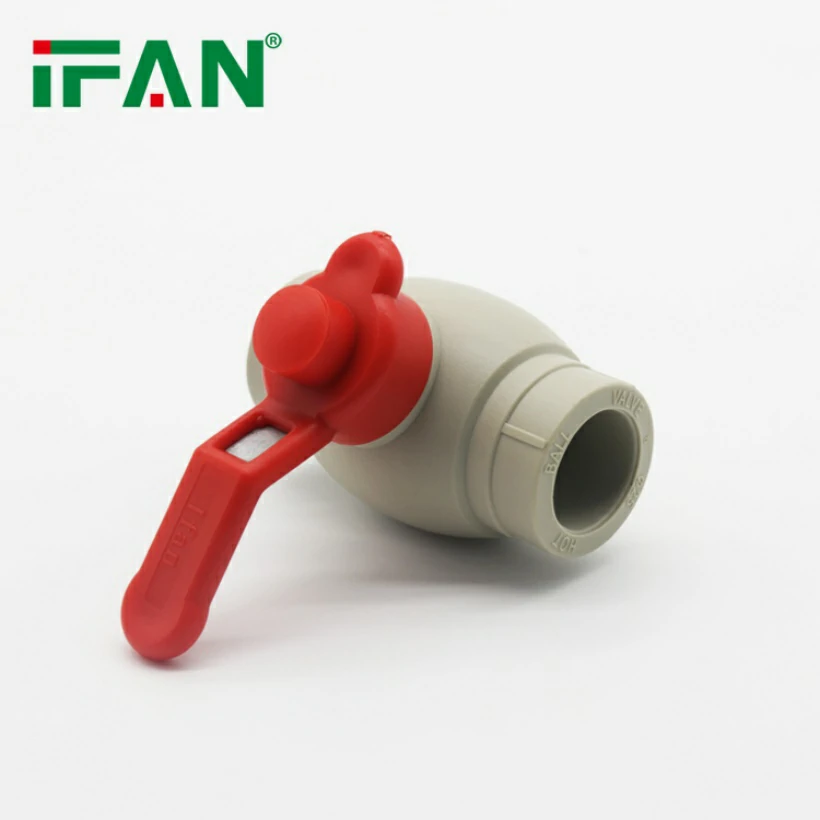
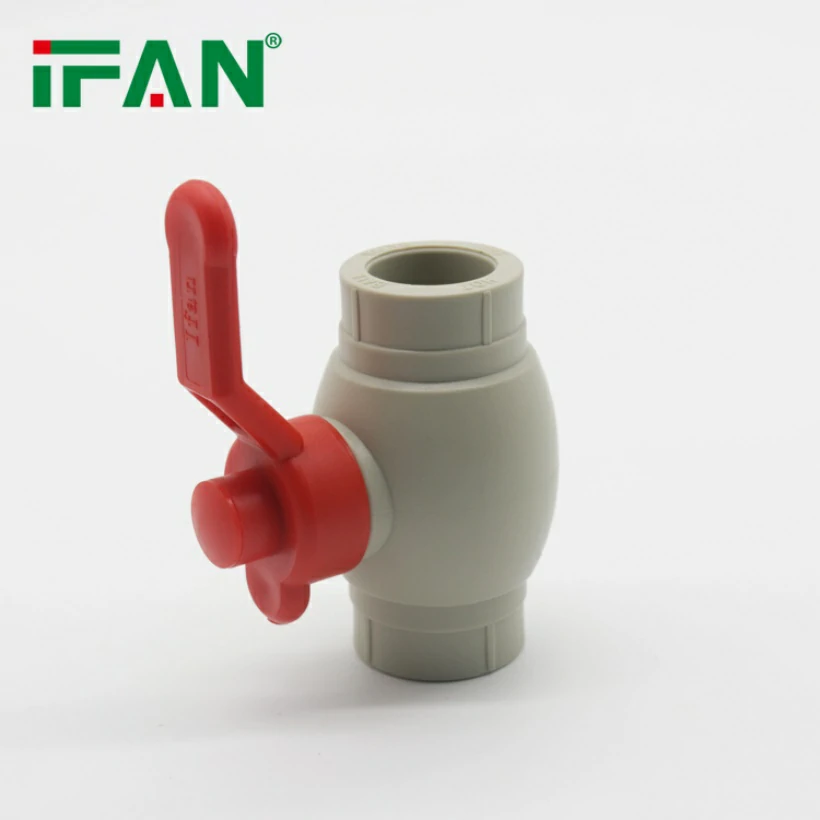
PPR Ball Valve Supports Industrial Piping Applications
Type:PPR Ball Valve
Brand:IFAN
Connecting method:Hot Melt
Applications:Water Systems
Color:Green,White,Blue
- Fast Delievery
- Quality Assurance
- 24/7 Customer Service
Product Introduction

| Product Name | PPR Ball Valve |
| Size | 20-63mm Or Customized |
| Color |
Green,White,Blue Or Customized |
| Package | IFAN standard packaging |
| Connection | welding |
| Sample | Sample Free |
| Contact |
Welcome to contact IFAN, we are online 24 hours a day to answer your questions!
Understanding the Role of PPR Ball Valves in Industrial Piping
Industrial piping systems are designed to transport water and other compatible fluids between processing equipment, storage facilities, cooling units, and different production areas. Unlike ordinary building plumbing, industrial networks often contain multiple pipeline routes with different operating pressures, temperatures, and flow requirements. Selecting suitable valves is therefore an important part of industrial piping design.
A PPR ball valve is manufactured from polypropylene random copolymer and uses a spherical internal component to control fluid movement. Its structure allows it to be incorporated into compatible thermoplastic piping systems where the transported medium and operating conditions fall within the material's specified application range.
In industrial environments, PPR ball valves may be used in auxiliary water supply lines, cooling water distribution, equipment connections, and certain chemical service pipelines. Their application should always be determined by the actual characteristics of the transported fluid rather than by the general classification of the industrial sector.
Understanding the relationship between valve structure, pipeline configuration, and operating conditions helps engineers determine where PPR ball valves are appropriate.
Application in Industrial Water Supply Networks
Water is widely used throughout industrial facilities for equipment cleaning, process support, cooling, and general utility services. These applications require organized distribution networks that can deliver water to different production areas.
PPR ball valves can be installed at suitable points within industrial water supply pipelines to establish local isolation and control sections. For example, a manufacturing facility may use separate branches to supply workshops, washing stations, equipment rooms, and auxiliary service areas.
Each branch can be equipped with an appropriately sized valve according to its pipeline specifications. This arrangement allows maintenance personnel to isolate individual sections when inspecting equipment or modifying pipeline connections.
For larger industrial installations, valve positioning should be coordinated with the overall piping layout. Engineers need to consider flow demand, pressure conditions, pipe diameter, and access for operation. The selected valve must also meet the relevant industrial piping standards and project requirements.
Supporting Industrial Cooling Water Systems
Cooling water is essential in many manufacturing processes because machinery and production equipment generate heat during operation. Cooling systems transport water between heat exchangers, cooling towers, pumps, and equipment connections.
PPR ball valves may be used in compatible cooling water pipelines to isolate individual equipment branches or separate sections of the distribution network. Their installation locations depend on the system configuration and the operating requirements of the connected equipment.
For example, a production facility may have multiple cooling branches serving different machines. Installing isolation valves at suitable connection points allows one branch to be separated for inspection while other sections remain connected to the cooling network.
However, cooling water conditions must be evaluated before selecting the valve. Water temperature, pressure, chemical treatment agents, and suspended particles may influence material compatibility. The valve's specifications should correspond to the actual cooling system conditions.
Use in Chemical and Process Fluid Pipelines
Certain industrial processes involve the transportation of chemical solutions through dedicated piping networks. PPR materials demonstrate resistance to many common acids, alkalis, and aqueous chemical substances, making PPR ball valves suitable for selected chemical applications.
Nevertheless, chemical compatibility must never be assumed solely from the material name. Different chemicals can interact with polypropylene in different ways, particularly when concentration and temperature increase.
Before selecting a PPR ball valve for process fluid transportation, engineers should identify the exact chemical composition, concentration, operating temperature, pressure, and expected exposure duration. Manufacturer compatibility charts and relevant technical data should be consulted.
Strong oxidizing substances, certain organic solvents, and highly concentrated chemicals may be unsuitable for PPR. Where compatibility cannot be confirmed, an alternative valve material should be considered.
This evaluation is particularly important in chemical manufacturing facilities, where the transported medium may change between different production stages.
Integration with Industrial Equipment and Auxiliary Pipelines
Industrial equipment frequently requires separate fluid connections for cooling, cleaning, flushing, or other auxiliary operations. These pipelines may connect pumps, tanks, heat exchangers, filtration units, and production machinery.
PPR ball valves can be incorporated into suitable auxiliary connections to provide local isolation. Their position should be determined according to equipment maintenance requirements and the direction of fluid movement.
For instance, a valve installed near a filtration unit can separate the unit from the surrounding pipeline during inspection. Similarly, valves positioned around compatible auxiliary water connections can establish independent control points for different equipment groups.
When planning these arrangements, engineers should consider the physical dimensions of the equipment, the direction of connected pipes, and the clearance required for handle operation. The valve should not be positioned where surrounding machinery prevents normal access.
Operating Temperature and Pressure Requirements
Industrial piping systems may experience changing temperatures and pressure conditions depending on production schedules and equipment operation. These variables directly influence the suitability of PPR ball valves.
As a thermoplastic material, PPR changes its mechanical characteristics when exposed to elevated temperatures. Its allowable working pressure generally decreases as operating temperature increases. Therefore, a valve selected for a cold water pipeline may not automatically be suitable for a heated industrial process.
Pressure fluctuations should also be considered. Pump startup, sudden flow interruption, and changes in equipment demand may create pressure variations within the pipeline.
Engineers should evaluate the normal operating range, maximum expected pressure, temperature fluctuations, and continuous exposure duration. The valve must remain within the manufacturer's specified limits throughout the intended operating conditions.
Connection Methods and Industrial Installation
PPR ball valves are commonly connected to compatible PPR pipes through socket heat fusion. This method creates a thermoplastic connection by heating the pipe exterior and valve socket interior before joining the components.
In industrial projects, installation procedures should be standardized to maintain consistent connection quality. Pipe dimensions, heating temperature, heating duration, and insertion depth must follow the manufacturer's technical instructions.
The valve should be positioned accurately before the fusion process begins. Incorrect alignment may introduce mechanical stress into the connection, while excessive heating may cause material displacement inside the socket.
Industrial pipelines also require appropriate support arrangements. The valve should not carry unnecessary loads from unsupported pipes or connected equipment. Where thermal expansion is expected, suitable expansion management should be included in the piping design.
Following the approved installation procedure helps ensure that the valve is correctly integrated into the industrial network.
Inspection and Maintenance in Industrial Environments
Industrial facilities generally operate structured maintenance programs to monitor pipeline conditions and identify abnormal operating situations. PPR ball valves should be included in these inspection arrangements.
Maintenance personnel can examine the valve body, connection areas, handle movement, and surrounding pipeline supports. Leakage, visible deformation, unusual operating resistance, or changes in fluid conditions should be investigated.
The internal passage should also be considered when the transported fluid contains suspended particles or substances that may form deposits. Where contamination is possible, suitable filtration and cleaning procedures should be incorporated into the system design.
Inspection frequency should reflect the operating environment, fluid characteristics, and applicable industrial requirements. Any maintenance or replacement work should follow the manufacturer's recommendations and relevant safety procedures.


Hot Tags: ppr ball valve supports industrial piping applications, China ppr ball valve supports industrial piping applications manufacturers, suppliers, factory, Pipe Fitting Elbow, Ppr Elbow 90 Degree, PPR Elbow With Thread, PPR Female Elbow, Ppr Male Threaded Tee, PPR Plumbing Fittings