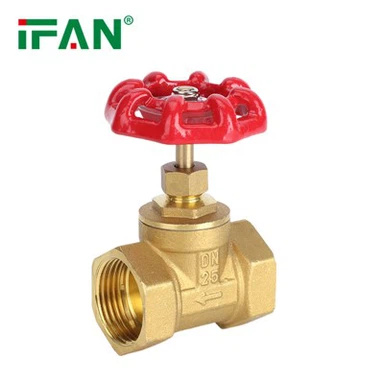


Irrigation Networks Depend On Brass Gate Valve
Type:Brass Gate Valve
Brand:IFAN
Connecting method:Thread
Applications:Water Systems
Color:Brass
- Fast Delievery
- Quality Assurance
- 24/7 Customer Service
Product Introduction

| Product Name | Brass Gate Valve |
| Color | Brass Color |
| Size | 1/2''-1'' |
| Brand | IFAN or Customized |
| OEM |
Support |
| Sample | Free |
| Experience | 30+Years |
| Contact Us | Click HERE to contact us now! |
Welcome to contact IFAN, we are online 24 hours a day to answer your questions!
Introduction
Irrigation networks are designed to distribute water across agricultural fields, landscapes, and controlled growing environments. These systems rely on structured pipeline layouts that direct water from a central source to multiple distribution zones. Within this type of infrastructure, valves are installed at key points to manage direction, sectioning, and flow control. A brass gate valve is commonly incorporated into irrigation systems because its internal structure allows clear opening and closing of water pathways. Its role in irrigation networks is closely linked to how water is divided, redirected, and managed across different field sections.
Zone Control in Field Distribution Systems
Agricultural irrigation systems are often divided into multiple zones to manage water delivery across different crop areas. Each zone may require independent control depending on planting schedules, soil conditions, or watering cycles. A brass gate valve is installed at zone entry points to define these divisions.
When the valve is closed, it creates a clear separation between irrigation branches, preventing water from entering specific sections of the field. When opened, it allows water to pass into the designated zone through a direct internal channel. This structured control supports organized distribution across multiple irrigation areas within a single network.
Direct Flow Routing Through Main Lines
Irrigation systems depend on main distribution lines that carry water from pumps or reservoirs to field branches. These main lines must maintain consistent flow direction while allowing controlled diversion into secondary channels.
The brass gate valve is positioned along these main lines to regulate flow direction without altering the overall pipeline alignment. When fully open, the internal gate is lifted completely out of the flow path, allowing water to move directly through the valve body. This straight passage maintains alignment with the main irrigation route, ensuring that water continues toward downstream distribution points.
Controlled Branch Connection Management
Branch lines in irrigation networks distribute water from the main pipeline into smaller sections of farmland. These branch connections require controlled activation depending on irrigation schedules and water demand.
A brass gate valve is installed at branch junctions to manage when water enters specific distribution lines. The vertical movement of the internal gate determines whether the branch line is active or isolated. This allows irrigation operators to direct water flow into selected areas while keeping other branches closed within the same network.
Flow Regulation During Irrigation Scheduling
Irrigation systems operate based on scheduled watering cycles that vary throughout the day or season. These cycles require controlled activation of different pipeline sections to match agricultural needs.
The brass gate valve is used to open or close sections of the irrigation network according to these schedules. When adjusted, the gate moves along a fixed internal path, changing the flow condition of the system. This movement supports structured timing of water distribution across multiple irrigation zones without altering the overall system layout.
Integration with Pump-Driven Water Supply Systems
Most irrigation networks are powered by pumps that generate pressure to move water through pipelines. These systems require valves that can manage pressurized flow while maintaining defined distribution paths.
The brass gate valve is installed within pump-fed irrigation lines to control how pressurized water enters different sections of the network. When open, the valve allows pump-driven water to pass through a straight internal channel. When closed, it creates a defined separation point that blocks water movement into specific sections of the irrigation system.
Field Layout Segmentation and Water Direction Control
Large agricultural fields are often divided into segmented layouts to optimize water usage across different crop types or soil zones. Each segment requires independent control to ensure proper distribution patterns.
The brass gate valve is used at segmentation points to define water direction between different field areas. Its internal gate structure allows water to be directed into specific segments while isolating others. This structural separation supports organized water routing based on field design and irrigation planning.
Use in Secondary Distribution Channels
Beyond main irrigation lines, secondary channels distribute water to localized field areas such as drip lines, sprinkler systems, or furrow irrigation setups. These channels require controlled entry points to regulate flow.
A brass gate valve is installed at the start of these secondary channels to manage water entry. By opening or closing the valve, water flow into these smaller distribution systems can be controlled directly from the main network. This supports organized water allocation across multiple irrigation delivery methods.



Hot Tags: irrigation networks depend on brass gate valve, China irrigation networks depend on brass gate valve manufacturers, suppliers, factory, 2 Inch Brass Gate Valve, Brass Gate Valve, Brass Gate Valve 3 Inch, Brass Gate Valve Price, Brass Globe Valve, Gate Valve For Drinking Water