


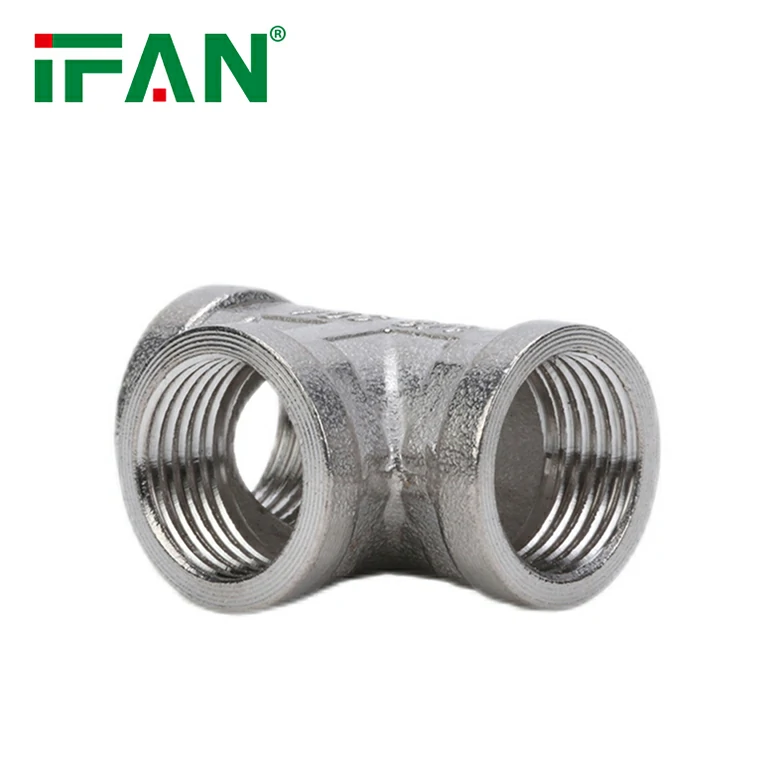
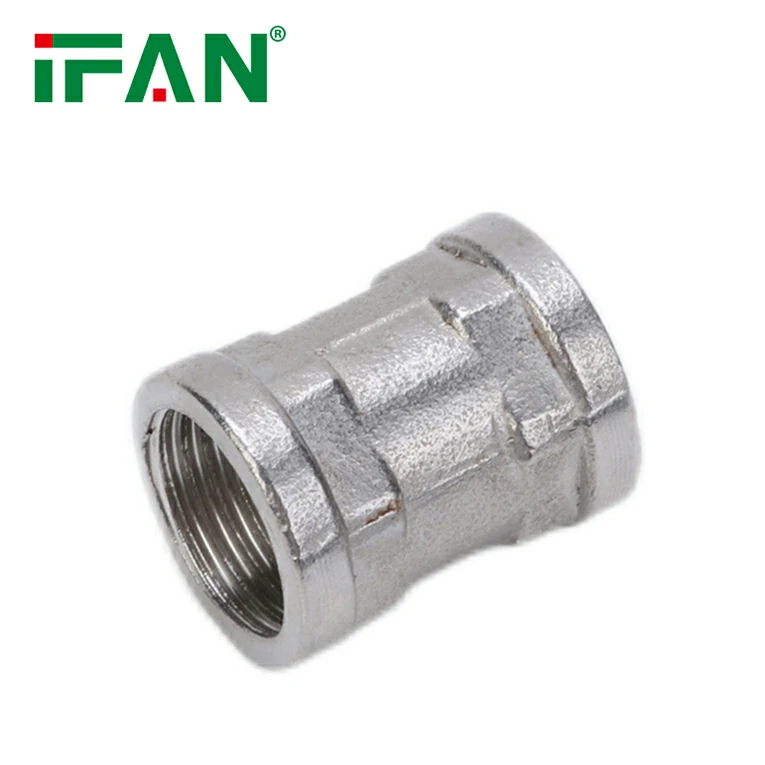
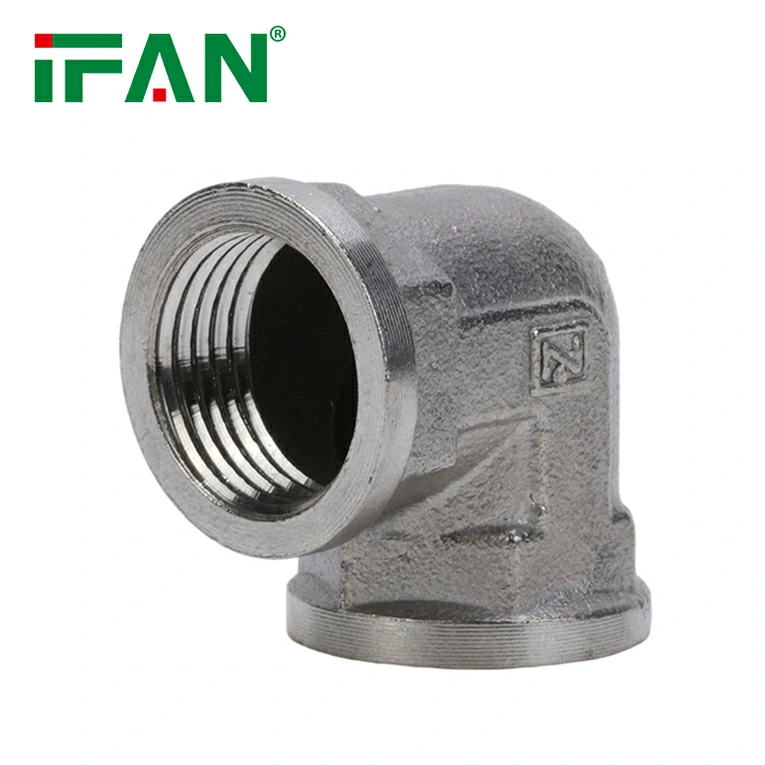
Stainless Steel Pipe Fittings Simplify Pipe Installation
Type:Stainless steel pipe fittings
Brand:IFAN
Connecting method:Thread
Applications:Water Systems
Color:Sliver
- Fast Delievery
- Quality Assurance
- 24/7 Customer Service
Product Introduction


| Product Name | IFAN Brass Thread Fittings |
| Size | 1/2"-2" Or Customized |
| Color |
Yellow/White Or Customized |
| Package | IFAN standard packaging |
| Features | Durable |
| Sample | Sample Free |
| Contact | Click HERE to contact us now! |
Welcome to contact IFAN, we are online 24 hours a day to answer your questions!
Introduction
Pipe installation involves much more than connecting straight sections of pipe. A complete piping system requires directional changes, branch connections, size transitions, equipment interfaces, and termination points. These functions are achieved through the use of pipe fittings, which serve as the connecting elements that shape the overall layout of the system. Stainless steel pipe fittings are widely used in industrial, commercial, and process piping projects because they support organized and efficient installation procedures. Their standardized designs, dimensional consistency, and broad range of configurations allow installers and engineers to assemble complex piping networks with greater precision and coordination.
Standardized Dimensions Facilitate Assembly
One of the most important factors in pipe installation is component compatibility. If fittings and pipes are manufactured to different dimensions, alignment problems can arise during assembly. Installers may need to make adjustments in the field, increasing complexity and affecting project workflows.
Stainless steel pipe fittings are generally produced according to recognized industry standards. These standards define dimensions, connection sizes, wall thickness classifications, and tolerances. Because the fittings are manufactured within these specifications, they can be matched with corresponding pipe systems more easily. Standardization allows installers to plan installations with confidence, knowing that components are designed to fit together according to established engineering requirements.
Multiple Fitting Types Support Layout Design
Every piping system has a unique configuration based on the requirements of the facility. Pipes may need to change direction, split into multiple branches, connect to equipment, or transition between different diameters. Without appropriate fittings, creating these layouts would be difficult and inefficient.
Stainless steel pipe fittings are available in a wide variety of designs, including elbows, tees, reducers, couplings, caps, unions, and crosses. Each fitting serves a specific installation function. By providing dedicated components for different layout requirements, stainless steel fittings allow installers to construct piping networks according to engineering drawings without extensive modifications. This organized approach simplifies the installation process from the initial assembly stage through final system completion.
Accurate Dimensions Improve Alignment
Proper alignment is essential during pipe installation. Misaligned components can complicate assembly procedures and create challenges when connecting multiple sections of pipe. Achieving accurate alignment becomes increasingly important in large systems that contain numerous connection points.
Stainless steel pipe fittings are manufactured with precise dimensions that help maintain alignment throughout the installation process. Their consistent geometry allows connected components to meet correctly and follow the intended routing path. This dimensional accuracy reduces the need for corrective adjustments and supports efficient assembly practices. Accurate alignment also contributes to a more orderly installation sequence across complex piping projects.
Compatibility with Different Joining Methods
Installation requirements vary depending on the application, operating conditions, and project specifications. Some systems use welded connections, while others rely on threaded, socket weld, compression, or mechanical joining methods. The ability to accommodate different installation techniques is an important consideration when selecting fittings.
Stainless steel pipe fittings are produced in configurations suitable for various connection methods. Installers can select fittings that correspond to the chosen assembly approach without changing the overall piping design. This flexibility allows projects to follow installation procedures that align with technical requirements and construction practices. As a result, the fitting selection process becomes more straightforward during project planning and execution.
Simplifying Directional Changes
Pipelines rarely travel in a perfectly straight line from one point to another. Equipment placement, building structures, and process layouts often require changes in direction. Creating these directional transitions directly from pipe sections alone would be impractical.
Stainless steel elbows and directional fittings provide predefined angles that allow installers to redirect piping routes efficiently. Common configurations such as 45-degree and 90-degree elbows help achieve the required path without complicated fabrication work. By offering standardized directional components, these fittings simplify routing decisions and support orderly installation throughout the system.
Supporting Equipment Connections
Industrial piping systems frequently connect to pumps, valves, tanks, heat exchangers, filters, and process equipment. These connection points often require transitions between different sizes or configurations. Establishing these interfaces can become challenging if suitable fittings are not available.
Stainless steel pipe fittings provide numerous options for connecting piping systems to equipment. Reducers facilitate size changes, unions assist with component connections, and specialized fittings accommodate unique installation requirements. Their availability allows installers to integrate piping systems with process equipment according to design specifications. This structured approach simplifies equipment connection procedures during system assembly.
Facilitating Modular Installation Approaches
Many modern piping projects are designed using modular construction techniques. In these projects, sections of piping are assembled separately and later integrated into the final system. Modular installation requires components that can be incorporated into prefabricated assemblies while maintaining dimensional consistency.
Stainless steel pipe fittings are commonly used in modular construction because their standardized dimensions support predictable assembly processes. Installers can prepare sections in advance and connect them according to project requirements during final installation. This approach helps maintain organization throughout the construction sequence and supports efficient system integration.
Simplifying System Modifications and Expansions
Piping systems are sometimes modified during installation to accommodate design revisions, equipment additions, or layout adjustments. Components that support flexible configuration changes can simplify these modifications.
The wide range of stainless steel fitting types allows installers to adapt piping layouts when necessary. Additional branches can be created using tees, size changes can be addressed with reducers, and routing adjustments can be achieved through elbows and couplings. The availability of these components supports installation activities that require changes without fundamentally altering the overall piping concept.


Hot Tags: stainless steel pipe fittings simplify pipe installation, China stainless steel pipe fittings simplify pipe installation manufacturers, suppliers, factory, Stainless Steel Threaded Pipe Fittings


