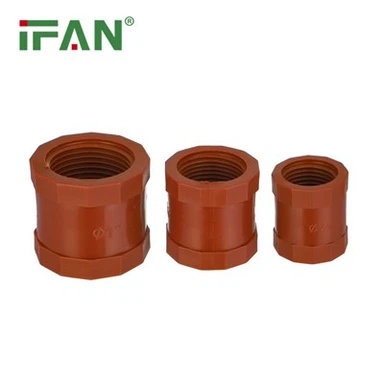


HDPE Butt Fusion Fittings Support High Pressure
Brand: IFAN
Materials:PE
Size:63-400mm
Sample: Free Sample
Service: OEM&ODM
- Fast Delievery
- Quality Assurance
- 24/7 Customer Service
Product Introduction
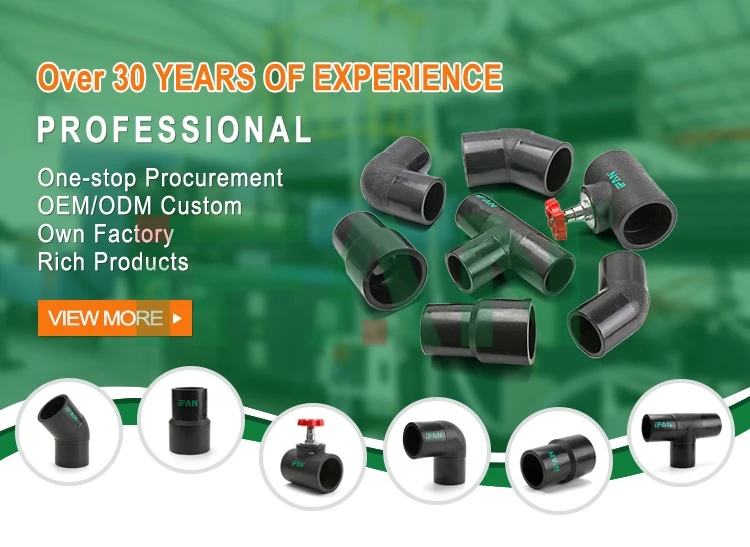
| Product Name | HDPE Butt Fusion Fittings |
| Size | 63-400mm |
| Color | Black Color Or Customized |
| Connection | Welding |
| MOQ | 100PCS |
| Sample | Sample Free |
| Contact |
Understanding Pressure Requirements in HDPE Piping Systems
High-density polyethylene (HDPE) butt fusion fittings are used in piping systems where internal pressure must be managed through correctly selected components and properly executed connections. These fittings are joined to compatible polyethylene pipes by heating their prepared end surfaces and pressing them together under controlled conditions. The resulting fused interface becomes an integral part of the pipeline, allowing pressure to be transmitted through the connected sections when the system is designed and installed correctly.
Pressure performance depends on several factors, including the polyethylene material grade, pipe dimensions, wall thickness, fitting specifications, operating temperature, and the characteristics of the transported medium. A fitting should never be selected solely because its nominal diameter matches the pipeline. Its pressure classification must also correspond to the intended service conditions and the applicable design requirements.
Understanding these factors is essential when planning water distribution networks, industrial fluid systems, and other pressurized applications. The fitting, pipe, and joining procedure must be evaluated as parts of one pressure-containing system rather than as independent components.
How Butt Fusion Creates a Pressure-Resistant Joint
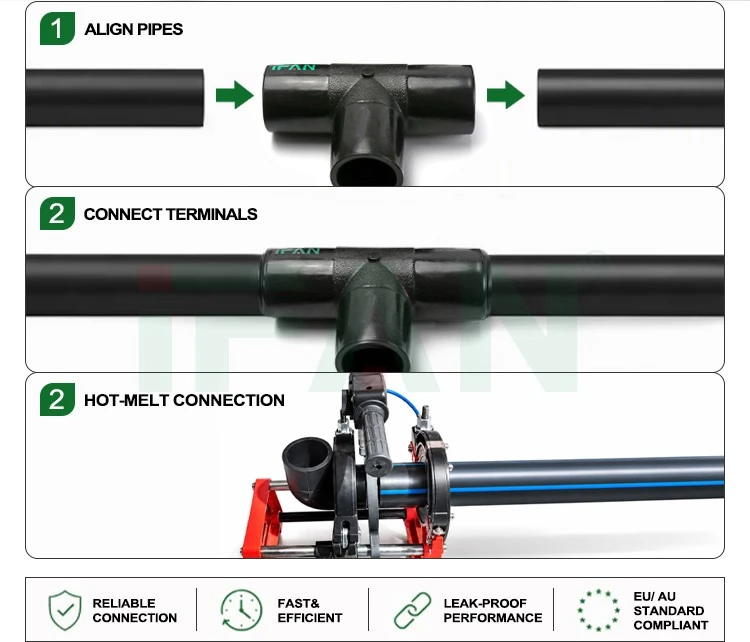
The butt fusion process joins two compatible polyethylene surfaces through controlled heating and pressure. Before fusion, the pipe and fitting ends are faced to create clean, flat, parallel surfaces. These surfaces are heated using an appropriate fusion plate until the polyethylene reaches the condition specified by the joining procedure.
The heating plate is then removed, and the softened surfaces are brought together using the prescribed force. As the material cools, the interface develops a fused structure across the joining area. When the process is performed correctly, the connection can transfer mechanical loads and contain internal pressure in accordance with the system's design limits.
The quality of this interface is particularly important in pressurized pipelines. Incomplete fusion, contamination, excessive misalignment, or unsuitable joining parameters can create localized weaknesses. Such defects may affect the connection's ability to withstand sustained pressure or pressure fluctuations.
For this reason, pressure performance cannot be established by the joining method alone. Material compatibility, machine calibration, operator control, and compliance with the applicable fusion procedure all contribute to the final joint quality.
Selecting the Correct Pressure Rating
Pressure-rated HDPE butt fusion fittings must be matched to the pipeline's design requirements. Manufacturers specify product dimensions, material grades, and pressure classifications that determine the conditions under which a fitting may be used. Engineers should review these specifications before approving components for installation.
The relationship between pressure rating and pipe dimensions is important. For polyethylene piping, the standard dimension ratio (SDR) expresses the relationship between the pipe's outside diameter and its wall thickness. For a given material grade, a lower SDR generally indicates a thicker wall relative to the outside diameter and is associated with a higher pressure rating under comparable conditions.
However, the SDR of the pipe alone does not establish the suitability of every fitting in the system. The fitting's own specification, design, and compatibility with the connected pipe must also be verified. Any applicable pressure derating factors should be considered when operating temperatures exceed the reference conditions used for the published rating.
Controlling Wall Thickness and Material Compatibility
Wall thickness affects how a polyethylene pipe responds to internal pressure. Internal pressure generates circumferential stress in the pipe wall, and the design must account for the relationship between that stress, the material's rated properties, and the dimensions of the pipeline.
Butt fusion fittings must be suitable for the pipe dimensions and pressure classification with which they are used. Differences in wall thickness, material grade, or dimensional tolerances can influence alignment and the fusion process. Installers should confirm that the mating components are approved for the intended connection rather than assuming that all HDPE products can be fused together under identical conditions.
Material identification and product documentation provide essential information during this verification stage. Where a pipeline operates under demanding pressure conditions, engineers should also review the relevant design standard, manufacturer data, and project specifications. These checks establish the basis for selecting a suitable fitting before installation starts.
Distinguishing Butt Fusion from Socket Welding
HDPE butt fusion fittings and HDPE socket welding fittings use different joining arrangements, which affects their application in pressurized systems.
Butt fusion connects prepared pipe and fitting ends face to face. A dedicated fusion machine holds the components in clamps, maintains alignment, and controls the heating and joining sequence. This approach is commonly used in larger-diameter polyethylene pipelines, where the equipment can accommodate the dimensions and forces required during fusion.
Socket welding, by contrast, heats the outside surface of the pipe end and the inside surface of a compatible fitting socket using matched heating elements. The pipe is then inserted into the socket to the specified depth. The method requires accurate control of insertion depth, heating time, alignment, and handling during cooling.
Neither joining method automatically establishes a higher pressure capacity simply because of its configuration. Pressure suitability depends on the specific product, dimensions, material, joining quality, and applicable standards. The correct method must be selected according to the fitting design and the manufacturer's installation requirements.
Managing Pressure Fluctuations and Operating Temperature
Pipelines may experience changes in operating pressure caused by pump starts, valve closures, flow interruptions, or variations in system demand. Rapid pressure changes can produce transient loads, commonly known as pressure surges or water hammer. These effects must be considered during pipeline design rather than addressed through fitting selection alone.
HDPE butt fusion fittings should be evaluated within the operating conditions specified for the complete piping system. Engineers need to consider normal working pressure, potential surge pressure, temperature variations, and the frequency of pressure cycles. A system operating close to its allowable pressure limit may require additional design measures to control transient conditions.
Temperature is also relevant because polyethylene's pressure capacity generally decreases as operating temperature increases above the reference temperature used for its rating. The appropriate reduction factors must be obtained from the applicable standards or manufacturer documentation. The selected fitting and connected pipe must remain within their permitted operating limits under the expected conditions.
Fusion Inspection and Pressure Testing
Proper inspection helps verify that butt fusion connections have been produced according to the approved procedure. Installers should examine the external fusion bead, alignment, and visible joint characteristics using the acceptance criteria specified for the project. Irregularities should be investigated rather than accepted solely because the connection appears complete.
Fusion records may include the operator's identification, equipment details, heating conditions, joining parameters, and cooling information. Maintaining these records allows the installation team to trace individual connections and review possible causes of process deviations.
After installation, the pipeline should undergo the specified pressure test using an approved method appropriate to the system. Test pressure, stabilization procedures, duration, and acceptance criteria must follow the governing standard and project requirements. Pressure testing should be conducted by qualified personnel with suitable safety precautions, since stored energy in a pressurized pipeline can create hazards.


Hot Tags: hdpe butt fusion fittings support high pressure, China hdpe butt fusion fittings support high pressure manufacturers, suppliers, factory, Compression HDPE Pipe Fittings, HDPE Elbow 90, HDPE Pipe and Fitting, HDPE Pipe Fitting, HDPE Water Pipe Fittings, PE Pipe