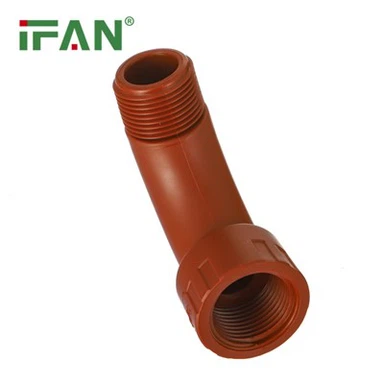

Brass Ball Valve Offers Easy Installation
Nov 24, 2026

| Product Name | Brass Ball Valve |
| Color | Brass or Sliver Color |
| Size | 1/2''-4'' |
| Brand | IFAN or Customized |
| OEM |
Support |
| Sample | Free |
| Experience | 30+Years |
Welcome to contact IFAN, we are online 24 hours a day to answer your questions!
Introduction
Choosing the right valve can make a noticeable difference in the time and effort required to complete a plumbing project. Contractors often work with limited installation space, tight schedules, and piping systems that require reliable connections. A component that is difficult to position or requires complicated assembly can slow down the entire process. Brass ball valves are popular in residential, commercial, and selected industrial installations because their practical construction makes them relatively straightforward to install. Available in different sizes and connection configurations, they can be integrated into many compatible piping arrangements. Their compact structure and simple operating mechanism also reduce unnecessary installation complexity. Although proper tools and technical knowledge remain essential, understanding the features that make brass ball valves installation-friendly can help plumbers and project managers improve their workflow.
Compact Design Makes Positioning Easier
One noticeable advantage of brass ball valves is their relatively compact construction. Unlike some larger flow-control assemblies, many standard ball valves can fit into restricted plumbing areas without requiring substantial additional space.
This is particularly useful when installing valves beneath kitchen sinks, behind utility equipment, inside service cabinets, or near water heaters. A compact body gives installers more flexibility when arranging nearby pipes and fittings.
The quarter-turn operating mechanism also contributes to practical installation planning. Since the handle moves through a limited angle, users do not need the additional clearance associated with some multi-turn valve designs.
However, sufficient space must still be provided for handle movement, tool access, and future maintenance. Considering accessibility before fixing the valve in position helps avoid unnecessary adjustments later.
Different Connection Options Simplify Integration
Brass ball valves are manufactured with several connection configurations to accommodate different plumbing requirements. Common options include female threaded, male threaded, and other application-specific connection designs.
This variety allows contractors to select products that match the existing pipeline arrangement. For example, a threaded valve may be suitable for connecting compatible metal pipes or plumbing adapters, while other designs can be used with approved transition components.
Before purchasing, installers should check thread standards, nominal sizes, and connection specifications. Two products may appear similar but still have incompatible thread profiles or dimensions.
Selecting the correct connection type from the beginning reduces the need for additional adapters and helps create a more organized installation.
Straightforward Installation Procedures
Installing a brass ball valve generally involves fewer specialized joining operations than some traditional valve installation methods. For a threaded model, the process typically includes preparing the pipe connection, applying an appropriate thread sealant, and assembling the valve according to the manufacturer's instructions.
The installer should first examine the valve and surrounding pipework for damage, contamination, or dimensional problems. Clean connection surfaces help reduce the possibility of installation defects.
During assembly, suitable tools should be used on the designated connection areas. Applying excessive force directly to the valve body or handle should be avoided because it may damage the component.
The valve should also be oriented so that its operating handle can move freely. Following these basic precautions helps establish a secure connection while reducing unnecessary installation difficulties.
Reducing the Need for Specialized Equipment
Many standard brass ball valves can be installed using commonly available plumbing tools. Depending on the connection design, these may include suitable wrenches, pipe preparation equipment, and approved thread-sealing materials.
This can be convenient for contractors who manage several different plumbing tasks on the same project. They may not need to arrange additional specialized joining equipment solely for installing a conventional threaded ball valve.
The exact equipment requirements depend on the valve model and piping material. Installers should always consult the manufacturer's documentation rather than assuming that every brass ball valve follows an identical procedure.
Having the correct tools ready before beginning work can prevent interruptions and make the installation process more efficient.
Suitable for New Projects and Replacement Work
Brass ball valves are useful in both new plumbing installations and maintenance projects. During new construction, they can be positioned at strategic points to provide convenient isolation for individual pipe branches or equipment connections.
Replacement work often presents different challenges. An existing valve may be installed in a narrow cabinet or connected to older piping that requires careful inspection.
A compatible replacement brass ball valve can make the task more manageable when the connection dimensions and thread specifications match. Before removing the existing component, workers should isolate the water supply and release pressure safely.
If the surrounding pipework is corroded or damaged, additional repairs may be necessary. Installing a new valve without addressing existing connection problems can lead to future leakage.
Installation Quality Determines Long-Term Performance
Easy installation should never mean overlooking technical requirements. A valve must be correctly rated for the system's pressure, temperature, and fluid type.
Installers should also consider the material compatibility of connected pipes and fittings. In drinking water applications, appropriately certified brass products should be selected.
After assembly, the valve and surrounding connections should be inspected. The completed system must undergo the required leak or pressure testing in accordance with applicable regulations and manufacturer recommendations.
Keeping the valve accessible is another important consideration. A well-positioned component is easier to operate, inspect, and replace when maintenance becomes necessary.