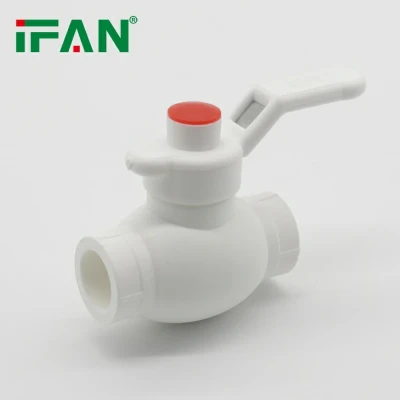

Brass Ball Valve Provides Long-Term Durability
Nov 24, 2026

| Product Name | Brass Ball Valve |
| Color | Brass or Sliver Color |
| Size | 1/2''-4'' |
| Brand | IFAN or Customized |
| OEM |
Support |
| Sample | Free |
| Experience | 30+Years |
Welcome to contact IFAN, we are online 24 hours a day to answer your questions!
Introduction
Durability is an important consideration when choosing components for a plumbing or fluid control system. Valves are expected to perform consistently through years of regular operation, exposure to moisture, pressure changes, and varying temperatures. Replacing a poorly made valve can involve more than purchasing a new component, as maintenance work may also interrupt water supply and require additional labor. Brass ball valves are widely used in residential, commercial, and industrial applications because their material properties and mechanical design support dependable service under suitable operating conditions. Their sturdy construction, practical internal structure, and relatively simple operation make them a popular choice for long-term installations. However, actual service life depends on several factors, including alloy quality, manufacturing precision, installation methods, and environmental conditions.
Brass Material Offers Mechanical Strength
The durability of a brass ball valve begins with the material used to manufacture its body. Brass is primarily composed of copper and zinc, with certain alloys containing additional elements to achieve specific performance characteristics.
This material offers a useful combination of strength, hardness, and machinability. Manufacturers can produce accurately shaped valve bodies with well-defined internal passages and connection surfaces. These characteristics are important because the valve must withstand mechanical loads and internal fluid pressure during normal operation.
Brass also performs well in many common plumbing environments. Unlike ordinary carbon steel, it does not develop the same type of red iron rust when exposed to moisture. Nevertheless, brass can still experience corrosion under aggressive water conditions. Selecting an appropriate alloy, particularly one resistant to dezincification where necessary, helps improve long-term reliability.
Internal Components Designed for Repeated Operation
A ball valve is frequently operated to isolate equipment, regulate service access, or perform maintenance. Its internal components must therefore withstand repeated movement without experiencing excessive wear.
The main operating element is a spherical ball containing a central opening. It rotates inside the valve body to change the flow passage between open and closed positions. The ball works together with internal seats that help maintain effective sealing.
Many designs use PTFE seats because of their low-friction characteristics and suitable sealing properties. The stem and handle assembly also contribute to operating stability by transferring movement from the user to the internal ball.
The quality of these individual components influences the overall durability of the valve. Accurate machining, suitable material selection, and careful assembly help reduce premature wear and maintain smooth operation.
Resistance to Common Environmental Conditions
Plumbing valves are frequently installed in locations where temperature changes, humidity, and occasional condensation are unavoidable. A durable valve should maintain its physical condition despite these everyday environmental influences.
Brass offers useful resistance to many common moisture-related conditions, making it suitable for indoor water distribution systems. Its material characteristics can help reduce deterioration compared with less suitable metals.
However, environmental compatibility should never be overlooked. Certain water chemistries, chloride concentrations, and chemical cleaning agents may accelerate corrosion or affect internal sealing materials.
For outdoor or industrial installations, additional attention should be given to environmental exposure and product specifications. Choosing a valve specifically approved for the intended conditions helps prevent avoidable material degradation.
Stable Performance Under Suitable Pressure and Temperature
Long-term durability also depends on how a valve handles the pressure and temperature conditions within a piping network.
Brass ball valves are manufactured in different pressure classes and configurations. Their ability to withstand operating loads depends on body dimensions, alloy properties, connection design, and internal construction.
Temperature is equally important because excessive heat may affect sealing seats and other nonmetallic components even when the brass body remains structurally sound.
Users should therefore review the manufacturer's pressure-temperature ratings rather than assuming that all brass ball valves offer identical performance. Maintaining operating conditions within approved limits helps protect the valve against premature deterioration.
Installation Quality Influences Service Life
Even a durable product can fail earlier than expected when installation procedures are neglected. Incorrect thread engagement, excessive tightening, or poor alignment may create unnecessary stress around the valve connections.
Before installation, workers should inspect the component for damage and verify that its dimensions match the pipeline. Suitable thread-sealing materials should be applied where required, following the manufacturer's recommendations.
The valve should also be positioned where the handle remains accessible and surrounding pipes do not place excessive mechanical loads on the body.
After assembly, the system should undergo the required leakage and pressure testing. Correct installation helps ensure that the valve operates under the conditions for which it was designed.
Maintenance Helps Preserve Long-Term Value
Although brass ball valves generally have a relatively simple structure, periodic inspection remains important. Users should check accessible connections for moisture, examine the body for corrosion, and pay attention to changes in handle movement.
A valve that becomes unusually difficult to operate may have internal deposits, damaged sealing components, or other mechanical problems. Forcing the handle can make the situation worse.
In commercial facilities, maintenance records can help identify recurring problems and support timely replacement decisions. Keeping product specifications also makes it easier to select compatible components when repairs become necessary.