
Chemical Processing Applications Using HDPE Electrofusion Fitting
Oct 27, 2026

| Product Name | HDPE Electrofusion Fitting |
| Size | 50-630mm |
| Color | Black Color Or Customized |
| Connection | Electrofusion |
| MOQ | 100PCS |
| Sample | Sample Free |
| Contact |
The Role of HDPE Electrofusion Fittings in Chemical Plants
Chemical processing facilities rely on interconnected piping networks to transfer raw materials, intermediate products, process water, and chemical solutions between storage tanks, reactors, treatment units, and production equipment. These pipelines must be designed around the properties of the transported substances, as well as operating pressure, temperature, and flow requirements. Selecting suitable pipe connections is therefore an important part of process engineering.
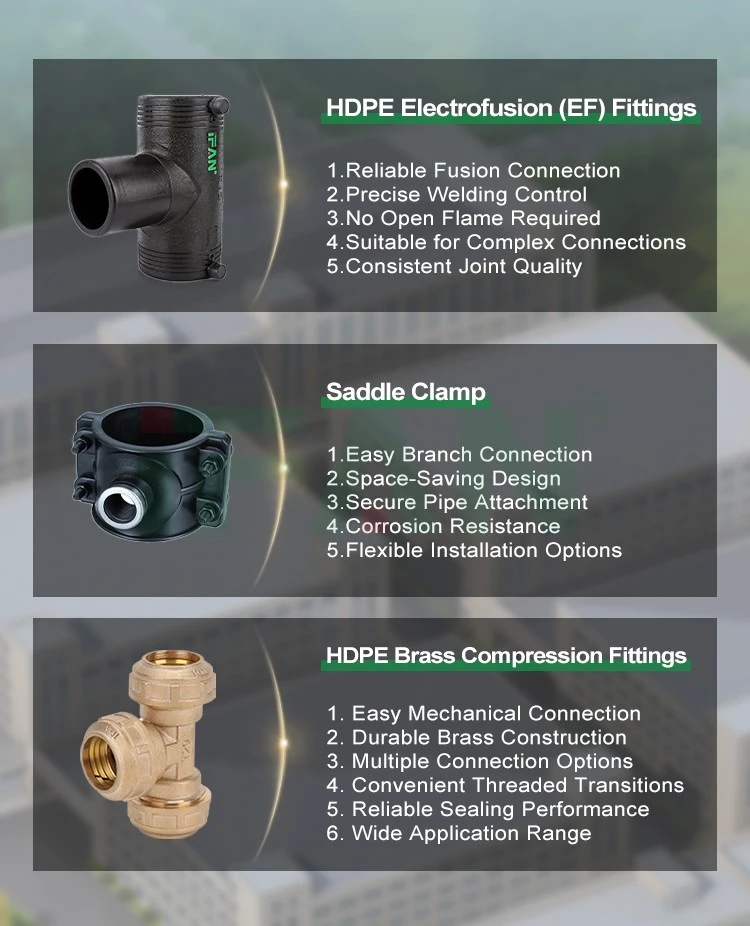
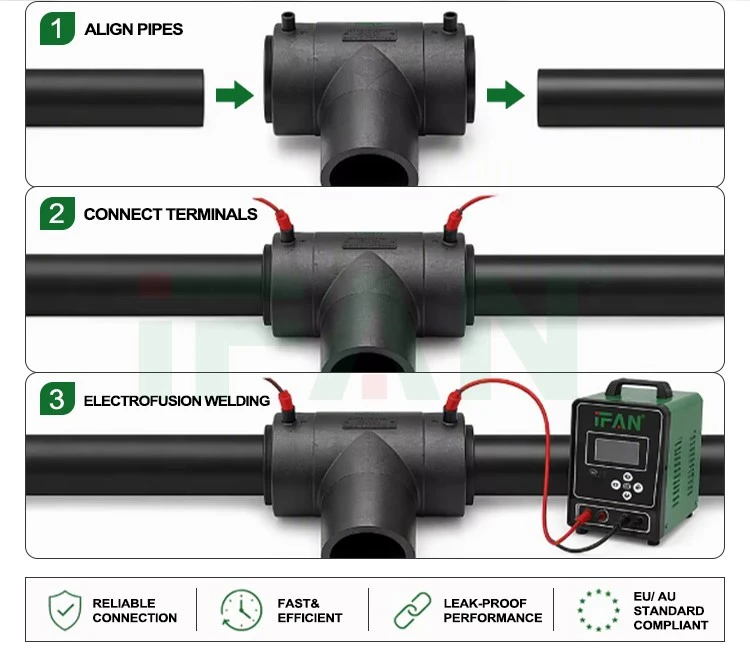
High-density polyethylene (HDPE) electrofusion fittings provide a joining method for compatible polyethylene piping systems used in selected chemical processing applications. Each fitting contains an embedded resistance wire that generates heat when connected to an approved fusion control unit. The heat melts the adjoining polyethylene surfaces, allowing them to fuse together under controlled conditions.
Unlike conventional connections that rely entirely on separate gaskets or threaded interfaces, electrofusion creates a bonded joint between the pipe and fitting. This approach can be appropriate for chemical transfer lines where polyethylene offers the required material compatibility. However, not every chemical is suitable for HDPE, and the fitting must be selected according to the specific fluid, concentration, temperature, pressure, and applicable safety requirements.
Chemical Compatibility and Material Selection
The first step in specifying an HDPE electrofusion fitting is to establish whether polyethylene is compatible with the substance being transported. Chemical resistance varies according to the chemical composition, concentration, operating temperature, exposure duration, and presence of other substances in the process stream.
HDPE is resistant to many acids, alkalis, salts, and aqueous chemical solutions under suitable conditions. As a result, it may be considered for certain dosing lines, chemical distribution systems, wastewater treatment processes, and industrial utility networks. Its suitability must nevertheless be confirmed for each application.
Some strong oxidizing agents, organic solvents, hydrocarbons, and elevated-temperature chemicals can affect polyethylene or its mechanical properties. A material that performs well with a dilute solution may not be appropriate for a more concentrated mixture at a higher temperature.
Engineers should consult manufacturer compatibility data and verify the chemical service limits of both the pipe and fitting. They must also examine the compatibility of any seals, transition components, and auxiliary equipment within the complete installation. Material selection should be documented during design so that procurement and maintenance teams understand the intended operating conditions.
Connecting Chemical Storage and Transfer Systems
Chemical plants commonly use dedicated pipelines to move liquids from storage tanks to dosing equipment, blending vessels, and production units. The layout may include long transfer routes, multiple branches, and connections to pumps or metering devices. Each joint must suit the operating conditions and the physical arrangement of the facility.
HDPE electrofusion couplers can connect compatible pipe sections, while tees and elbows support branches and directional changes. Reducers may be used where a designed transition between pipe diameters is required. These fitting configurations allow engineers to create a piping layout that follows the process design without relying on improvised connections.
The installation must account for the chemical's properties and the forces acting on the pipe. Pump startup, valve operation, and changes in process demand can produce pressure fluctuations. Supports and pipe routing should be designed to accommodate expected loads without placing excessive stress on fused joints.
For hazardous chemical services, the connection method must also satisfy the facility's containment and regulatory requirements. HDPE electrofusion should be used only where the selected material and joining system are approved for the intended chemical and operating conditions.
Applications in Water and Wastewater Treatment
Water and wastewater treatment facilities frequently use chemical dosing to adjust pH, control biological processes, support disinfection, and remove suspended contaminants. These operations may involve transferring treatment chemicals from storage areas to dosing pumps and injection points.
HDPE piping with electrofusion fittings may be suitable for selected chemical feed systems, particularly where the transported solution is compatible with polyethylene. A properly designed network can connect storage tanks, dosing skids, and treatment equipment while maintaining a defined route for each chemical.
Different dosing systems may require different material specifications. A fitting suitable for one treatment chemical cannot automatically be used for another. Engineers should consider chemical concentration, temperature, pressure, and possible interactions between substances before approving the installation.
The pipe layout should also provide suitable access to pumps, injection assemblies, and maintenance points. Drainage, flushing, and isolation arrangements must be considered as part of the system design. Correct fitting selection is only one element of a safe chemical dosing installation; appropriate ventilation, containment, monitoring, and handling procedures may also be required.
Managing Corrosive Environments
Metallic piping components can experience corrosion when exposed to certain chemical solutions or aggressive environmental conditions. Depending on the substance and the selected alloy, corrosion may lead to surface deterioration, leakage, or changes in the internal pipe condition.
HDPE does not undergo conventional electrochemical rusting, which makes it an option for some corrosive chemical applications. Its non-metallic construction can be useful in areas where compatible fluids would otherwise require careful selection of corrosion-resistant metallic materials.
However, resistance to corrosion should not be confused with universal chemical resistance. Polyethylene can be affected by particular chemicals, elevated temperatures, and mechanical stress. The fitting must remain within its specified pressure and temperature limits throughout normal operation and foreseeable process variations.
Chemical plants should establish clear operating limits and verify that process changes do not introduce incompatible substances. If a new chemical is introduced or the concentration changes, the material compatibility assessment should be reviewed before the pipeline is returned to service.
Installation Control and Joint Quality
The quality of an electrofusion connection depends heavily on installation practice. Before joining, technicians must verify pipe and fitting compatibility, inspect the pipe ends, and prepare the specified fusion area. Surface oxidation and contamination can interfere with bonding, so the preparation procedure must follow the manufacturer's instructions.
The pipe should be scraped using an approved tool, and the required insertion depth should be marked. After positioning the fitting, installers must secure the assembly to prevent movement during heating and cooling. The fusion control unit must apply the correct parameters for the specific fitting.
Environmental conditions, including temperature and moisture, may influence the required precautions. The joint should not be disturbed before the specified cooling period has elapsed. If the control unit reports an error, personnel must follow the manufacturer's procedure for evaluating the connection.
These controls are especially important in chemical plants because a defective joint may allow a hazardous substance to escape. Installation records should identify the fitting, fusion equipment, operator, and relevant inspection results.
Inspection, Testing, and Operational Monitoring
After installation, the pipeline should undergo the inspections and testing required by the applicable standards and project specifications. Depending on the chemical service, the procedure may include pressure testing, leak testing, examination of accessible connections, and verification of supporting equipment.
Testing conditions must remain within the permitted limits of the pipeline components. The test medium and method should be selected according to the application, with particular attention to chemical hazards and site safety procedures.
During operation, personnel should monitor relevant process variables, including pressure, temperature, flow rate, and signs of leakage. Unexpected changes may indicate a problem with the pipeline, a connected component, or the operating process. Inspection intervals should reflect the chemical's hazard level and the consequences of a potential release.
Maintenance teams should also retain records of material specifications, installation procedures, and previous inspections. This information helps determine whether a developing issue is related to chemical incompatibility, operating conditions, or joint installation.