
Chemical Resistance Supports CPVC Pipe Fittings Applications
Jun 29, 2026

| Product Name | CPVC Pipe Fittings |
| Color | Yellow or Customized |
| Size | 1/2"-2" |
| Brand | IFAN or Customized |
| OEM |
Support |
| Sample | Free |
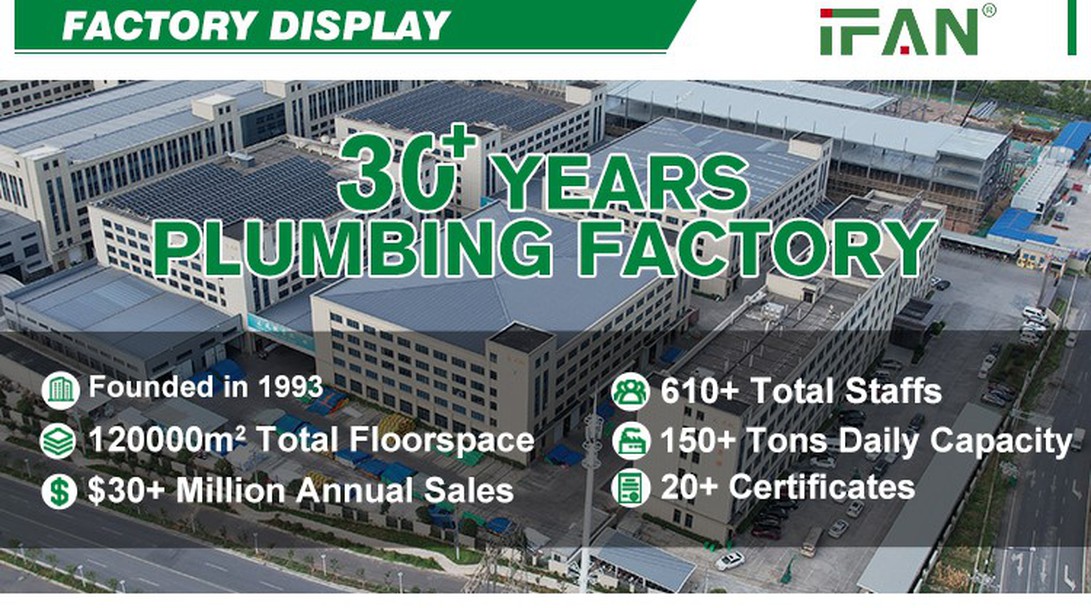
| Experience | 30+Years |
| Contact Us | Click HERE to contact us now! |
Welcome to contact IFAN, we are online 24 hours a day to answer your questions!
The Importance of Chemical Stability in Piping Systems
In many modern plumbing and fluid transport systems, water is no longer the only medium being carried through pipelines. Depending on the application, systems may also handle cleaning agents, disinfectants, industrial fluids, or water treated with various chemical additives. These substances can gradually interact with piping materials, affecting performance and lifespan if the material is not chemically stable.
CPVC pipe fittings are widely used because they offer strong chemical resistance across a broad range of common substances. This property allows them to function reliably in environments where exposure to reactive or treated fluids is unavoidable. As a result, chemical resistance becomes a defining factor in the suitability of CPVC for diverse applications.
Resistance to Water Treatment Chemicals
Municipal water systems often rely on treatment chemicals such as chlorine to ensure water safety before distribution. While these chemicals are essential for public health, they can create long-term challenges for certain piping materials that are sensitive to oxidation or chemical reaction.
CPVC fittings are engineered to withstand exposure to these treatment agents without significant degradation. Their material structure remains stable even when in constant contact with chlorinated water. This helps ensure that piping systems maintain their integrity over time, even in regions where water treatment levels are relatively high.
Performance in Mild Industrial Fluid Systems
Beyond residential and commercial water systems, CPVC fittings are also used in light industrial environments where fluids may contain mild chemical properties. These may include cooling fluids, process water, or diluted chemical solutions used in manufacturing or facility maintenance operations.
In such environments, material compatibility is essential to avoid premature system failure. CPVC pipe fittings perform well under these conditions because they resist chemical interaction with many commonly used industrial fluids. This allows them to maintain structural stability and functional reliability without frequent replacement or repair.
Preventing Material Degradation from Chemical Exposure
Chemical exposure in piping systems often leads to gradual material degradation. This may include surface weakening, internal cracking, or loss of structural strength. Over time, these issues can compromise the entire system and lead to costly maintenance or replacement work.
CPVC fittings reduce this risk by maintaining chemical stability under normal operating conditions. Their non-reactive nature prevents most common chemical processes that lead to material breakdown. As a result, systems built with CPVC experience slower degradation, which supports longer service life and more reliable performance.
Expanding Application Range in Modern Infrastructure
Because of their chemical resistance, CPVC pipe fittings are used in a wide variety of applications beyond traditional plumbing. These include water distribution systems in hospitals, food processing facilities, educational institutions, and light industrial plants where water quality and system reliability are both important.
This wide application range is made possible by CPVC's ability to perform consistently in different chemical environments. Designers and engineers can use the same material across multiple systems, simplifying material selection and ensuring consistent performance standards throughout a building or facility.
Stability in Cleaning and Maintenance Environments
Many plumbing systems are regularly exposed to cleaning agents during maintenance procedures. These substances, while necessary for hygiene and system upkeep, can be aggressive toward certain materials if compatibility is not considered during system design.
CPVC fittings maintain stability even when exposed to common cleaning and sanitation chemicals. This allows maintenance teams to clean and service systems without worrying about damaging the piping infrastructure. Over time, this compatibility supports safer and more efficient maintenance practices across a wide range of facilities.
Reducing Failure Risks in Chemical-Prone Areas
Some areas within a building or facility are more likely to experience exposure to chemical substances. These may include mechanical rooms, utility areas, laboratories, or processing zones. In such locations, piping systems must be designed to withstand occasional or continuous chemical contact.
CPVC pipe fittings reduce the risk of system failure in these environments by resisting chemical attack. Their durability ensures that even when exposed to reactive substances, the system remains stable. This reduces the likelihood of leaks, joint failures, or unexpected shutdowns in sensitive operational areas.
Supporting Long-Term System Reliability
Chemical exposure is one of the factors that can shorten the lifespan of plumbing systems if not properly managed. Materials that degrade quickly require more frequent inspection, repair, and replacement, increasing operational costs over time.
CPVC fittings contribute to long-term reliability by maintaining performance in chemically active environments. Their resistance to degradation helps ensure that systems remain functional over extended periods without significant intervention. This reliability is especially important in large facilities where system downtime can have wide-reaching effects.
Importance of Proper System Design and Installation
While chemical resistance is a key advantage of CPVC, system performance also depends on correct design and installation. Proper material selection, joint preparation, and installation techniques ensure that the system operates as intended under real-world conditions.
CPVC pipe fittings rely on solvent welding methods that create strong and chemically stable joints. When installed correctly, these joints complement the material's chemical resistance, resulting in a fully integrated and durable piping system. Proper installation ensures that chemical stability is fully maintained throughout the system's lifespan.