
Corrosion Resistance Defines CPVC Pipe Fittings Performance
Jun 29, 2026

| Product Name | CPVC Pipe Fittings |
| Color | Yellow or Customized |
| Size | 1/2"-2" |
| Brand | IFAN or Customized |
| OEM |
Support |
| Sample | Free |
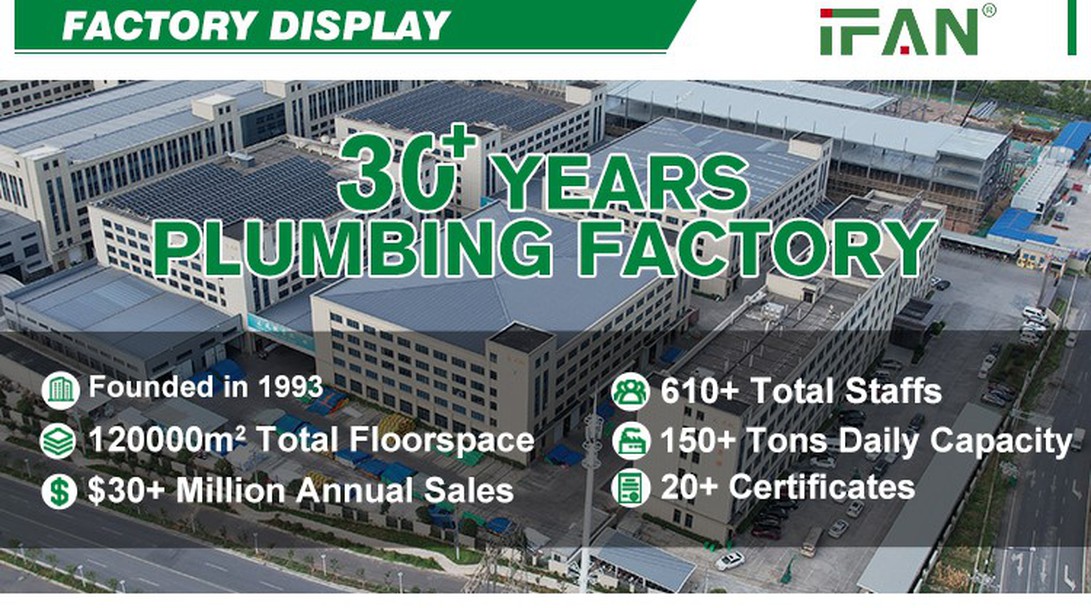
| Experience | 30+Years |
| Contact Us | Click HERE to contact us now! |
Welcome to contact IFAN, we are online 24 hours a day to answer your questions!
Why Corrosion Resistance Matters in Modern Plumbing
In plumbing systems, long-term performance is not determined only by pressure handling or temperature tolerance, but also by how materials react to the water they carry. Water is not always chemically neutral; it may contain chlorine, dissolved salts, minerals, or other reactive elements. Over time, these substances can gradually degrade piping materials, especially in metal-based systems.
CPVC pipe fittings are widely used because they are inherently resistant to corrosion. Unlike metals that can oxidize or react with water chemistry, CPVC maintains stable performance without chemical breakdown. This resistance plays a central role in defining its reliability, especially in systems where water quality varies or where plumbing must operate continuously for many years.
Chemical Stability as a Key Material Advantage
The performance of CPVC fittings is strongly linked to their chemical structure. CPVC is a chlorinated form of PVC, which gives it improved resistance to chemical reactions commonly found in water systems. This structure allows it to remain stable even when exposed to treated municipal water or slightly aggressive water conditions.
This chemical stability means that CPVC fittings do not rust, scale, or deteriorate in the same way as metal alternatives. As a result, the internal surface of the piping system remains smooth and unaffected by corrosion-related buildup. This helps maintain consistent flow performance while reducing the risk of long-term structural damage.
Resistance to Internal Water Chemistry
One of the most challenging aspects of plumbing system durability is the variation in water chemistry. Depending on location, water may contain chlorine used for disinfection, calcium deposits, or other dissolved compounds that interact with piping materials.
CPVC pipe fittings are designed to resist these chemical interactions. Their non-metallic composition prevents oxidation and minimizes reaction with common water treatment chemicals. This resistance ensures that fittings maintain their structural integrity even in systems where water chemistry is not tightly controlled. Over time, this leads to more stable and predictable plumbing performance.
Preventing Internal Degradation Over Time
Corrosion in plumbing systems often begins internally, where it is not immediately visible. As materials degrade, they may develop rough surfaces, cracks, or weak points that can eventually lead to leaks or system failure. This process can be slow, making early detection difficult.
CPVC fittings eliminate this type of degradation mechanism because they do not rely on metallic components. Without the presence of rust or oxidation, the internal structure remains consistent throughout its service life. This prevents gradual weakening and supports long-term reliability in both residential and commercial applications.
Maintaining Flow Efficiency Through Smooth Surfaces
Corrosion does not only affect structural strength; it also impacts hydraulic performance. In corroded metal pipes, internal buildup can restrict flow, increase friction, and reduce overall system efficiency. This often leads to pressure inconsistencies and higher energy demand in pumped systems.
CPVC fittings help maintain smooth internal surfaces that are not affected by corrosion or mineral scaling. This smoothness allows water to move efficiently through the system with minimal resistance. Over time, this contributes to more stable flow rates and improved overall system efficiency without the performance decline often seen in corroding metal systems.
Long-Term Reliability in Water Distribution Systems
Plumbing systems are expected to function reliably for many years without major intervention. Corrosion is one of the primary reasons systems fail prematurely, particularly in environments where maintenance access is limited or costly.
CPVC pipe fittings extend system reliability by removing corrosion as a failure factor. Their resistance to chemical and environmental degradation allows plumbing networks to maintain consistent performance over long periods. This makes them especially suitable for concealed piping systems in buildings where long-term durability is essential.
Performance in Different Environmental Conditions
Plumbing systems are installed in a wide range of environments, from humid climates to dry regions and from residential buildings to industrial facilities. Each environment presents different challenges that can influence material performance over time.
CPVC fittings perform consistently across these varying conditions because their corrosion resistance is not dependent on external factors such as humidity or air exposure. Whether installed in wet mechanical rooms or enclosed wall systems, they maintain their structural and functional stability. This environmental adaptability is a key reason they are widely used in modern plumbing design.
Reducing Maintenance Linked to Corrosion Issues
Maintenance in plumbing systems is often driven by corrosion-related problems such as leaks, blockages, or material breakdown. These issues require inspection, repair, or replacement, increasing operational costs and system downtime.
Because CPVC fittings are not affected by corrosion, they significantly reduce the frequency of such maintenance tasks. Once installed correctly, they typically require only routine inspection rather than corrective repairs. This reduction in maintenance workload makes CPVC systems more cost-effective over their lifecycle, particularly in large buildings or multi-unit facilities.
Installation Quality and Long-Term Performance
While corrosion resistance is a major advantage of CPVC, proper installation remains essential for achieving full system performance. Poor joint preparation or incorrect solvent welding can compromise even corrosion-resistant materials.
CPVC pipe fittings rely on proper installation techniques to form permanent chemical bonds between pipes and fittings. When installed correctly, these joints become highly durable and resistant to both mechanical stress and chemical exposure. This ensures that the corrosion-resistant properties of CPVC are fully utilized throughout the system's operational life.