
Industrial Fluid Transport Using HDPE Electrofusion Fitting
Oct 27, 2026

| Product Name | HDPE Electrofusion Fitting |
| Size | 50-630mm |
| Color | Black Color Or Customized |
| Connection | Electrofusion |
| MOQ | 100PCS |
| Sample | Sample Free |
| Contact |
Meeting the Demands of Industrial Fluid Transportation
Industrial facilities depend on piping networks to move liquids between storage tanks, production lines, treatment units, cooling systems, and wastewater collection points. These networks may carry process water, mineral slurries, chemical solutions, or other industrial fluids under varying pressure and temperature conditions. The piping arrangement must accommodate the properties of the transported medium while fitting the physical requirements of the facility.
High-density polyethylene (HDPE) electrofusion fittings provide a joining method for compatible polyethylene pipelines used in selected industrial applications. Each fitting contains an embedded electrical resistance element that generates heat during the fusion cycle. The heat softens the prepared surfaces of the fitting and pipe, allowing them to bond as the joint cools under controlled conditions.
This joining method can be incorporated into pipelines that require branches, directional changes, diameter transitions, or connections between separate pipe sections. However, suitability depends on the fluid composition, operating temperature, pressure rating, and relevant industrial standards. Engineers must assess these factors before selecting an HDPE electrofusion system for a particular transportation task.
Selecting Materials According to Fluid Properties
The first consideration in industrial fluid transport is the compatibility between the pipe material and the transported substance. Industrial fluids vary widely in composition, ranging from relatively clean water to solutions containing dissolved salts, acids, alkalis, suspended particles, or specialized process chemicals.
HDPE is resistant to many water-based solutions and a range of common industrial chemicals. This makes it a candidate for selected applications involving process water, wastewater, certain chemical transfer lines, and other compatible fluids. Nevertheless, resistance depends on chemical concentration, temperature, exposure duration, and the presence of mixed substances.
Some solvents, strong oxidizing agents, hydrocarbons, and elevated-temperature fluids may affect polyethylene. Engineers should therefore consult verified chemical compatibility data rather than relying on general descriptions of polymer resistance. The fitting and pipe must also have suitable pressure ratings for the intended service.
Material selection should be documented during the design stage. Clear specifications help procurement teams choose the correct components and prevent substitutions that could compromise compatibility. For complex industrial processes, the assessment may also need to consider occasional cleaning chemicals, flushing solutions, and foreseeable changes in the process stream.
Designing Connections for Industrial Pipeline Layouts
Industrial piping systems often connect equipment distributed across large facilities. Pipes may run between pump stations, storage tanks, filtration units, reactors, and production areas, with several branches serving different processes. The layout must accommodate these connections while providing suitable access for operation and inspection.
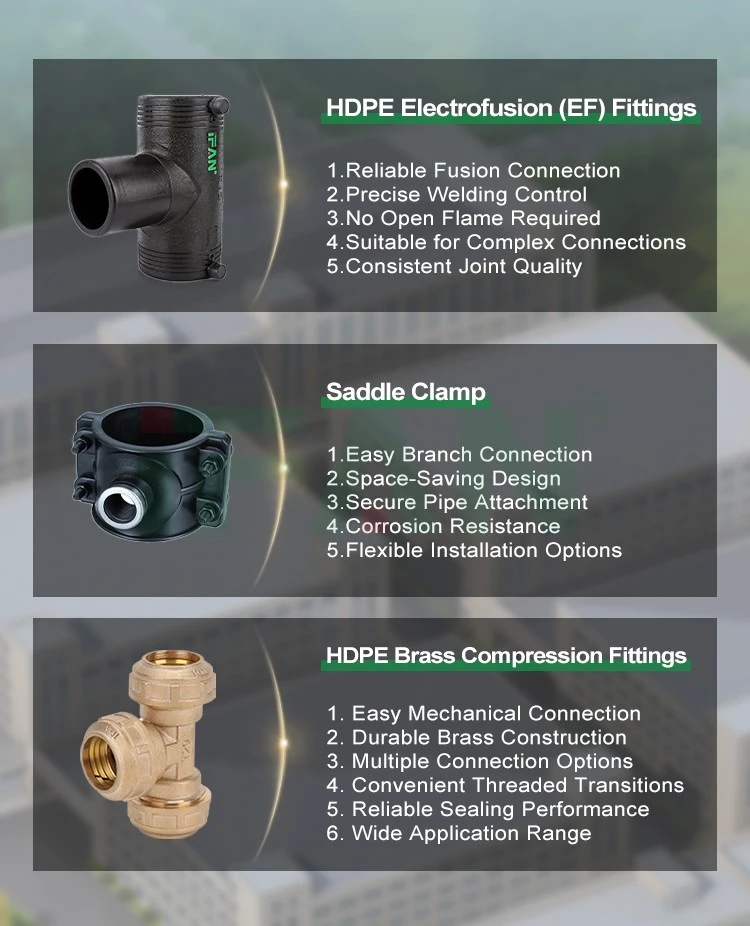
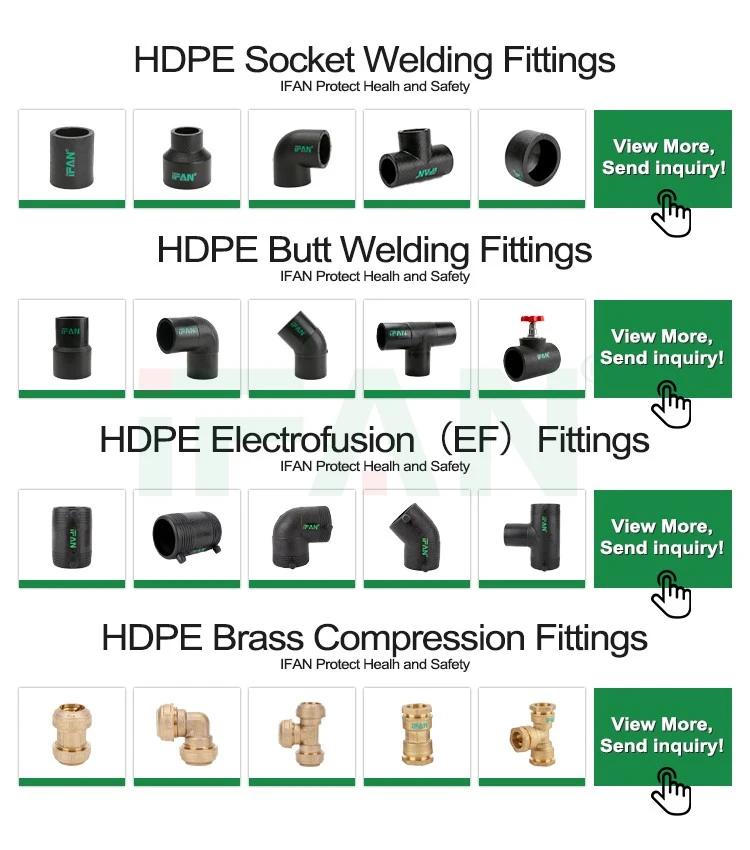
HDPE electrofusion fittings are available in configurations such as couplers, elbows, tees, and reducers. Couplers connect compatible pipe ends, elbows change the direction of a pipeline, and tees create branch connections. Reducers provide transitions between specified pipe diameters when permitted by the system design.
Selecting the correct configuration helps engineers establish a defined route through the facility. However, fitting placement should not be based on physical convenience alone. Pipe diameter, flow rate, pressure loss, pump capacity, and equipment connection requirements must all be evaluated.
The layout should also account for supports, expansion allowances, isolation valves, and maintenance access. In areas with limited clearance, engineers need to confirm that workers can prepare the pipe surface and operate the fusion equipment safely. A well-coordinated design reduces installation conflicts and supports orderly pipeline operation.
Managing Pressure and Flow During Operation
Industrial fluid systems can experience changing flow demands as equipment starts, stops, or shifts between operating modes. Pump operation, valve adjustments, elevation differences, and variations in downstream demand can affect pressure throughout the network.
HDPE electrofusion fittings must be selected according to the design pressure and operating conditions of the complete pipeline. The allowable pressure may depend on pipe dimensions, material classification, temperature, and applicable design rules. A fitting's nominal rating should not be considered separately from the rating of the pipe and other system components.
Pressure surges also require attention. Rapid valve closure or pump shutdown can produce transient loads that exceed normal operating pressure. Engineers should assess these conditions during hydraulic design and provide suitable controls where necessary.
Flow requirements influence the selection of pipe diameters and fitting arrangements. Excessive changes in direction, undersized branches, and poorly planned transitions can increase resistance or create uneven flow distribution. Careful hydraulic calculations help ensure that the pipeline can deliver the required fluid volume without imposing unnecessary stress on its components.
Applying Electrofusion in Industrial Water and Wastewater Systems
Many industrial facilities require separate networks for process water, equipment washdown, cooling water, and wastewater collection. These services can have different operating conditions and material requirements, so each line should be evaluated according to its specific function.
HDPE electrofusion fittings may be suitable for compatible water and wastewater pipelines, including selected underground networks and connections around treatment equipment. Their resistance to conventional metallic rusting can be relevant in environments where moisture or certain chemical constituents would otherwise affect metal components.
Wastewater characteristics must still be assessed carefully. Suspended solids, abrasive particles, chemical cleaning agents, and elevated temperatures may influence material selection and system design. Where a fluid contains abrasive solids, engineers should evaluate the expected wear conditions rather than assume that the fitting alone determines overall suitability.
Pipeline routing should provide access to inspection points, pumps, filters, and isolation devices. Where treatment processes change over time, designers should also consider whether future branches or equipment connections may be required. This planning helps the network accommodate operational changes without unnecessary reconstruction.
Controlling Installation Quality in Industrial Environments
The performance of an electrofusion joint depends heavily on installation accuracy. Industrial construction sites may contain dust, moisture, machinery, and other conditions that complicate preparation. Consistent procedures are necessary to prevent these factors from interfering with the fusion process.
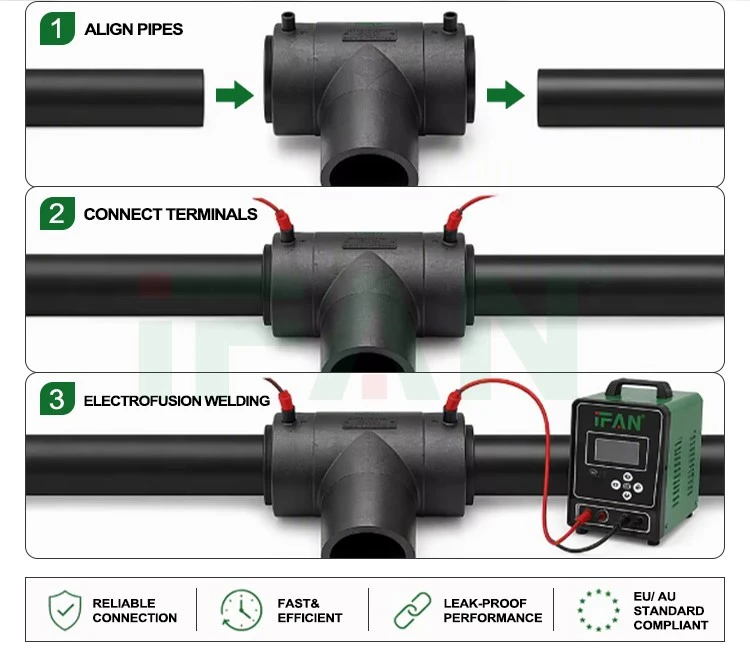
Before joining, installers should verify material compatibility, inspect the pipe ends, and prepare the designated fusion area according to the manufacturer's instructions. The specified outer layer should be removed using an approved tool, and the insertion depth should be marked clearly. Prepared surfaces must remain clean until assembly.
The fitting must be positioned correctly and secured against movement. A compatible control unit should apply the prescribed fusion parameters, and the joint must remain undisturbed for the required cooling period. If an error occurs during the fusion cycle, personnel should follow the manufacturer's assessment procedure rather than attempt an unapproved correction.
After installation, the pipeline should undergo the inspections and testing required by the project specifications. Documentation should record fitting identification, fusion details, and inspection results to support quality assurance and future maintenance.
Monitoring Industrial Pipelines During Service
Once an industrial pipeline enters operation, monitoring helps identify changes that may indicate a developing problem. Depending on the application, operators may track pressure, flow rate, temperature, pump performance, and signs of leakage at accessible locations.
Unexpected changes should be investigated systematically. A reduction in flow, for example, may result from a blocked filter, a valve position, a pump issue, or a restriction elsewhere in the network. It should not automatically be attributed to an electrofusion joint.
Maintenance records help operators compare current conditions with previous performance and identify recurring issues. Inspection frequency should reflect the fluid's properties, operating conditions, and the consequences of a potential failure.