
PPR Fittings Simplify Plumbing System Installation
Nov 19, 2026

| Product Name | PPR Pipe Fittings |
| Size | 20-63mm Or Customized |
| Color |
Green,White,Blue Or Customized |
| Package | IFAN standard packaging |
| Connection | welding |
| Sample | Sample Free |
| Contact |
Welcome to contact IFAN, we are online 24 hours a day to answer your questions!
Understanding the Role of PPR Fittings in Modern Plumbing
Installing a plumbing system involves much more than laying pipes between a water source and individual outlets. Every building has a different structural layout, and the pipeline must pass through walls, floors, ceilings, and service areas while connecting various water supply points. Choosing suitable fittings is essential for adapting the pipeline to these different installation requirements.
PPR fittings, manufactured from polypropylene random copolymer, are commonly used in residential, commercial, and industrial water distribution systems. They provide connection solutions for straight pipe sections, directional changes, branch lines, and diameter transitions. Their availability in different shapes and sizes allows installers to construct pipeline arrangements according to project drawings without relying on complicated connection configurations.
One of the main characteristics of PPR fitting systems is their use of socket heat fusion. This connection method creates an integrated joint between compatible pipes and fittings through controlled heating. Understanding the fitting types, installation procedures, and planning requirements helps contractors organize plumbing work more efficiently.
A Variety of Fitting Designs for Different Installation Needs
Different sections of a plumbing system require different connection arrangements. PPR fittings are available in various configurations, each designed for a particular installation purpose.
Couplings: Connect two PPR pipes of the same nominal diameter and extend straight pipeline sections.
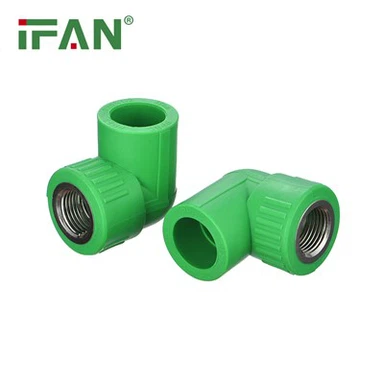
Elbows: Change the direction of a pipeline, commonly through 45-degree or 90-degree turns.
Tees: Create branch connections for supplying water to different rooms or equipment.
Reducers: Connect pipes with different nominal diameters within a distribution network.
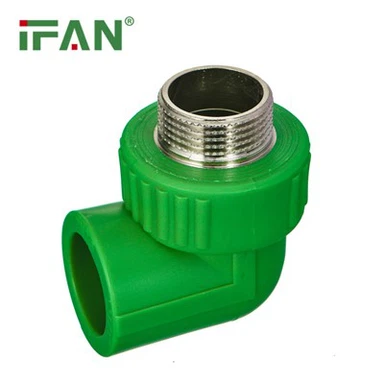
Threaded adapters: Connect PPR pipelines with compatible metal pipes, valves, meters, and equipment.
This range of configurations allows installers to adapt pipelines to different building layouts. For example, a bathroom installation may require several elbows and tees to connect showers, washbasins, and other outlets. A commercial water distribution system may require additional reducers and adapters around pumps and equipment.
Selecting the correct fitting before installation begins helps reduce unnecessary adjustments and keeps the construction process organized.
Socket Fusion Makes Pipe Connections Straightforward
PPR fittings commonly use socket heat fusion to establish connections with compatible pipes. The process involves heating the outside of the pipe and the inside of the fitting socket before joining the two components.
Specialized fusion equipment is used to heat both surfaces to the temperature specified by the manufacturer. Once the required heating time has been reached, the components are removed from the heating tool and inserted into each other to the specified depth.
As the materials cool, they form an integrated thermoplastic connection. This method does not require conventional threaded sealing at the fused interface, making the connection procedure relatively direct.
However, the process requires proper training and accurate execution. Heating temperature, insertion depth, and cooling duration must be controlled according to pipe dimensions. Installers should also ensure that the heating equipment is clean and suitable for the selected fitting size.
Easier Pipeline Routing Around Building Structures
A building's internal structure often creates obstacles for plumbing installation. Pipes may need to pass around beams, columns, ventilation ducts, electrical installations, and other building services.
PPR elbows and tees provide practical ways to adjust pipeline routes. Instead of bending pipes beyond their permitted limits, installers can use appropriately selected fittings to establish clear directional changes.
For example, a 90-degree elbow can be used where a pipeline turns from a horizontal route to a vertical section. A tee can establish a branch connection when the main supply line needs to serve another room.
Before installation, contractors should review architectural and plumbing drawings to determine the required fitting positions. This helps avoid conflicts with other building systems and reduces the need to modify completed pipe sections.
Simplifying Branch Connections and Water Distribution Layouts
Most plumbing systems contain several distribution branches. A single supply line may provide water to multiple bathrooms, kitchens, cleaning areas, or equipment connections.
PPR tee fittings allow these branches to be arranged in an organized manner. Their configuration makes it possible to divide the main pipeline while maintaining compatible connection dimensions.
In larger buildings, branch connections may be arranged around distribution manifolds or individual floor-level supply lines. Installers can use different fitting combinations to match the pipeline layout and required water distribution points.
Accurate planning is important because the number and position of branch connections influence the amount of installation work required. Contractors should identify the pipe diameters, fitting quantities, and connection locations before beginning assembly.
Lightweight Components and Convenient Site Handling
The physical characteristics of PPR fittings also influence installation arrangements. Compared with many conventional metal components, PPR fittings have relatively low weight, making them easier to handle, transport, and organize at construction sites.
Installers can sort different fitting sizes and configurations according to the installation sequence. This is particularly useful when working in confined areas, such as residential bathrooms, ceiling spaces, and equipment rooms.
The fittings can also be prepared and positioned using ordinary plumbing installation tools alongside the appropriate fusion equipment.
Although handling is relatively straightforward, components should be protected from excessive impact, contamination, and unsuitable storage conditions. Keeping fittings organized and covered before use helps prevent construction debris from entering the internal passages.
Connecting PPR Pipelines with Other Plumbing Components
A complete plumbing system often includes components made from different materials. Water meters, pumps, valves, storage tanks, and heating equipment may have metal or threaded connection interfaces.
PPR threaded adapters provide transition points between compatible PPR pipelines and these external components. Depending on the product configuration, the adapter may contain a metal threaded insert combined with a PPR socket connection.
During installation, the threaded connection must be assembled carefully. Excessive tightening can damage the threaded insert or place unnecessary stress on the surrounding polymer body.
Installers should use suitable sealing materials and follow the equipment manufacturer's connection instructions. The correct adapter type should be selected according to thread dimensions, connection direction, and operating requirements.
Installation Preparation and Tool Organization
A well-organized installation process begins with proper preparation. Before work starts, contractors should check the plumbing drawings, confirm the pipe dimensions, and prepare the required fittings.
Common installation equipment includes pipe cutters, measuring tools, marking tools, fusion machines, and suitable heating heads. Each tool should be appropriate for the selected pipe dimensions.
The pipe ends should be cut evenly and checked for contamination before fusion. Installers should also confirm the required heating parameters using the manufacturer's technical instructions.
Organizing tools and materials in advance reduces interruptions during installation. It also makes it easier to maintain consistent working procedures when multiple technicians are involved in the same project.
Inspection After Installation
Once the fittings have been installed, the completed pipeline should be inspected before being covered by walls, ceilings, or other building structures.
Visual checks should focus on connection alignment, visible deformation, incomplete insertion, and possible contamination. The pipeline should then undergo pressure testing according to applicable project specifications and plumbing standards.
Any connection showing leakage or abnormal pressure changes must be investigated and corrected before the system enters normal operation.
Keeping installation records and updating pipeline drawings also helps future maintenance personnel identify concealed fitting locations.